Build an Ethical, Measurable Therapist Marketing System
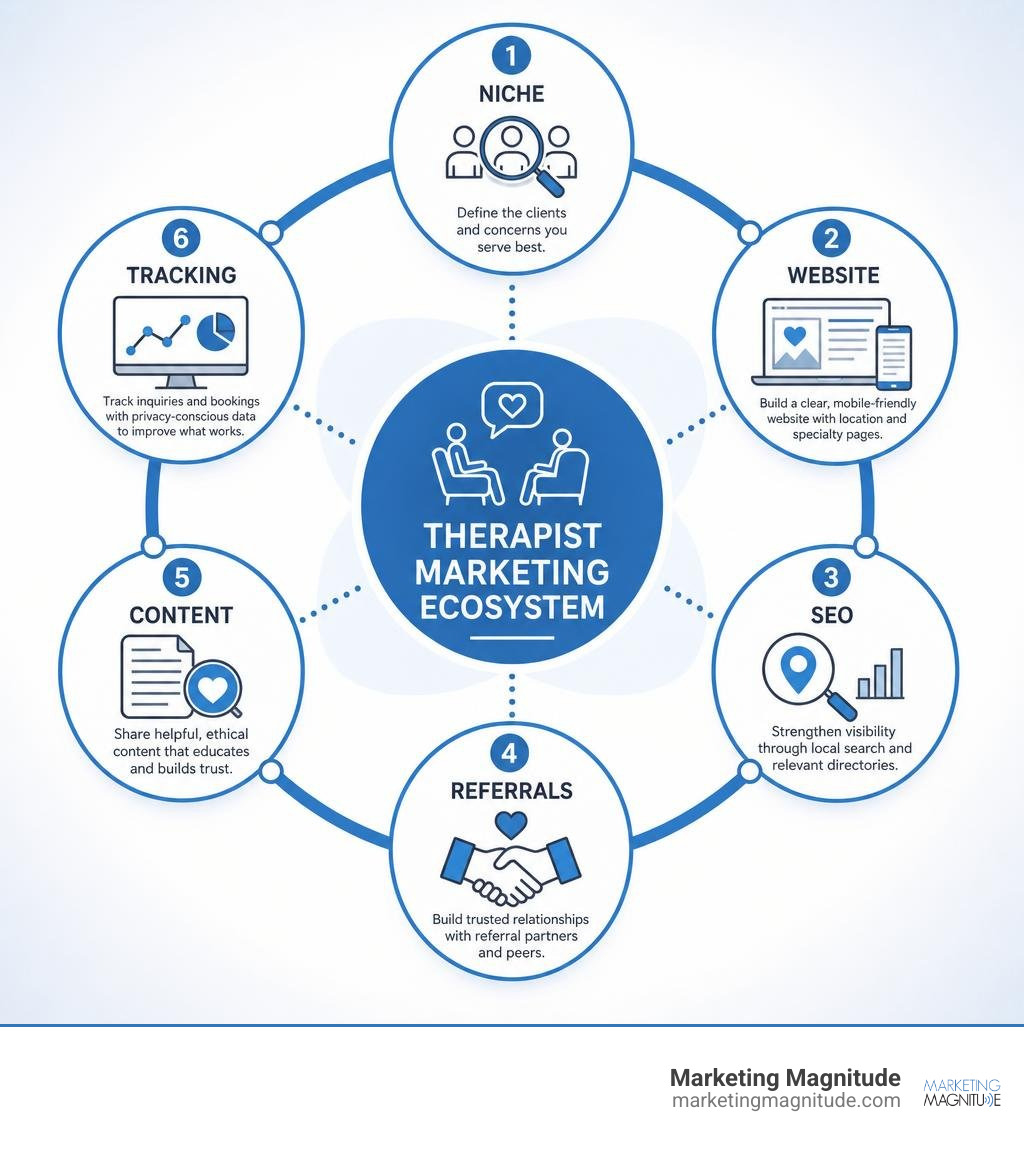
Effective therapist marketing helps the right people find care without using pressure, exaggerated promises, or invasive tracking. Start with a small, connected system:
- Define the clients and concerns you serve best.
- Build a clear, mobile-friendly website with location and specialty pages.
- Strengthen visibility through local search, relevant directories, helpful content, and referral relationships.
- Track inquiries, consultations, and bookings using privacy-conscious data so you can improve what works.
The goal is not to be everywhere or sound like every other practice. It is to make prospective clients feel understood, explain what support looks like, and give them a simple next step. Trust matters at every point, from a clinician bio and Google Business Profile to a reply to a referral partner.
For solo clinicians, this may mean focusing on one specialty and two dependable channels. For group practices, it means pairing a unified practice brand with distinct, easy-to-find clinician profiles and service pages. Sustainable growth comes from useful information, strong local relationships, prompt follow-up, and clear measurement – not pushy sales tactics.
I am Kelly Rossi, founder of Marketing Magnitude. With more than 20 years of experience connecting SEO, websites, CRM, automation, analytics, and customer communication, I help service businesses build therapist marketing systems that create visibility while protecting the human trust behind every inquiry.
Foundations of Ethical Therapist Marketing and Client Trust
Marketing in mental health requires a fundamentally different philosophy than conventional business promotion. Traditional marketing often manufactures urgency or amplifies insecurities to trigger impulse purchases. In therapy, your prospective clients are already in distress, experiencing vulnerability, and seeking a professional anchor. Pushing aggressive discounts or high-pressure countdown timers does not demonstrate competence; it erodes the therapeutic alliance before the first consultation even takes place.
Ethical marketing centers on mutual alignment, educational value, and clear communication. The aim is to help individuals self-qualify by understanding your clinical modalities, your values, and whether your approach matches their lived experience. If you are exploring how to implement these systems safely, you may wonder: do you offer HIPAA conscious marketing guidance? Operating ethically requires protecting personal health information across every contact form, analytics tag, and email workflow.
Defining Practice Niche and Ideal Client Personas
One of the most persistent hurdles clinicians face when scaling private practices is the fear of specialization. Clinicians often worry that narrowing their focus will turn away potential clients and shrink their caseload. In practice, generic messaging has the opposite effect: when your website tries to speak to everyone dealing with “life transitions, stress, anxiety, depression, and personal growth,” it resonates deeply with no one.
Developing an ideal client persona involves looking closely at your clinical strengths, your specialized training (such as EMDR, somatic experiencing, or Gottman methods), and the specific populations you serve best. Consider the exact language your clients use during their initial sessions:
- What are the daily triggers keeping them up at night?
- Are they working professionals in Austin, TX experiencing executive burnout?
- Are they parents navigating postpartum mood shifts in Las Vegas, Nevada?
- What internal narratives (“I should be able to handle this on my own”) prevent them from reaching out sooner?
Positioning your practice around a defined niche is not exclusionary; it is an act of clarity. When an individual lands on your page and sees their private emotional turmoil articulated with calm precision, they experience immediate relief. They recognize that you do not just provide generic counseling—you understand their specific struggle.
Navigating Ethical Boundaries and Clinical Messaging
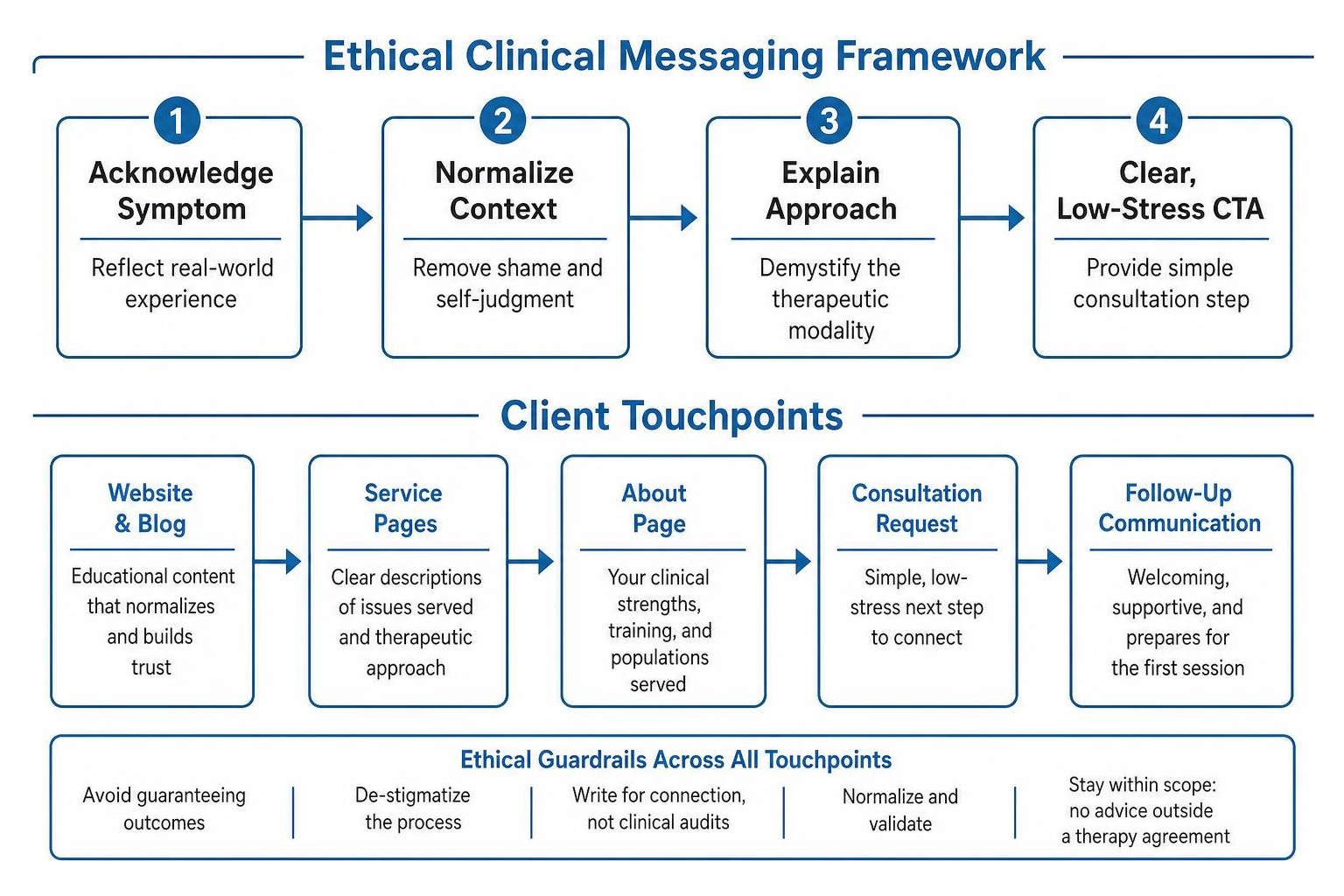
Clinical messaging must strike a careful balance: empathetic and accessible without crossing into diagnostic guarantees or clinical advice outside a formal therapy agreement.
To maintain strict ethical boundaries across all marketing touchpoints:
- Avoid Guaranteeing Outcomes: Do not promise “complete relief from panic attacks in four weeks.” Instead, describe the process and therapeutic framework: “Learn evidence-based tools to understand and regulate your nervous system.”
- De-stigmatize the Process: Frame therapy as a proactive, courageous step toward health rather than a reactive measure for severe crises.
- Write for Connection, Not Clinical Audits: Therapists spend years writing diagnostic notes for insurance reviewers, which can result in academic, clinical web copy. Shift your tone from clinical detachment to warm, conversational clarity.
- Normalize and Validate: Use educational content to let readers know their responses to trauma, burnout, or grief are understandable human reactions.
Building a High-Converting Website and Local Visibility
Your website serves as your digital front door. For someone searching for mental health support, arriving at your homepage is often an anxious moment. If the site is slow, difficult to navigate, visually cluttered, or dominated by clinical jargon, visitors will hit the back button and look elsewhere.

A high-converting website does not mean using aggressive sales funnels; it means delivering clarity, comfort, and an effortless path to get in touch. Investing in intentional website design development ensures your digital infrastructure is mobile-responsive, loads quickly, and structures information around the visitor’s journey.
To convert visitors into booked consultations, your website architecture should follow key usability standards:
- Simple, Calming Visual Architecture: Utilize clean palettes (soft tones paired with structured primary accents), ample whitespace, and legible typography.
- Above-the-Fold Clarity: State immediately who you help, how you help them, and the geographic area you serve.
- Frictionless Contact Options: Provide an embedded, HIPAA-conscious contact form and direct links to a self-scheduling intake calendar.
- Authentic Imagery: Replace cold, staged stock photography with professional, warm portraits of yourself and your therapy space.
Client-First Copywriting and Search Engine Optimization
Effective website copywriting answers three subconscious questions for the reader: Is this for me? Do you understand what I am experiencing? What do I do next?
When drafting your core pages, lead with the client’s internal experience before detailing your licensure, degrees, and training. Frame your credentials as the toolkit you use to help them achieve meaningful growth, rather than the primary headline.
Pairing client-first messaging with targeted search engine optimization SEO services ensures your practice gets discovered when individuals actively search for support. Search engines favor websites that clearly indicate geographical relevance and clinical expertise.
Essential SEO practices for private practices include:
- Location-Specific Title Tags: Use clear structures such as
Couples Therapy & Marriage Counseling | Austin, TX. - Specialty Landing Pages: Build dedicated pages for core areas (e.g., Trauma Therapy, Adolescent Counseling, Executive Stress Management) rather than listing all treatments on a single generic services page.
- Helpful Headers (H2s & H3s): Break up text using questions your clients frequently ask, such as “What does an intake session look like?” or “How do I know if CBT is right for me?”
- Descriptive Meta Descriptions: Write concise summaries that set realistic expectations and encourage clicks from search engine results pages.
Designing web assets with clear positioning ensures that passive visitors understand your clinical approach and feel encouraged to take the next step toward booking a consultation.
Directory Optimization and Local Map Visibility
When people search for local care, Google’s local map pack and reputable online directories dominate search engine results. Managing these external listings is essential for establishing local authority.
Optimizing your Google Business Profile (GBP) through dedicated local SEO services boost visibility in Google maps, positioning your physical office directly in front of nearby searchers. Profiles with verified addresses, complete operating hours, and professional interior photos consistently generate higher inquiry volume than incomplete listings.
Alongside your Google presence, optimize profiles on major directories like Psychology Today and TherapyDen:
- Professional Headshot: Use a high-resolution, friendly image where you make direct eye contact with the camera.
- First-Person Opening Hook: Speak directly to your ideal client in the first two sentences of your bio rather than leading with your professional title.
- Accurate Filtering Attributes: Select relevant insurance panels, clinical modalities, and specialty demographics carefully so inquiries are pre-qualified.
- Consistent NAP Information: Ensure your practice Name, Address, and Phone number are identical across every directory to build search engine authority.
Generating Leads and Building Sustainable Referral Networks
Generating inquiries for a private or group practice requires a balanced approach. While digital channels capture active searchers, local professional relationships generate high-trust referrals that convert reliably.
| Channel Type | Acquisition Speed | Conversion Intent | Ongoing Effort | Trust Foundation |
|---|---|---|---|---|
| Organic Search (SEO) | 3–6 Months | High (Problem-Aware) | Moderate (Content/Updates) | Institutional / Authority |
| Local Directories | 1–4 Weeks | Moderate to High | Low (Profile Maintenance) | Directory Endorsement |
| Professional Referrals | 2–6 Months | Very High | Consistent Relationship Care | Peer Recommendation |
| Community Partnerships | 1–3 Months | Moderate | Active Engagement | Direct Human Connection |
| Targeted Paid Search | Immediate | High | High (Budget & Ad Management) | Immediate Need Capture |
Core Channels in Modern Therapist Marketing
Relying on a single marketing channel leaves your caseload vulnerable to algorithm shifts or platform changes. A sustainable growth model integrates multiple touchpoints that support one another.
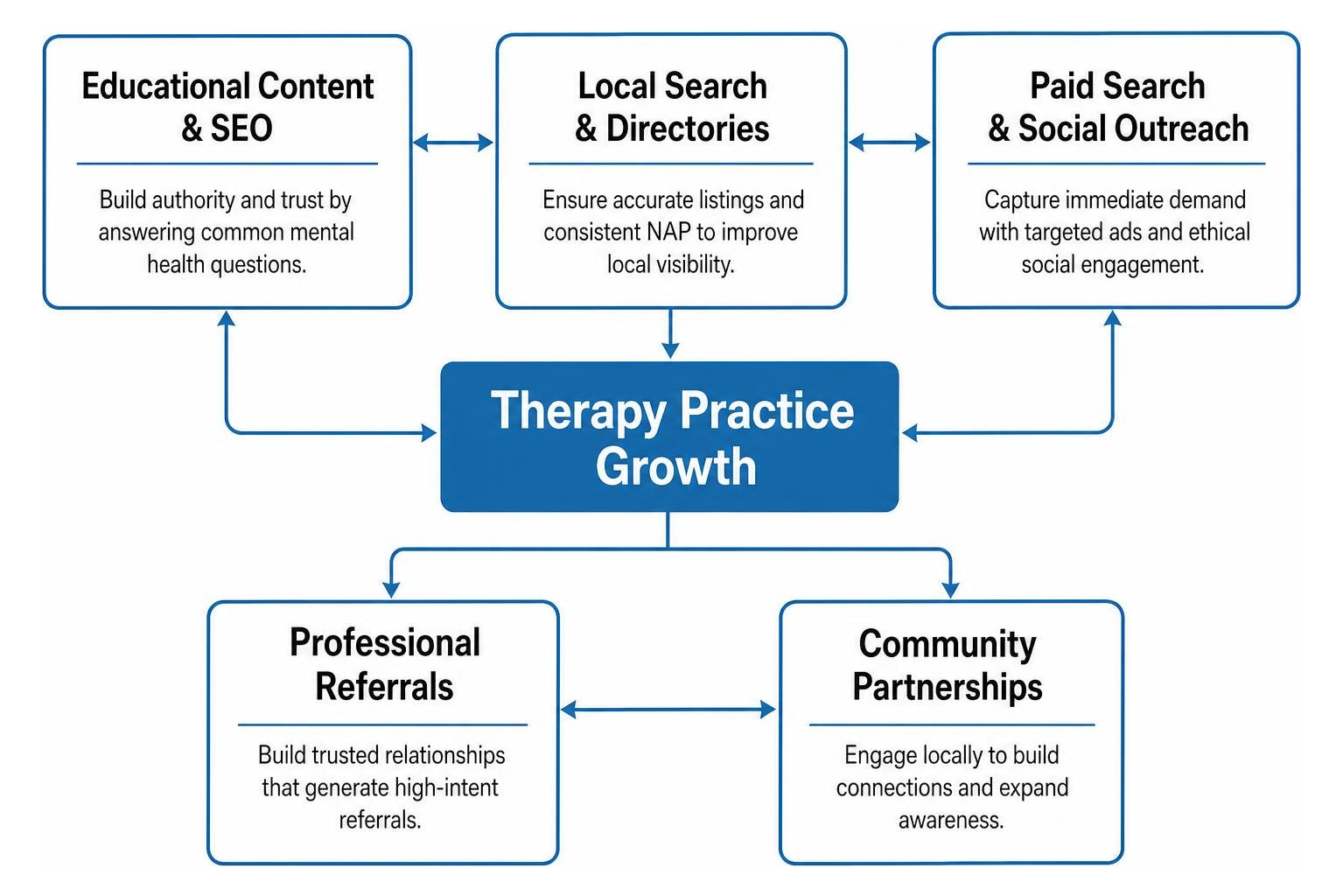
- Educational Content Creation: Producing high-quality articles through content marketing services lets you answer common mental health questions. Writing about panic management, workplace boundary setting, or adolescent communication builds trust with readers who may need care in the future.
- Ethical Social Media Presence: Leveraging social media management allows you to share digestible mental health education, normalize therapy, and provide practical coping strategies without giving direct clinical guidance.
- Intent-Driven Paid Search: When you need to fill openings quickly, managing targeted campaigns with paid advertising PPC management lets you place your services in front of individuals searching for terms like “grief counselor near me” or “adhd evaluation specialist.”
Diversifying across these core channels ensures your practice maintains a steady flow of inquiries without over-relying on any single platform.
Non-Salesy Networking and Group Practice Positioning
Therapists often dread networking because it can feel like forced self-promotion. However, building a professional referral network is simply an extension of clinical collaboration. You are identifying trusted colleagues so that when a prospective client is outside your scope of practice, you have a qualified provider to recommend.
Effective ways to build peer connections include:
- Reaching Out to Complementary Providers: Connect with psychiatric nurse practitioners, primary care physicians, pelvic floor physical therapists, divorce attorneys, and school guidance counselors who frequently encounter clients needing your specialty.
- Engaging in Clinical Peer Groups: Participate in local consultation groups and listservs. For example, community hubs like Marketing strategies for new therapists? | Austin, TX provide spaces for regional practitioners to discuss ethical outreach and share mutual referrals.
- Offering Community Workshops: Host educational sessions at local libraries, community centers, or wellness studios on managing stress or improving sleep hygiene.
For group practices, marketing requires a dual-level strategy. The parent brand must project a coherent identity, shared clinical values, and administrative reliability, while individual clinician bios highlight unique sub-specialties, backgrounds, and therapeutic styles. This structure allows prospective clients to choose the specific clinician who fits their needs while benefiting from the infrastructure of an established practice.
Operationalizing Practice Growth With CRM and Analytics
Generating inquiries is only the first step. If calls go unanswered, emails sit in an inbox for days, or consultation requests fall through the cracks, your marketing investment goes to waste.

Connecting a structured CRM software marketing automation system organizes incoming inquiries into a clear operational pipeline. When paired with email marketing automation, prospective clients immediately receive reassuring intake information, office details, and scheduling links without administrative delays.
Furthermore, integrating AI phone answering chatbot services allows your practice to capture after-hours inquiries, answer routine administrative questions, and guide visitors to your intake portal smoothly.
Measuring ROI in Therapist Marketing Without Breaching Privacy
Tracking marketing outcomes in healthcare requires strict adherence to patient privacy standards. You cannot simply install standard tracking pixels on client portal pages. Instead, practices rely on privacy-conscious attribution models, server-side data, and offline conversion tracking.
In digital advertising, tracking simple lead submissions can be misleading. Across healthcare and wellness verticals, only about 20% to 30% of initial inquiries book an intake consultation, and approximately 50% to 66% of those consultations transition into ongoing care.
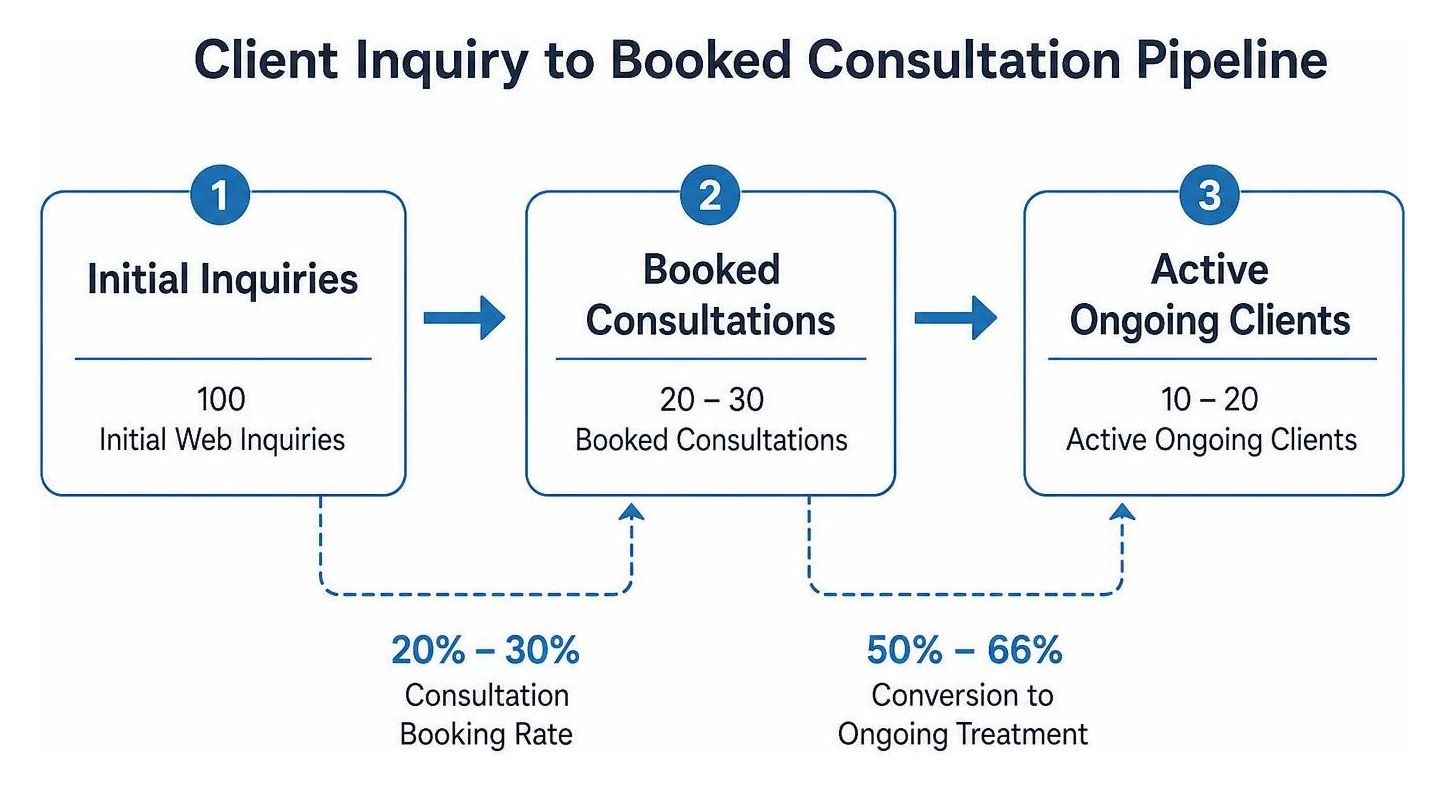
If an ad campaign yields a $50 cost-per-lead but operates at a 25% consult-and-show rate, the actual cost per active client in your chair is roughly $200. Measuring cost per active client rather than cost per lead prevents you from wasting marketing budget on unaligned inquiries.
By using privacy-compliant offline conversion tracking, you can pass anonymized milestone data back to your marketing platforms. Accounts that pair first-party data with offline conversions see a median 10% lift in campaign efficiency over standard tracking setups. Similarly, shifting ad bidding strategies to target actual conversion value can improve returns by a median of 14%.
For a detailed breakdown of evaluating intake pipelines, read our resource on A practical guide to comparing therapist lead generation systems.
Avoiding Common Pitfalls in Practice Scaling
As practices expand, common marketing mistakes can cause operational bottlenecks:
- Practitioner Burnout: Launching aggressive marketing campaigns before establishing structured intake systems can overwhelm solo clinicians with administrative follow-ups.
- Unsegmented Patient Outreach: Sending generic broadcast communications instead of tailored educational updates tailored to specific client interests.
- Ignoring Inbound Lead Speed: Leaving consultation requests unaddressed for more than 24 hours. Prospective clients typically contact two to three providers before booking; delayed responses mean lost appointments.
- Failing to Track Referral Sources: Neglecting to record how every new client found your practice, making it impossible to identify which networking relationships or search terms drive your growth.
Frequently Asked Questions About Marketing a Therapy Practice
How does marketing for therapists differ from traditional service marketing?
Therapist marketing requires higher standards of confidentiality, ethics, and empathy than traditional retail or home services. To explore this in detail, check out our guide on how is marketing for therapists different. In therapy marketing, trust and client safety take priority over hard-sell tactics and exaggerated guarantees.
Can solo therapists market effectively without relying on paid advertising?
Yes. Solo practitioners can build a full caseload by combining search engine optimization, an optimized Google Business Profile, active profiles on specialized directories, and relationships with local medical and mental health professionals.
How long does it take for practice SEO to generate consistent client inquiries?
Search engine optimization is a long-term investment. While local directory updates and Google Business Profile optimizations can generate inquiries in just a few weeks, building broad search engine authority for competitive specialty terms typically takes three to six months. Learn more about organic ranking timelines in our overview of how long does SEO take.
Conclusion and Practice Growth Roadmap
Sustainable growth for a mental health practice is not built on aggressive sales tactics or complicated marketing funnels. It comes from creating an authentic, integrated system that educates your community, communicates your clinical strengths, and offers a smooth, welcoming intake experience for individuals seeking care.
When you align your messaging, website user experience, local SEO, referral relationships, and automated intake workflows, marketing stops feeling like a chore. It becomes a reliable, ethical extension of your practice’s mission to help people heal.
At Marketing Magnitude, we build connected marketing platforms, website architecture, and intelligent CRM systems designed specifically for service and wellness practices. If you are ready to modernize your intake pipeline and grow your private practice with clarity, explore our specialized therapist marketing CRM platform and discover how connected systems make sustainable growth predictable.
Get Started Now
Fill out this form to start your journey to next-level marketing solutions for your business.