

Open uping the Power of Data-Driven Marketing
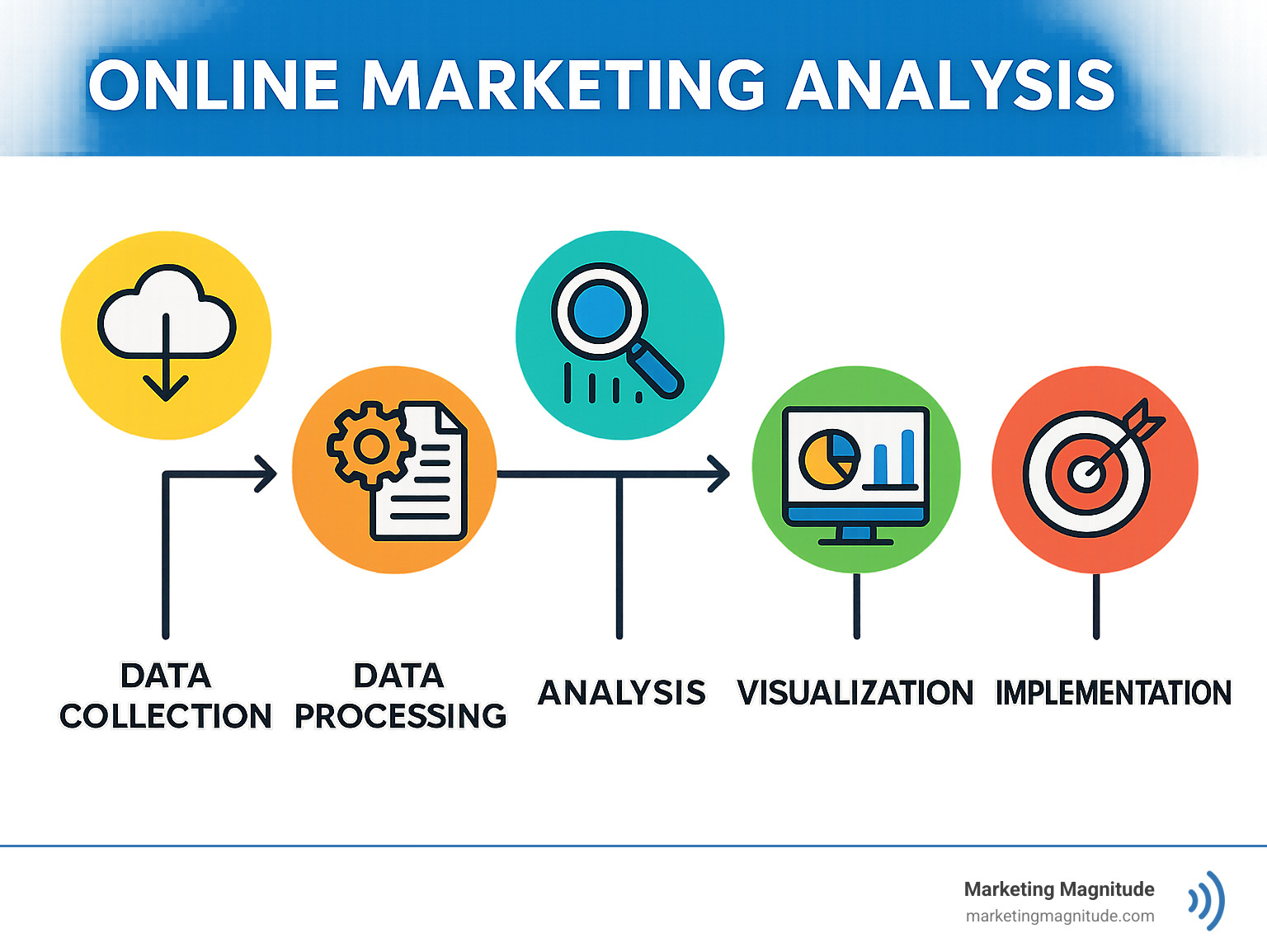
Online marketing analysis is the process of collecting, measuring, and interpreting data from your digital marketing channels to improve performance and make informed business decisions.
What is online marketing analysis?
- The systematic evaluation of digital marketing performance across channels
- Collection and analysis of data from websites, social media, email, and advertising
- Interpretation of metrics to identify trends, opportunities, and areas for improvement
- Application of insights to optimize campaigns and increase ROI
In today's digital landscape, marketing without analysis is like driving with your eyes closed. The explosion of marketing channels and consumer touchpoints has created both opportunity and complexity. Businesses now have access to unprecedented amounts of data, but the real challenge lies in changing that data into actionable insights.
As Philipp Loringhoven notes, "Advertising is becoming more expensive and ineffective. Why? Because there is more and more advertising. This is precisely why analytics is becoming increasingly indispensable in marketing."
The statistics support this urgency:
- Personalized ads achieve click-through rates 202% higher than non-personalized ads
- Companies that centralize their marketing data can cut reporting time by up to 50%
- Businesses implementing thorough data strategies have seen 30% increases in campaign effectiveness
Effective online marketing analysis isn't just about collecting data—it's about asking the right questions, measuring what matters, and creating a continuous feedback loop that drives improvement.
I'm Kelly Rossi, a digital marketing expert with over 20 years of experience implementing data-driven online marketing analysis strategies that deliver measurable growth for businesses across various industries. My approach to online marketing analysis focuses on converting raw data into actionable insights that drive real business results.
What Is Online Marketing Analysis?
Online Marketing Analysis Defined
Online marketing analysis is like having a compass in the digital wilderness. It's the process where we gather, analyze, and make sense of all the data from your digital marketing channels. Think of it as detective work that reveals what's working, what isn't, and why.
When we talk about online marketing analysis at Marketing Magnitude, we're talking about changing numbers into stories. Not just collecting data, but understanding what it means for your business. Are your Instagram ads connecting with customers? Is your email campaign driving sales? Which keywords are bringing quality traffic to your website?
I love how Sara Swaney, an education platform director, puts it: "Online marketing analysis allows us to look at our data across platforms — web and app — to understand the full journey of our users. We've been able to cut our reporting time by 50%."
That's the power of good analysis – it saves time while providing deeper insights.
Why Businesses Need Online Marketing Analysis
Let's be honest – digital marketing isn't getting any cheaper or less competitive. Without proper analysis, you might as well be throwing darts in the dark. Here's why online marketing analysis has become essential:
First, it gives you measurable ROI. Every dollar you spend on marketing should be accountable, and analysis provides that accountability. You'll know exactly which campaigns are generating revenue and which are just burning budget.
Second, it enables precision targeting. When you understand your audience's behavior patterns, you can create messages that speak directly to their needs. This is why personalized ads achieve click-through rates a whopping 202% higher than generic ones. That's not just a small improvement – it's a game-changer!
Third, analysis drives cost efficiency. One of our educational clients cut operational costs by 70% by using data to streamline their marketing efforts. In today's economy, who couldn't use that kind of saving?
Fourth, it gives you a competitive edge. While your competitors are guessing, you'll be making decisions based on solid evidence.
Finally, it powers personalization. As Philipp Loringhoven wisely notes: "It is important to recognize patterns and use them for targeted communication. This is how customer-oriented companies operate. When they combine data from sales, support, or shipping to display messages at the right time in the right format on the right channel, consumers feel that they are being taken seriously."
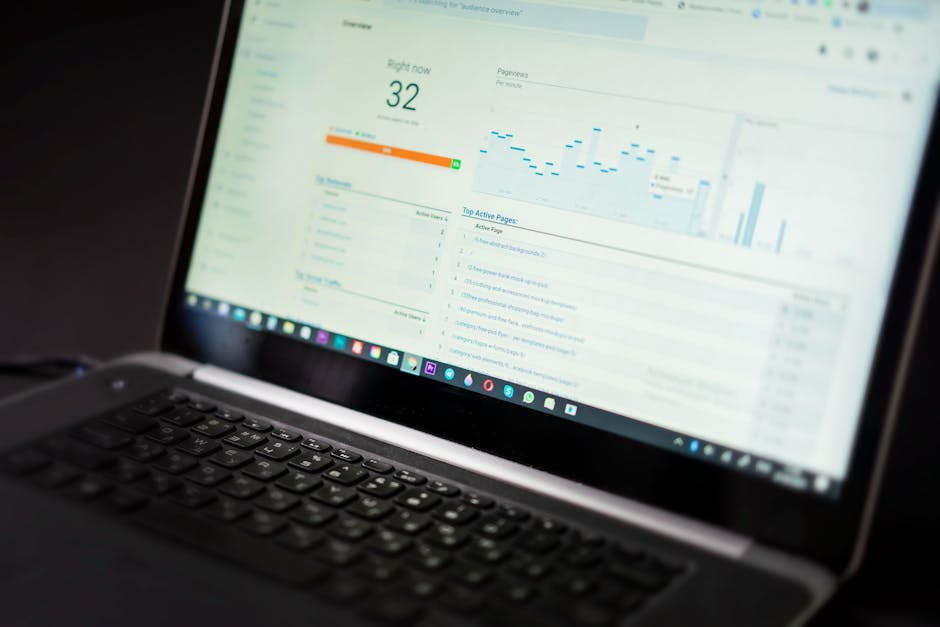
We've seen the transformative power of online marketing analysis at Marketing Magnitude. A local restaurant chain here in Las Vegas came to us struggling to drive online orders. After implementing our analytics-driven approach, they saw online orders jump by 45% – all because they started making decisions based on data rather than hunches.
Marketing without analysis is like sailing without navigation. You might eventually reach shore, but you'll waste a lot of time and resources getting there. With proper online marketing analysis, you'll chart the most efficient course to your business goals.
Setting Objectives, Metrics & Data Sources
If you're going to steer the sea of marketing data, you'll need a reliable map and compass. In online marketing analysis, these essentials come in the form of clear objectives and the right metrics to track your progress.
Mapping Goals to KPIs
Every successful marketing campaign begins with crystal-clear goals. I've found that using the SMART framework (Specific, Measurable, Achievable, Relevant, Time-bound) transforms vague wishes into concrete targets you can actually hit.
Think about what you're really trying to accomplish. Are you focused on traffic generation – bringing more eyes to your website through visits, understanding who's new versus returning, or which channels are delivering visitors? Maybe you're more concerned with engagement – how long people stay, how many pages they explore, or how they interact with your content.
For many of my clients, revenue generation is the ultimate goal, measured through conversion rates, average order values, and return on ad spend. Others prioritize customer retention, tracking customer lifetime value and repeat purchase rates.
I remember working with a small business in Austin who came to Marketing Magnitude with a fuzzy goal of "getting more leads." We refined this to: "Increase qualified lead generation by 50% within six months." This clarity allowed us to track specific KPIs – conversion rate, cost per lead, and lead quality – giving us real benchmarks for success.
Actionable vs. Vanity Metrics
Not all numbers tell a useful story. In online marketing analysis, distinguishing between metrics that guide decisions and those that just look impressive can save you from costly missteps.
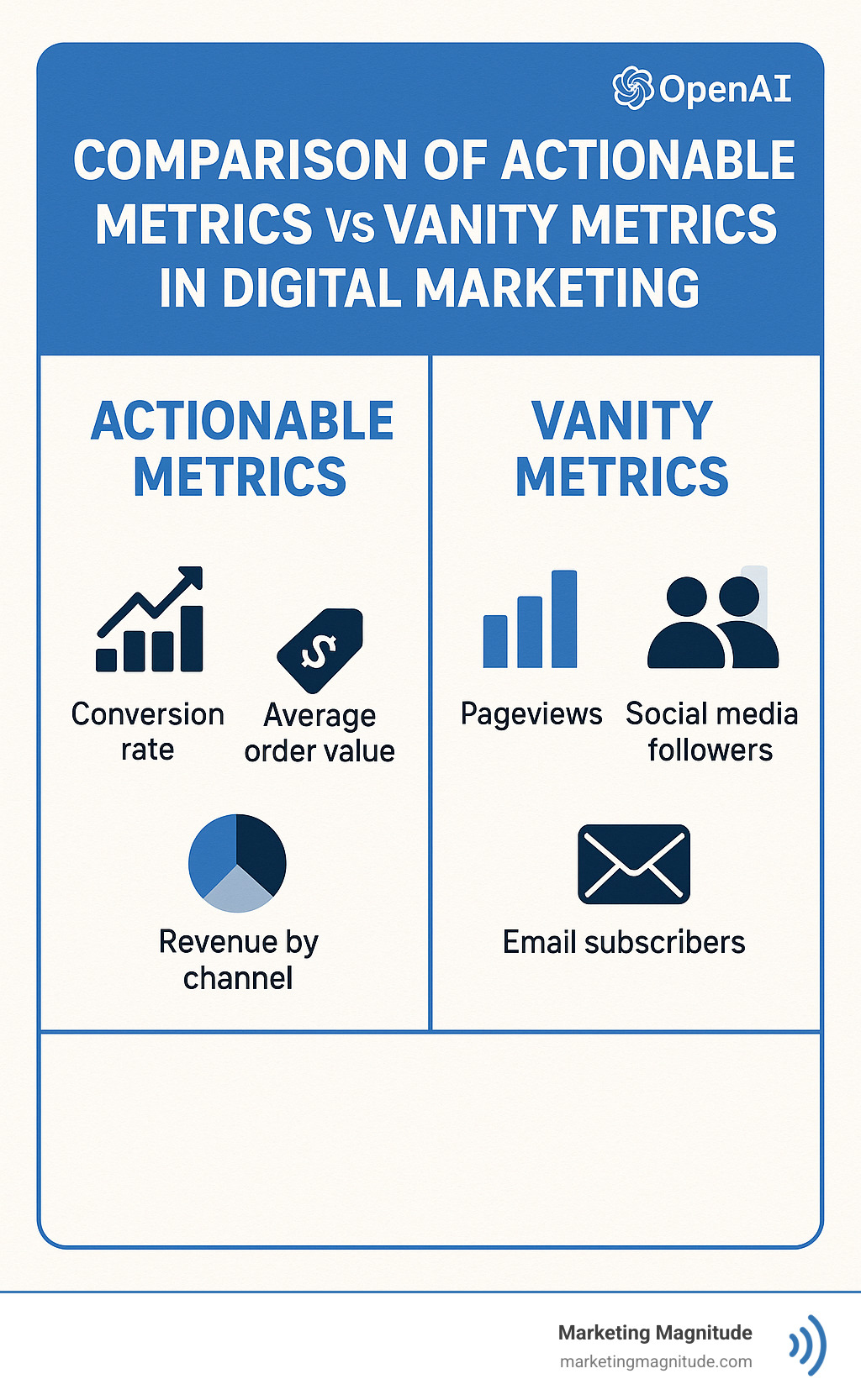
I've seen too many businesses celebrate 10,000 page views without realizing those visitors weren't converting. Or boast about a massive email list where only 2% of subscribers ever open a message. These vanity metrics might look good in a report, but they don't help you improve.
Instead, focus on actionable metrics that tell you what's working and what needs adjustment. Knowing your conversion rate by traffic source helps you invest in the right channels. Understanding revenue attributed to specific campaigns shows you where to double down. Tracking customer acquisition cost by channel reveals where you're getting the best return.
As I often tell my clients, "A 50% conversion rate sounds amazing until you learn it's based on just two visitors. But a 5% conversion rate from 100,000 visits? That's gold you can take to the bank."
Key Data Sources & Benchmarking
Effective online marketing analysis requires gathering intelligence from multiple sources and establishing meaningful benchmarks. Here's where to look:
Your web analytics platforms like Google Analytics 4 provide the foundation – showing how people find and interact with your site. Tools like Search Console reveal your organic search performance, while heat mapping helps visualize exactly how visitors engage with your pages.
Don't overlook your social media insights. Beyond the basic platform analytics, social listening tools capture brand mentions and sentiment that might otherwise fly under your radar.
Your email marketing platform holds treasures too – from open rates and click-throughs to subscriber growth patterns. Similarly, your CRM system connects marketing efforts to actual customer relationships and purchase histories.
Finally, your advertising platforms provide crucial data about campaign performance across channels.
At Marketing Magnitude, we help businesses in Nevada and throughout the US establish meaningful benchmarks by comparing their performance against historical data, industry averages, geographic norms, and channel-specific standards.
I'll never forget the relief on one Las Vegas e-commerce client's face when we showed them that their seemingly low 2.3% conversion rate was actually 30% above the industry average for their product category. Context matters!
More info about improving your digital marketing strategy
Essential Tools & Integration Best Practices
Choosing the Right Platform
Finding your way through the jungle of online marketing analysis tools can feel overwhelming. With so many options out there, how do you know which ones are right for your business? The secret isn't necessarily choosing the most expensive or feature-packed platform, but finding the one that fits your specific needs like a glove.
When we work with clients at Marketing Magnitude, we start by understanding their unique situation before recommending any tools. A small local business has very different needs than a multi-location enterprise!
For web analytics, Google Analytics 4 (GA4) has become the go-to choice for many businesses. Its event-based tracking model gives you incredible flexibility in understanding how users interact with your site. One of our Austin-based clients actually found GA4 more effective than their previous enterprise solution because their team found it more intuitive to use. The result? A 50% jump in team members actually using analytics data to make decisions!
For larger organizations with complex needs, platforms like Adobe Analytics offer enterprise-level capabilities, while privacy-conscious businesses often gravitate toward solutions like Piwik PRO that put data compliance front and center.
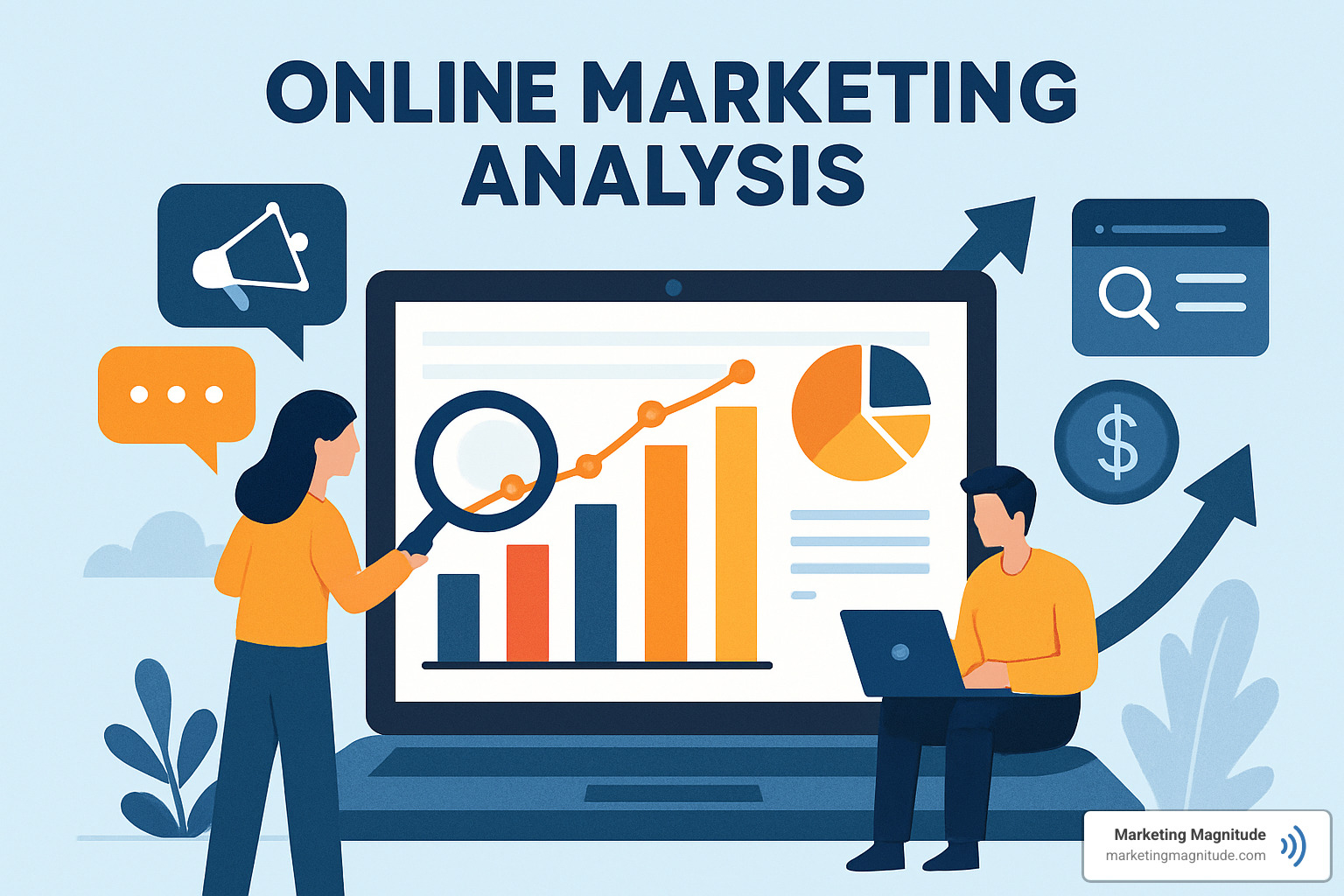
When it comes to visualizing and exploring your data, business intelligence tools like Tableau, Power BI, and Looker can transform raw numbers into actionable insights through powerful dashboards. Meanwhile, tag management systems like Google Tag Manager make it much easier to implement tracking without bothering your development team for every little change.
The best platform isn't always the shiniest one – it's the one your team will actually use and benefit from.
Integrating Multi-Channel Data
The real magic of online marketing analysis happens when you connect data from all your marketing channels. This creates what we often call a "single view of the customer" – a complete picture of how people interact with your brand across different touchpoints.
Think about it: your customers don't experience your marketing in silos. They might see your Instagram ad, visit your website, sign up for your email list, and finally make a purchase after getting a special offer by text. Shouldn't your analysis reflect this connected journey?
One of our dance studio clients in Las Vegas saw this principle in action. By connecting data from their website, email campaigns, and booking system, they finded which dance classes were best marketed through specific channels. Some classes filled up quickly when promoted on Instagram, while others got more traction through email. This integrated approach helped them cut customer acquisition costs by 20%!
Creating this connected view requires some thoughtful planning. Consistent tracking parameters are essential – we recommend establishing a clear naming convention for your UTM parameters and using a URL builder to ensure everything is tagged correctly.
For more technical integration, API connections can automate the flow of data between platforms, while data centralization through warehouses or lakes gives you one source of truth for all your marketing data.
And don't forget about privacy and consent management. With regulations like GDPR and CCPA, proper handling of customer data isn't just good practice – it's the law. Make sure your tracking respects user privacy preferences and complies with relevant regulations.
Online Marketing Analysis in Action
So what does online marketing analysis actually look like in practice? Let's paint the picture of how data transforms into action.
Imagine you're running a summer promotion for a product line. With proper analysis tools in place, you can monitor performance in real-time, spotting if certain ads or channels aren't delivering as expected. Rather than waiting until the campaign ends to learn it underperformed, you can make adjustments on the fly.
For a retail client of ours, we implemented a tiered dashboard approach that revolutionized how they used data. The executive team got high-level summaries showing overall performance, marketing managers received detailed metrics for their areas of responsibility, and channel specialists accessed granular data for day-to-day optimization. This democratization of data increased their marketing team's productivity by 35% because decisions could be made more quickly at the appropriate level.
Effective online marketing analysis also helps you understand how different marketing touchpoints work together through cross-channel attribution. Instead of giving all the credit to the last click before purchase, you can see how your social media awareness campaigns might be setting the stage for search ads to convert later in the customer journey.
Perhaps most powerfully, good analysis enables scenario planning and forecasting. Using historical data, you can predict how different budget allocations might perform, helping you make more confident decisions about where to invest your marketing dollars.
At Marketing Magnitude, we've found that making data accessible and actionable for everyone involved in marketing decisions creates a culture of continuous improvement. When everyone can see what's working (and what isn't), your entire organization becomes more agile and effective.
Latest research on personalized ads
Roadmap, Predictive Analytics & Future Trends
Step-By-Step Implementation
Turning data into decisions isn't something that happens by magic. At Marketing Magnitude, we've found that the most successful online marketing analysis happens when you follow a clear roadmap. Think of it as your GPS for navigating the sometimes overwhelming world of marketing data.
Our proven 5-step framework has helped businesses from Nevada to Texas transform how they use data:
First, plan your analytics strategy with intention. This means sitting down with stakeholders to define what success looks like for your business. A client once told me, "Before working with Marketing Magnitude, we were measuring everything but understanding nothing." Start by clarifying those business objectives and the KPIs that will tell you if you're on track. Document your current performance—you can't celebrate improvement if you don't know where you started!
Next, collect the right data by building a solid tracking infrastructure. This is where the technical foundation gets laid. We help clients set up proper tracking codes, configure event tracking for important user actions, and validate that what you're collecting is accurate. The last thing you want is making decisions based on faulty data!
The third step is where things get interesting: analyze what you've collected to extract meaningful insights. This isn't just about running reports—it's about uncovering the story behind the numbers. By segmenting your data and comparing against benchmarks, patterns emerge that might surprise you. One e-commerce client finded that their lowest-priced products actually had the worst ROI when marketing costs were factored in—a complete reversal of their previous strategy.
Then comes the most important part: act on what you've learned. All the analysis in the world means nothing if you don't make changes based on the insights. Design A/B tests to validate your hypotheses, shift resources to high-performing channels, and adjust your messaging based on what resonates with your audience. This is where data transforms into business results.
Finally, iterate and optimize continuously. Marketing is never "set it and forget it"—it's an ongoing cycle of refinement. Monitor how your changes perform, expand your tracking as you grow, and keep evolving your dashboards to answer new business questions.
This framework helped a Nevada e-commerce client increase conversions by 28% in just three months by systematically identifying and fixing friction points in their purchase journey.
Leveraging Predictive & Real-Time Insights
The most exciting evolution in online marketing analysis isn't looking backward—it's looking forward. Predictive analytics and real-time insights are changing the game for marketers who want to stay ahead of the curve.
Predictive analytics helps you answer the question "what will happen next?" rather than just "what happened before?" Imagine being able to identify which customers are likely to leave before they actually do, or predicting which content topics will perform best before you invest in creating them.

We helped a Las Vegas hospitality client implement predictive models that now forecast demand patterns with 85% accuracy. This allows them to adjust their marketing spend weeks ahead of seasonal shifts, giving them a competitive edge in a crowded market.
AI-powered models can now determine the likelihood of conversion for different customer segments, estimate how campaigns will perform before they launch, and even optimize your marketing budget allocation automatically. One client told me, "It feels like having a crystal ball for our marketing department."
Equally powerful is the rise of real-time analytics. In today's digital environment, waiting days or weeks to analyze campaign performance can mean missing critical opportunities. Real-time insights enable:
- Dynamic campaign adjustments that shift budget to high-performing segments automatically
- Personalized user experiences that adapt based on behavior as it happens
- Immediate threat detection for brand reputation issues or competitive activities
A travel company we work with now uses real-time analytics to adjust their ad creative based on weather conditions in target markets—showing sunny beach destinations to people experiencing rainy days and seeing conversion lifts of over 20% as a result.
The combination of predictive modeling and real-time capabilities creates a powerful feedback loop that continuously improves your marketing performance without constant manual intervention.
Common Challenges & How to Overcome Them
Even the best-laid plans for online marketing analysis face obstacles. Let's talk about the challenges we see most often and how to tackle them head-on.
Data silos are perhaps the most common roadblock. When information is trapped in disconnected systems, you only see fragments of the customer journey. A United States retailer we worked with initially had data spread across seven separate platforms—their website, email platform, CRM, social media, in-store POS, customer service system, and ad platforms. By implementing data integration solutions and connecting these systems through APIs, they reduced reporting time by 65% and gained insights they never had access to before.
Data quality issues can undermine even the most sophisticated analysis. As one of our Austin clients likes to say, "Garbage in, garbage out." Establishing data governance protocols and automated validation checks helps ensure you're making decisions based on accurate information. After implementing data quality scoring, this service provider saw a 40% improvement in their team's confidence when making data-driven decisions.
Privacy regulations like GDPR and CCPA have changed the landscape of data collection. Rather than seeing this as a limitation, we help clients view it as an opportunity to build trust with their audience. A Nevada healthcare client maintained 93% of their analytics capabilities while achieving full compliance by being transparent about data usage and implementing proper consent management.
Skill gaps within marketing teams can create bottlenecks when it comes to analyzing data effectively. We believe in empowering our clients through knowledge transfer. Marketing Magnitude's training program helped one client's marketing team increase their analytics proficiency by 75%, allowing them to make data-driven decisions independently rather than always relying on external support.
Finally, analysis paralysis is real! When you have access to mountains of data, it can be overwhelming to determine what actually matters. We help clients implement tiered reporting with clear action thresholds so they know exactly when and how to respond to data insights. An e-commerce client reduced their campaign optimization time from weeks to days by implementing decision frameworks that clarified exactly what metrics should trigger specific actions.
As one Marketing Magnitude client beautifully summarized: "We went from drowning in data to surfing on insights. The difference wasn't more data—it was better organization, clearer priorities, and actionable frameworks."
The journey to mastering online marketing analysis isn't about avoiding challenges—it's about having the right partner to help you steer them successfully.
Conclusion
The digital marketing landscape shifts beneath our feet every day, making online marketing analysis not just a nice-to-have but an absolute must for business success. Throughout this guide, we've seen how turning raw numbers into meaningful insights can transform your marketing from guesswork into a precision instrument.
Let's take a moment to reflect on what we've covered:
First and foremost, online marketing analysis serves as the compass for your marketing journey. It helps you understand not just what's happening with your campaigns, but why it's happening and what to do about it. Without it, you're essentially marketing blindfolded.
Setting clear objectives isn't just a planning exercise – it's about creating a direct line between your marketing activities and business outcomes. When you map specific KPIs to your goals, you create accountability and focus that drives real results.
One lesson that has saved our clients countless hours and dollars is learning to separate actionable metrics from vanity metrics. That impressive-looking spike in page views means nothing if it doesn't lead to conversions or other business outcomes. At Marketing Magnitude, we've helped businesses in Las Vegas and beyond focus on numbers that actually move the needle.
The magic really happens when you connect the dots between channels. By integrating data from your website, social platforms, email campaigns, and ads, you begin to see the complete customer journey rather than disconnected fragments. One of our Austin clients described this moment as "finally seeing the forest instead of just individual trees."
Remember our five-step framework: plan, collect, analyze, act, and iterate. This isn't a one-time process but a continuous cycle that gets more powerful with each revolution. The beauty of this approach is that it works whether you're a solo entrepreneur or a marketing team at a Fortune 500 company.
Looking ahead, predictive analytics and real-time insights represent the next frontier. Imagine not just understanding what happened yesterday but accurately forecasting tomorrow's results and adjusting campaigns in real-time. We're already implementing these approaches for clients across Nevada with remarkable results.
The truth is, the most successful companies in today's digital landscape aren't necessarily those with the biggest budgets. They're the ones making smarter decisions based on solid online marketing analysis. They're the businesses that can pinpoint exactly which marketing dollars are working hardest and why.
At Marketing Magnitude, we believe in explaining marketing data. Our transparent reporting shows you exactly what's working and what isn't, in language anyone can understand. We're passionate about helping businesses across the United States harness the power of data-driven marketing without getting lost in spreadsheets and jargon.
As marketing expert Amit Kapadia wisely noted, "Marketing analytics is often praised for its ability to make campaigns more effective, but its true value goes beyond the numbers on a dashboard." The real power of online marketing analysis isn't just better campaigns – it's better business decisions that drive growth and profitability.
Ready to bring clarity to your marketing efforts? Let's talk about how Marketing Magnitude can help you implement the strategies we've discussed and turn your marketing data into your competitive advantage.


