Finding the Right Ecommerce Solution for Your Business
Ecommerce website development packages typically range from $1,000 to $10,000+ depending on features, with three common tiers:
- Starter ($995-$2,500): Up to 100 products, template design, basic payment gateways, 2-3 week delivery
- Standard ($2,500-$5,500): Up to 500 products, semi-custom design, multiple payment options, 4-6 week delivery
- Advanced ($5,000-$10,000+): Unlimited products, custom design, advanced integrations, 8-12 week delivery
The digital marketplace has transformed how businesses connect with customers, making an online store no longer optional but essential. When launching your ecommerce presence, finding the right balance between features and budget can feel overwhelming. Many small business owners struggle to determine which platform and package will provide the necessary functionality without unnecessary expenses.
A well-chosen ecommerce package gives you the foundation to start selling quickly while allowing room to grow. The key is understanding what each tier offers and identifying which features are truly necessary for your specific business model.
“I went from selling to my town to selling nationwide in one week. It’s a whole new business now,” shared one store owner who found the right ecommerce solution for their needs.
I’m Kelly Rossi, and having designed and implemented ecommerce website development packages for hundreds of businesses since 2002, I’ve seen how the right platform choice can dramatically impact a company’s growth trajectory. My experience includes creating scalable ecommerce solutions that evolve with businesses from startup to enterprise level.

Ecommerce Website Development Packages: What’s Inside?
Ever ordered a meal kit that arrives with everything you need to create a gourmet dinner? Ecommerce website development packages work in much the same way – delivering all the essential ingredients for your online store in one convenient bundle.
These packages aren’t just websites; they’re complete business solutions that blend technology, design, and functionality into your digital storefront. Rather than hunting down separate pieces and trying to fit them together yourself, you get a cohesive system designed to work seamlessly from day one.
When you unwrap a typical ecommerce website development package, you’ll find a ready-to-launch online store built on established platforms like Shopify, WooCommerce, or Magento. The package includes mobile-friendly design, secure hosting with that all-important SSL certificate (the padlock that builds customer trust), and your complete product catalog setup. You’ll also get payment processing, shipping configuration, basic SEO groundwork, training materials, and technical support after you launch.
Our research shows businesses choosing comprehensive packages over piecemeal solutions typically launch 40% faster and encounter fewer technical hiccups during their first year. That’s time and headaches saved!
Want to learn more about what goes into creating a successful online presence? Check out more information about web development services.
Key deliverables in ecommerce website development packages
Let’s peek inside the box and examine what you’re actually getting when you purchase an ecommerce website development package.
Your storefront theme serves as your digital shop window – creating that crucial first impression. Depending on your package tier, you’ll receive either a customized template or a bespoke design that reflects your brand personality while adapting beautifully to phones, tablets, and desktops.
The cart and checkout process is where sales are won or lost. Your package should include a friction-free system with guest checkout options, account creation, order tracking, and confirmation emails. Higher-tier packages often add abandoned cart recovery – those gentle nudges that can recover up to 10% of almost-lost sales.
Getting your product catalog up and running is often the most time-consuming part of launching a store. Good packages include initial setup with categories, descriptions, images, pricing, inventory management, and product variations. Some even set up related product suggestions to boost your average order value.
Your customers need secure ways to pay, so payment gateway integration is essential. Expect standard options like credit card processing, PayPal, and possibly Apple Pay or Google Pay, all configured to meet security standards.
Shipping rules can be surprisingly complex. Your package should configure flat-rate options, weight-based calculations, integration with major carriers, and local pickup if needed.
Understanding store performance requires analytics setup. This typically includes Google Analytics integration, basic sales reporting, traffic source tracking, and conversion monitoring so you can make data-driven decisions.
The SEO basics in your package lay the foundation for being found online. Look for SEO-friendly URLs, meta titles and descriptions, sitemap creation, and search engine submission as standard deliverables.
Learning to manage your new digital asset is crucial, so training videos or documentation should be included to help you steer your admin dashboard and handle day-to-day operations.
Finally, a thorough “go-live” checklist ensures quality control before launch, with cross-browser testing, mobile responsiveness checks, payment processing verification, security audits, and proper error page setup.
Common pitfalls when buying ecommerce website development packages
While these packages offer tremendous convenience, there are several potential traps that can catch unwary business owners. Consider these common pitfalls before signing any contract:
Watch for hidden fees that can balloon your budget. Many packages advertise an attractive base price but tack on charges for what should be standard features. Always clarify costs for domain registration and renewal, ongoing hosting fees, SSL certificate renewal, payment gateway transaction fees, and subscription costs for add-on apps.
Template lock-in can become frustrating as your business evolves. Some lower-tier packages severely limit your ability to customize your store’s appearance or functionality, essentially putting your brand in a box you might outgrow.
Many basic packages include only minimal SEO groundwork. Without proper optimization, your beautiful new store might remain invisible to potential customers – like opening a physical store in an alley with no signage.
Consider your future growth when selecting a package. Some providers create limited upgrade paths that make scaling expensive or cumbersome. Ask specific questions about how your store can evolve as your business expands.
The quality of support varies dramatically between providers. Some offer only email assistance with 48-hour response times, while others provide dedicated account managers and 24/7 help. Your package should clearly define what support you’ll receive and for how long.
If you’re transitioning from an existing platform, ensure your package includes comprehensive data migration. Missing product information, customer records, or order history can create significant headaches and damage customer relationships.
Finally, beware of scope creep – those vague deliverables that result in unexpected costs. A well-defined package should clearly state what’s included and what costs extra.
As one business owner told us: “I thought I was getting a complete solution, but ended up paying almost double the package price for ‘extras’ that I assumed were included. Always get everything in writing.”
By understanding what’s truly inside your ecommerce website development package and avoiding these common pitfalls, you’ll be well-positioned to choose a solution that supports your business goals without unexpected surprises.
Starter vs. Standard vs. Advanced: Feature Showdown
When shopping for ecommerce website development packages, it’s a bit like choosing between economy, business, or first-class tickets. Each tier offers a different experience designed to match where your business is today—and where it’s heading tomorrow.
I’ve helped dozens of businesses find their perfect package fit, and the first question I always ask is: “Where do you see your business in two years?” Your answer tells me more about which package you need than your current product count ever could.
Let’s break down what you’ll typically find at each level:

Starter packages (good for testing the waters)
Think of starter ecommerce website development packages as the perfect “first apartment” for your business online. They’re not fancy, but they get the job done when you’re just beginning.
These packages typically support up to 20 products and come with template-based designs that look professional but won’t stand out from the crowd. You’ll usually get a basic payment gateway (PayPal or Stripe), simple flat-rate shipping options, and email-only support when things go sideways.
The beauty of starter packages? They’re quick to launch—usually within 2-3 weeks—making them perfect for:
“My client Sarah started with a starter package for her handmade jewelry business,” I recall. “She wasn’t sure if online sales would work for her unique pieces. Six months later, she was already upgrading to handle her unexpected success!”
Entry-level packages typically start around $2,499, usually with about 6 months of basic support. Just remember—these packages are like starter homes. They’re not built for growing families, and you’ll likely outgrow yours faster than you expect.
Standard packages (growth-ready balance)
Standard ecommerce website development packages hit the sweet spot for most small to medium businesses. They’re the “Goldilocks” option—not too basic, not too complex, just right for businesses ready to get serious about online sales.
With support for 100-500 products, these packages give you room to grow. The semi-custom design options mean your store won’t look like a carbon copy of your competitors. You’ll get multiple payment gateways, more sophisticated shipping rules, and the all-important abandoned cart recovery emails (which, by the way, can recover up to 10% of otherwise lost sales).
One of my favorite features at this tier is the improved support—when your store has an issue at 9pm on a Saturday, having access to chat support rather than waiting until Monday for an email response can be a business-saver.
Standard packages typically take 4-6 weeks to launch and cost between $3,499 and $5,499. They’re perfect for established small businesses that have proven their concept and are ready to scale.
The marketing add-ons at this level make a real difference too. Look for email marketing integration, customer review functionality, and cross-sell features—these tools can boost your average order value by 10-25% with very little additional effort on your part.
Advanced & custom packages (enterprise grade)
Advanced ecommerce website development packages are the luxury vehicles of the ecommerce world—they come with all the bells and whistles, plus the option to add custom features built specifically for your business needs.
These packages remove virtually all limitations. Unlimited products? Check. Fully custom design that perfectly reflects your brand? Absolutely. Advanced integrations with your existing business systems? That’s standard at this level.
What really sets advanced packages apart is their sophistication behind the scenes. They include ERP synchronization, multi-warehouse inventory management, and the kind of automated workflows that can save your team dozens of hours each week.
“One of our clients reduced their order processing time by 78% after upgrading to an advanced package,” I often share. “The custom integrations between their inventory system and their online store eliminated almost all manual data entry.”
These premium options typically start around $4,999 and take 8-12 weeks to build properly. The longer timeline reflects the custom work and thorough testing these complex stores require. The good news? They usually include extended support periods—up to 12 months.
Advanced packages shine for established businesses with complex needs—think companies selling internationally, managing thousands of SKUs, or requiring sophisticated B2B functionality alongside their consumer offerings.
The investment in an advanced package typically pays for itself through higher conversion rates (often 1-2% higher than template stores), more efficient operations, and the ability to offer customer experiences that keep buyers coming back again and again.
Whichever tier fits your business best, your ecommerce platform is the foundation of your online success. Choosing the right package from the start can save you significant time and money down the road.
Cost & Timeline: What to Expect Before You Sign
Let’s talk money and time – the two things every business owner wants clarity on before diving into an ecommerce project. Understanding what you’re really signing up for with ecommerce website development packages can save you from budget surprises and missed launch dates.

The price spectrum for online stores typically ranges from budget-friendly $1,000 solutions to comprehensive $10,000+ builds. Most businesses find their sweet spot somewhere in between, depending on their specific needs and growth plans. Whether you’re looking at hourly rates or flat-fee packages, it’s important to understand what drives these costs and how long the journey will take from contract to launch day.
Factors that influence package pricing
When we work with clients at Marketing Magnitude, we’re always transparent about what affects the bottom line. Think of your ecommerce website development package as a custom recipe – the ingredients you choose determine the final cost.
Project scope is your foundation – the more features and functionality you need, the higher the investment. Those custom bells and whistles always cost more than standard implementations, but they might be worth every penny for your unique business model.
Your choice of platform license matters too. Some platforms like Shopify include monthly subscription fees, while others like WooCommerce might have lower upfront costs but require more development hours. This is something we carefully discuss with clients to find the best long-term value.
The beauty of your store – or design complexity – directly impacts pricing. Think of it like home decorating: using a template with some color changes is more affordable than building a completely custom look from scratch. How unique do you need to be?
Got thousands of products? Your catalog size and structure will influence both cost and timeline. Complex product variations (think clothing with multiple sizes, colors, and styles) require more setup time and possibly custom development for efficient management.
Every connection to external systems – whether it’s payment processors, shipping providers, inventory systems, or your CRM – adds to the project scope. These third-party integrations are often essential but do impact the bottom line.
If your business must meet specific compliance requirements like PCI DSS for payments, GDPR for European customers, or ADA accessibility standards, implementing these correctly requires additional expertise and testing.
The level of hand-holding you need matters too. Premium support level agreements with faster response times and longer durations naturally cost more, but can be a lifesaver when issues arise.
Finally, developer location influences rates. While it might be tempting to choose the lowest bid, communication challenges and quality issues can increase your total cost over time. We’ve seen many businesses come to us after offshore projects went sideways, ultimately spending more than if they’d chosen a reliable partner from the start.
Want to understand exactly what’s driving your ecommerce project costs? Check out our SEO services page for more insights on building search-friendly stores that actually get found online.
Typical build timeline from kickoff to launch
Rome wasn’t built in a day, and neither is a successful online store. A realistic timeline for implementing an ecommerce website development package typically spans 2-12 weeks, depending on complexity. Here’s what that journey looks like:
The findy phase takes about a week, where we get to know your business inside and out. This includes initial consultations, requirements gathering, platform selection, and that exciting project kickoff meeting where everyone aligns on goals.
Next comes the design phase (1-2 weeks), where your store’s visual identity takes shape. We start with wireframes (the skeleton), then create visual design concepts, work through revisions, and finally get your stamp of approval on the look and feel.
The development phase (2-4 weeks) is where the magic happens. This includes store setup and configuration, implementing the approved design, setting up your product catalog, connecting payment and shipping options, and building any custom features your business needs.
No quality store launches without proper testing (about 1 week). This crucial phase includes functionality testing, making sure everything works across different browsers, verifying mobile responsiveness, optimizing performance, and conducting security checks.
The launch preparation week includes finalizing content, implementing SEO best practices, setting up analytics to track your success, training your team on the admin system, and going through a comprehensive pre-launch checklist.
Finally, post-launch optimization is an ongoing process where we monitor performance, fix any emerging issues, implement improvements, and integrate marketing tools to drive traffic to your beautiful new store.
In our experience at Marketing Magnitude, the most common delay in ecommerce projects is content preparation – specifically, product descriptions, images, and policy pages. Having these materials ready before project kickoff can significantly reduce your timeline and get you selling sooner.
Different providers offer varying timelines – some promise delivery in as little as 2-3 weeks for basic packages, while comprehensive solutions typically require 4-6 weeks or more. The key is finding the right balance between speed and quality for your specific business needs.
Want to explore how we approach ecommerce projects with transparent tracking and realistic timelines? Visit our web development services page to learn more about our approach to building successful online stores.
How to Pick (and Upgrade) the Right Package
Choosing the perfect ecommerce website development package is a bit like finding the right home—it needs to fit your current needs while giving you room to grow. I’ve guided hundreds of businesses through this decision, and I’ve found that a thoughtful approach saves both money and headaches down the road.
Step-by-step selection checklist
Start by getting crystal clear on your business vision. Are you selling handcrafted jewelry to local customers, or do you have dreams of international expansion for your tech gadgets? Your goals dramatically impact which package makes sense.
Next, make a coffee and sit down to honestly audit your requirements. If you’re launching with just 15 products but plan to expand to 200 within a year, a starter package might leave you scrambling for an upgrade too soon. Think about payment methods your customers expect, shipping options you’ll need, and any systems (like your accounting software) that should connect to your store.
“Taking the time to thoroughly vet three different providers saved us thousands in the long run,” one of our clients told me recently. “We found one that included features as standard that others charged premium prices for.”
When shortlisting vendors, look beyond flashy websites. Check their portfolio for businesses similar to yours, read reviews, and ask about their support team. Is it in-house or outsourced? What hours are they available? These details matter when your store has an issue at 8 PM on a Saturday.
Before signing anything, request demos of the actual admin interface you’ll be using daily. Is it intuitive? Can you easily update products or process orders? The prettiest storefront in the world won’t help if you can’t manage it efficiently.
Don’t forget to read the fine print in service level agreements. I’ve seen businesses unpleasantly surprised when they finded their “unlimited support” only covered email tickets with 48-hour response times.
Finally, budget realistically by factoring in not just the package cost but ongoing expenses like hosting fees, platform subscriptions, and app integrations. And don’t be shy about negotiating for extras like additional training hours or extended support periods—most providers have some flexibility.
When to upgrade your ecommerce website development packages
Even the most perfect package eventually needs an upgrade as your business evolves. Here are the telltale signs it’s time:
Your site starts crawling during high-traffic periods or flash sales—this is your first warning that you’ve outgrown your current setup. Similarly, if you’re expanding into new geographic markets, you’ll likely need more sophisticated capabilities for multiple languages, currencies, and international shipping options.
Omnichannel growth is another common trigger for upgrades. When you start selling through Instagram, Amazon, or physical pop-up shops alongside your website, you need systems that keep inventory synchronized across all channels.
Pay attention to your metrics too. Declining conversion rates or increasing bounce rates often signal that customers find your user experience frustrating. An upgrade that improves navigation or checkout flow can quickly pay for itself in recovered sales.
When you find yourself creating spreadsheets to track information your store should manage automatically, it’s definitely time to look at more advanced packages with better automation features.
Avoiding “package regret”: red flags to watch
I’ve seen too many business owners experience “package regret” after rushing into the wrong solution. Watch out for these warning signs:
One-size-fits-all promises should immediately raise eyebrows. Every business has unique needs, and providers who claim their solution works perfectly for everyone without customization are oversimplifying.
Beware of packages without a clear upgrade roadmap. Quality providers should explain exactly how their solution can grow with your business without requiring a complete rebuild.
Proprietary platform lock-in is another serious concern. Some providers build on closed systems that make it extremely difficult to take your data elsewhere if you want to switch providers later.
Vague support terms often lead to disappointment. Support should be clearly defined with specific response times, available channels, and duration periods.
If SEO isn’t mentioned or is treated as an expensive add-on, your beautiful new store may sit empty while competitors capture your potential customers. Check out our guide on Web Design Mistakes That Lower Your Web Traffic to understand why this matters so much.
Unrealistically short timelines should also make you cautious. Quality ecommerce development takes time—anyone promising a fully-featured custom store in a week is cutting corners somewhere.
At Marketing Magnitude, we believe in transparent partnerships. We’ve seen too many businesses struggle with inadequate solutions, which is why we offer a free personalized package audit to help you find the right fit—whether that’s with us or another provider. The most important thing is that your business gets the foundation it needs to thrive online.
You might also want to view a demo of PORTO, one of our recommended themes that offers exceptional flexibility for growing businesses.
Frequently Asked Questions about Ecommerce Website Development Packages
How much does a typical package cost?
When you’re shopping for ecommerce website development packages, pricing is probably one of your first questions. The cost spectrum is quite broad, reflecting the range of features and support you’ll receive:
Starter Packages: $995-$2,500
These budget-friendly options give new businesses a chance to test the digital waters without breaking the bank. You’ll typically get a template design (nothing fancy, but professional), basic payment processing capabilities, and enough room for about 100 products. Many providers offer these entry-level packages starting at just $995, with a reasonable 30-day turnaround and ongoing technical support via email and phone.
Standard Packages: $2,500-$5,500
This middle ground is where many growing businesses find their sweet spot. You’ll enjoy semi-custom designs that better reflect your brand personality, multiple payment options to satisfy different customer preferences, and space for 100-500 products. Quality packages in this range start at $2,499 and can be ready in as little as 2-3 weeks, with generous support extending up to 12 months.
Advanced Packages: $5,000-$10,000+
For established businesses or those with complex needs, these premium solutions deliver the full package: custom designs that perfectly match your brand vision, sophisticated integrations with other business systems, and unlimited product capacity. Premium packages start at $4,999 with delivery timelines of 8-12 weeks and include extended support for up to a full year.
These prices typically cover the initial build, but don’t include ongoing expenses like:
- Platform subscription fees (Shopify plans range from $27 to $159 monthly)
- Transaction fees (usually 2-3% per sale)
- Add-on app subscriptions for extended functionality
- Hosting and domain renewal costs after your initial period expires
What’s included in the setup and onboarding?
The beauty of a comprehensive ecommerce website development package is that it should take you from concept to launch with everything handled. A quality package includes a thorough onboarding process to ensure you’re comfortable managing your new digital storefront.
Your journey typically begins with a findy phase where your development team learns about your business goals, product offerings, and specific needs. This consultation shapes the entire project, helping prioritize features and establish realistic timelines.
Once planning is complete, the technical setup begins. Your team will handle platform installation, customize your chosen theme to match your brand, configure payment gateways so you can accept money, set up shipping methods and tax rules, and establish automated email notifications for orders.
The content phase is where your store truly comes to life. Depending on your package, the team will create your category structure, upload an initial batch of products, craft essential pages like About Us and Contact, and establish legally required policies for privacy and returns.
Before you take the reins, proper training ensures you can confidently manage your store. This typically includes personalized walkthroughs of your admin dashboard, tutorials on adding products and processing orders, guidance on content updates, and both video and written documentation for future reference.
Quality assurance is the final pre-launch step, where your development team tests functionality across devices, verifies mobile responsiveness, ensures payments process correctly, checks browser compatibility, and optimizes load times for a smooth customer experience.
When launch day arrives, your team handles technical details like DNS configuration, SSL certificate installation, search engine submission, and analytics setup. They’ll also stand by for troubleshooting during those critical first days.
In our experience, the most successful launches happen when packages include a dedicated project manager who guides you through each milestone, ensuring no detail is overlooked.
Can I migrate or scale my package later without rebuilding from scratch?
One of the most common concerns we hear is whether an ecommerce website development package will become a digital dead-end as your business grows. The good news is that with proper planning, your online store can evolve alongside your business.
The platform you choose plays a significant role in future flexibility. Open-source platforms like WooCommerce and Magento generally offer more freedom for future migrations because you own and control all your data and code. SaaS (Software as a Service) platforms like Shopify make scaling within their ecosystem incredibly smooth but can present more challenges if you ever want to move to a completely different platform.
Your data portability is another key consideration. A well-built store should allow you to export product information, customer data, and order history in standard formats that other systems can understand. However, be aware that custom features developed specifically for one platform may not transfer easily to another.
Most reputable providers offer clear upgrade paths as your business grows. These might include:
- Moving up tiers within the same platform (like upgrading from Shopify Basic to Shopify Plus)
- Adding functionality through apps and integrations without changing your core platform
- Extending your existing store with custom development rather than starting over
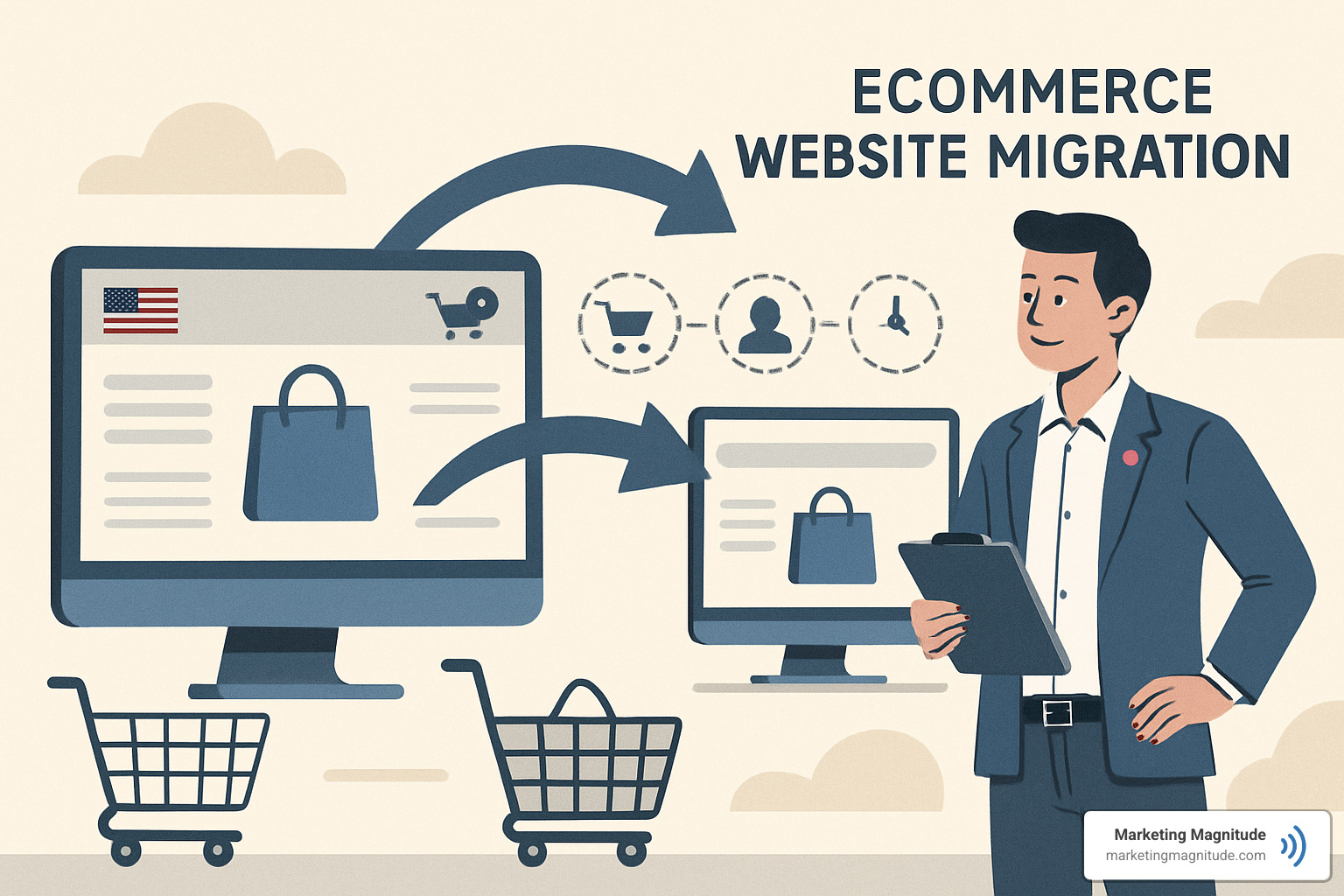
If you do need to change platforms entirely, many providers offer specialized migration services that transfer your product data, preserve customer accounts, maintain order history, and keep your URL structure intact to protect your hard-earned SEO rankings.
At Marketing Magnitude, we believe in future-proofing your investment. We design our ecommerce website development packages with scalability in mind, using modular approaches that allow your store to grow without requiring a complete rebuild. This foresight saves our clients significant time and money as their businesses expand.
As one client shared with us: “We started with their basic package but quickly outgrew it. The upgrade to their standard package was seamless, with no disruption to our business operations.”
Conclusion
Selecting the right ecommerce website development package doesn’t have to be overwhelming or break your budget. When you understand what each tier offers and align those features with your business goals, you’re making a smart investment that supports your growth journey.
After exploring all the options and considerations, here are the key insights I’ve found most valuable for businesses choosing ecommerce website development packages:
Match your package to where you are in your business journey. Those starter packages are perfect when you’re testing the waters with a new concept. Standard packages hit that sweet spot for growing businesses ready to scale, while advanced packages deliver the enterprise-level functionality established businesses need.
Look beyond that upfront sticker price. I’ve seen too many business owners focus solely on the initial cost, only to be surprised by ongoing fees, support costs, and unexpected upgrade expenses down the road. The true value lies in the total cost of ownership over time.
Scalability should be non-negotiable. Your business won’t stand still, so why should your ecommerce platform? Choose a solution that can grow alongside your ambitions to avoid costly and disruptive migrations later.
Those support terms might seem like fine print now, but they become crucial the moment you need help. Verify exactly what assistance you’ll have after launch – that’s typically when you’ll need it most as real customers interact with your store.
Think ahead to where your business will be in 2-3 years. Those immediate needs are important, but selecting features with your future business plan in mind will save you headaches and expenses later.
At Marketing Magnitude, we understand the challenges of launching and growing an ecommerce business firsthand. Our team specializes in creating customized ecommerce website development packages that provide the functionality you need today while building in clear upgrade paths for tomorrow. We pride ourselves on transparent pricing, realistic timelines, and ongoing support that helps your business thrive in the competitive online marketplace.
What sets our approach apart is our real-time tracking and reporting tools that give you complete visibility into your store’s performance. This transparency allows you to make data-driven decisions about future improvements and marketing strategies rather than guessing what’s working.
Ready to explore ecommerce website development packages that truly align with your business goals? Contact our team for a personalized consultation and take the first step toward an affordable, future-proof ecommerce store that can grow with your business!

Get Started Now
Fill out this form to start your journey to next-level marketing solutions for your business.