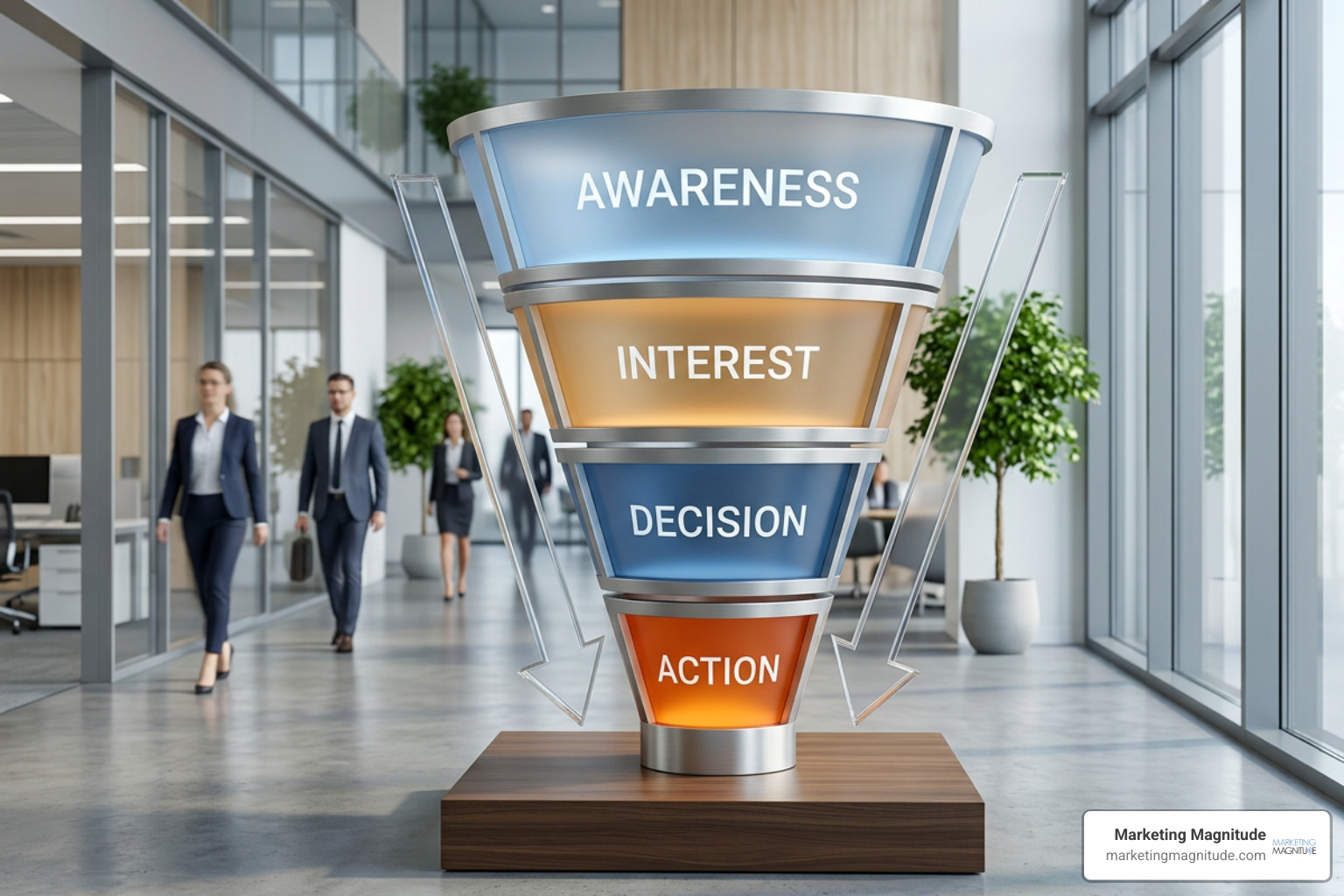
What is Lead Generation and Why Does Your Business Need It?
At its core, lead generation is the systematic approach to bringing new interest into your business pipeline. Rather than waiting for foot traffic or random word-of-mouth recommendations, a structured approach allows you to initiate contact, gather buyer intent, and build a reliable sales pipeline.
When prospects raise their hands by filling out a form, requesting a phone call, or scheduling a consultation, they transition from anonymous website visitors into identifiable opportunities. Without a reliable mechanism to attract and capture these individuals, service-based organizations face unpredictable revenue swings.
Many owners struggle with what we refer to as hidden business leaks. Discovering these 7 Hidden Business Leaks No Agency Mentions often reveals that the issue isn’t a lack of web traffic, but rather a broken lead capture system that allows interested visitors to leave without getting in touch.
Inbound vs Outbound Lead Generation
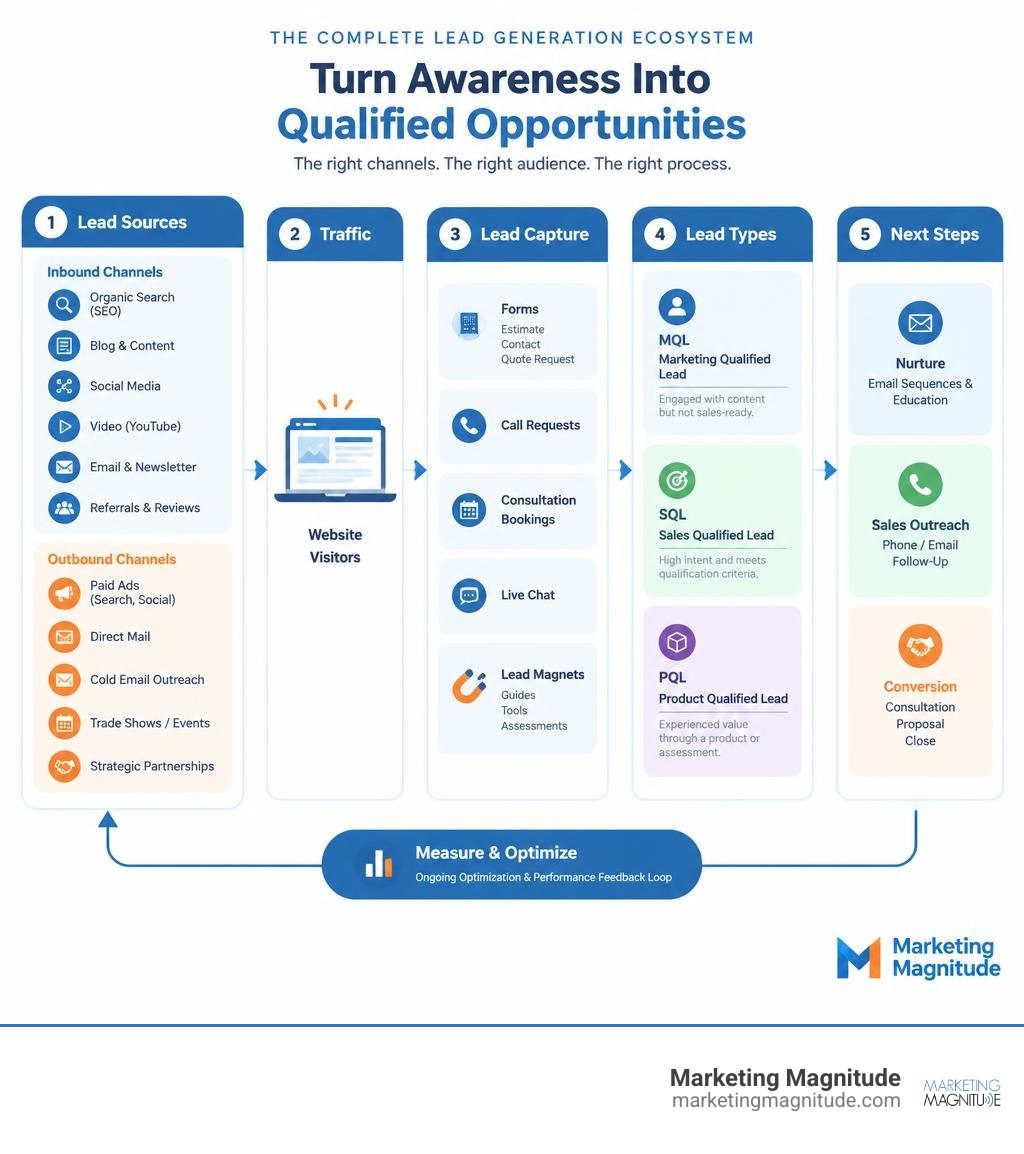
Understanding how prospects enter your business requires looking at inbound and outbound dynamics:
- Inbound Lead Generation: This strategy relies on permission marketing and organic discovery. Potential clients discover your business when searching for answers on search engines, reading informational blog posts, watching online videos, or engaging with social media channels. Because the customer initiates contact, inbound strategies typically produce prospects with higher trust and higher conversion intent.
- Outbound Lead Generation: Outbound methods involve direct proactive outreach, such as targeted paid advertising, localized direct mail, cold email outreach, or trade show networking. Outbound methods allow you to instantly target specific business personas or geographic service areas without waiting for organic rankings to develop.
Understanding Lead Types: MQL, SQL, and PQL
Not every prospect who fills out a form is immediately ready to buy. To protect your sales team’s time and prioritize outreach, we classify prospects into distinct lifecycle stages based on their engagement and readiness.
| Lead Type | Definition | Primary Trigger Actions | Ideal Next Step |
|---|---|---|---|
| MQL (Marketing Qualified Lead) | A prospect who has engaged with marketing content but hasn’t explicitly requested a sales conversation. | Downloading an informative guide, attending a webinar, or subscribing to a newsletter series. | Nurture through automated email sequences and educational content. |
| SQL (Sales Qualified Lead) | A prospect who has demonstrated clear purchasing intent and meets qualification criteria. | Submitting a estimate request form, booking a strategy call, or requesting pricing details. | Direct, immediate outreach from a account manager or sales representative. |
| PQL (Product Qualified Lead) | A prospect who has experienced value through a free trial, tool, or freemium service offer. | Hitting usage thresholds in a software trial or completing a direct service assessment online. | Target with upgrade offers, strategy consultations, or full-service options. |
Core Channels and Strategies for Generating Leads
Building a resilient business requires diversifying how you attract and capture prospects. Relying on a single acquisition channel creates vulnerability if algorithms shift or ad costs fluctuate.
SEO Lead Generation Tactics
Search engine visibility remains one of the most effective strategies for capturing immediate buyer intent. Every day, search engines handle over 8.5 billion search queries worldwide. When people search for specific solutions, appearing at the top of search results puts your brand directly in front of active buyers.
Effective search strategy involves aligning your content with user intent:
- Informational Search Intent: Prospects looking to answer general questions (e.g., “how to fix a leaky faucet”).
- Commercial Search Intent: Prospects comparing options or researching options (e.g., “best local plumbing services near me”).
- Transactional Search Intent: Prospects ready to schedule services immediately (e.g., “emergency plumber in Las Vegas”).
To maximize search traffic conversions, local service businesses need to optimize their digital presence. Our targeted Search Engine Optimization Services combine technical optimization with geographic targeting to turn search volume into inquiries.
Content Marketing and Lead Magnets
Content marketing builds brand authority by addressing potential clients’ key pain points before pitching solutions. To capture contact information from top-of-funnel readers, offering a high-value lead magnet in exchange for an email address or phone number is effective.
Common lead magnets include:
- Comprehensive guides, checklists, and downloadable resources.
- Interactive tools, calculators, and online diagnostic quizzes.
- Live or recorded educational webinars (which typically run 30 to 60 minutes).
By deploying customized offers, you can capture attention across all stages of the buying cycle. Explore our comprehensive Services: Content Marketing Services to discover how tailored content engines can elevate your organic lead capture efforts.
Paid Advertising and Social Media Channels
Paid channels provide speed, predictability, and precise audience targeting. For immediate intent, Pay-Per-Click (PPC) advertising captures users actively looking for solutions. Paid social platforms—including Facebook, Instagram, YouTube, and LinkedIn—allow you to reach precise buyer demographics. Native lead generation forms on platforms like Facebook and LinkedIn pre-fill contact details from a user’s profile, making form completion quick and seamless.
Paid advertising performance metrics:
- Email Marketing Adoption: Over 34.49% of companies utilize email marketing as a core lead generation and nurturing channel.
- Social Platform Footprint: Industry research shows that 69.56% of marketers use Facebook in their overall marketing strategy, followed closely by Instagram (60.31%) and YouTube (58.77%).
To maintain strong return on investment, paid search campaigns require precise audience targeting, conversion tracking, and regular optimizations. Take advantage of our expert Services: Paid Advertising PPC Management to build ad campaigns that deliver measurable business results.
Events, Conferences, and Offline Networking
While digital channels scale rapidly, offline channels remain valuable for building trust. Sponsoring industry trade shows, presenting at conferences, or attending regional events like Leadscon Las Vegas 2026 provide direct networking opportunities.

Connecting offline efforts back into digital platforms—using QR codes, localized landing pages, or event follow-up automations—ensures every relationship established in person is captured and nurtured effectively.
Lead Qualification, Scoring, and Conversion Optimization
Generating leads is only half the battle; ensuring those leads match your ideal client profile and convert efficiently is where true revenue growth occurs.

Implementing Lead Scoring Models
Lead scoring assigns point values to prospects based on explicit information (demographics, job roles, geographic location) and implicit behavior (email opens, specific website pages visited, content downloads).
For instance:
- Viewing a general blog post: +2 points
- Opening an email newsletter: +5 points
- Visiting a service pricing page: +15 points
- Filling out a consultation request form: +30 points
- Out-of-service geographic region: -50 points
Setting specific score thresholds allows your software to automatically trigger internal team alerts when a lead transitions from an MQL to an SQL. Review our guide on Marketing Metrics 101: Know If It’s Working to establish lead scoring metrics and reporting structures.
Landing Page Optimization and A/B Testing
A landing page’s main job is converting visitors into leads. Eliminating distracting navigation menus, crafting direct headlines, and featuring social proof helps turn traffic into inquiries.
Form length plays an important role in balancing lead volume and lead quality:
To continuously improve conversion performance, we use structured A/B testing:
- Headline Testing: Compare primary benefits against direct call-to-action statements.
- Form Placement: Test short floating lead forms against detailed step-by-step forms.
- Visual Proof: Test real team photos against video testimonials.
Connecting landing pages to analytics platform software allows for precise conversion measurement. Implementing accurate Website Conversion Tracking ensures every click, submission, and phone call is reliably measured.
Essential Tech Stack and Best Practices
Managing business growth using manual spreadsheets quickly leads to lost opportunities and missed follow-ups. Modern lead generation platforms combine customer relationship management (CRM) tools, communication capabilities, and smart integrations into a unified ecosystem.
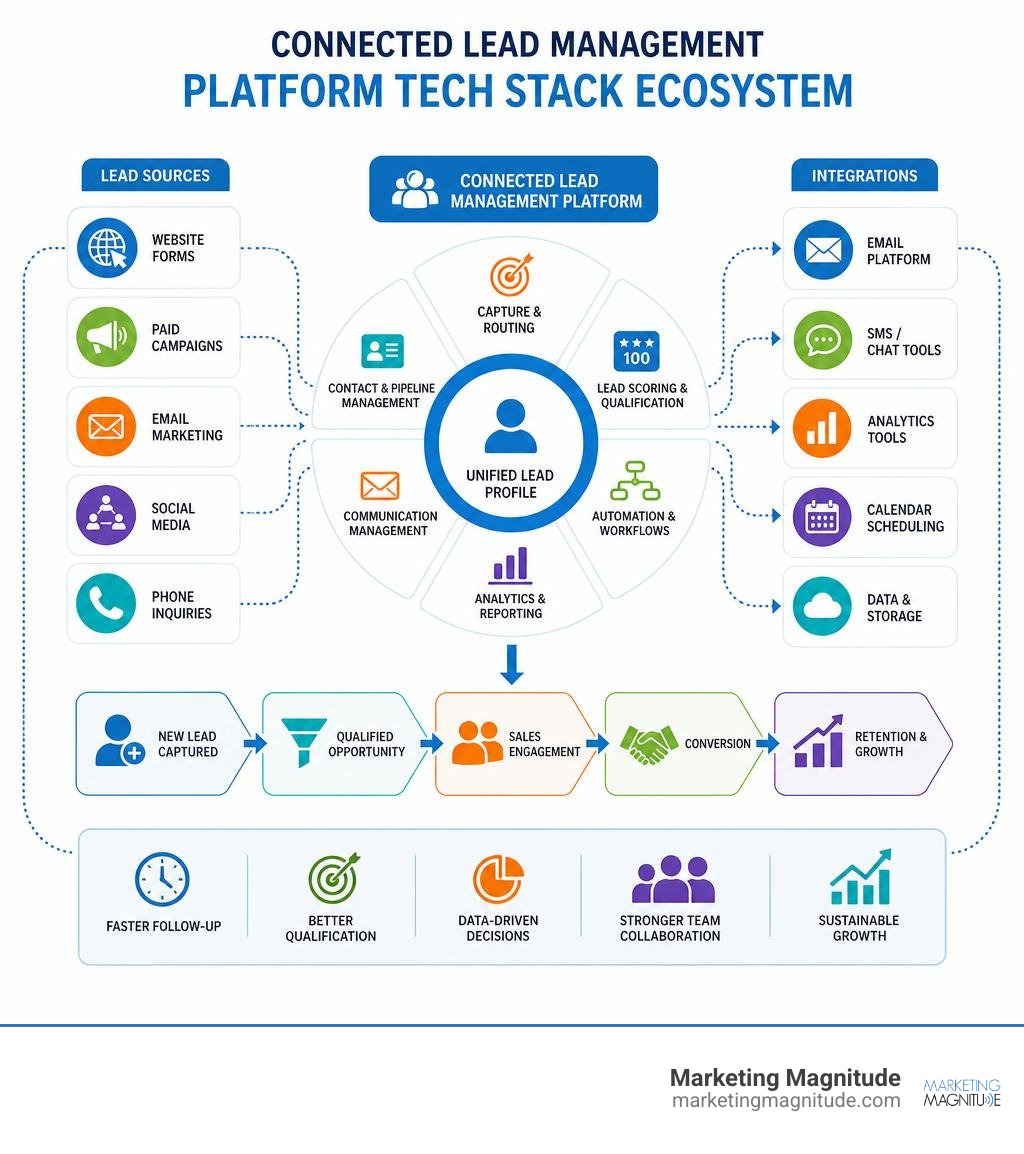
To support custom workflow orchestrations, organizations often integrate specialized communication and delivery tools like FASTPANEL alongside central CRM platforms to streamline system administration and data transfer.
Building an Integrated Automation System
Speed to lead is critical for high conversion rates. Contacting a prospect within five minutes of an inquiry significantly increases the likelihood of starting a conversation compared to waiting hours or days.
Leveraging modern automation platforms enables businesses to instantly deliver resources, send scheduling calendar links, route lead details to team members, and trigger AI-assisted live chat assistance to handle questions outside standard business hours.
Implementing automated nurture sequences keeps your brand top of mind for prospects who aren’t quite ready to buy immediately. Discover how our Services: Email Marketing Automation keeps your brand engaged with prospects automatically.
Common Pitfalls to Avoid in Campaign Execution
Even well-funded marketing campaigns can underperform if fundamental execution mistakes occur:
- Buying Lead Lists: Purchased lists hurt domain reputation and generate high spam complaints. Because these individuals never requested contact, conversion rates remain low while risking long-term deliverability.
- Delayed Follow-Up: Allowing leads to sit idle in an inbox for days leads to lost opportunities as prospects turn to faster-responding competitors.
- Siloed Tracking and Attribution: Running ads without tracking phone calls or form origins makes it difficult to see which campaigns actually yield paying customers. Implementing accurate call recording and tracking solutions overcomes this barrier. Read our guide on How Call Tracking Alone Doubles Marketing ROI to learn how clear phone attribution improves return on marketing spend.
- Sales and Marketing Misalignment: Failing to establish clear criteria for what constitutes a qualified lead causes sales teams to lose trust in marketing efforts.
Frequently Asked Questions about Lead Generation
What is the difference between lead generation and demand generation?
Demand generation builds widespread brand awareness, creates category interest, and educates the market on a specific problem. Lead generation focuses on capturing contact information (such as name, email, phone number) from individuals within that audience who express direct intent to learn more or buy.
Why is buying lead lists considered a poor strategy?
Purchased lead lists consist of individuals who have not opted in to receive communication from your brand. Contacting them often leads to high spam flag rates, damages your domain’s email deliverability, and risks non-compliance with privacy regulations. Building an audience organically yields far higher conversion rates and protects your digital reputation.
How long does it take to see results from new lead strategies?
Timelines vary by marketing channel:
- Paid Search and Paid Social Ads: Can begin capturing inquiries within days of launch.
- Search Engine Optimization (SEO) & Content Marketing: Require sustained publishing and optimization over several months to build organic search authority.
- Referral Programs: An effective customer referral strategy can deliver results quickly. In one case study, a referral program generated over 40% of all new business within six months of implementation.
Predictable Growth Through Connected Ecosystems
At Marketing Magnitude, we believe that sustainable business growth doesn’t come from isolated marketing tactics or one-off ad campaigns. Real business growth happens when your advertising, content, website design, lead capture tools, CRM technology, and automated follow-up sequences work together as one connected system.
By taking a structured approach to lead capture, establishing transparent lead qualification systems, and optimizing your outreach tools, you remove unpredictable revenue swings and replace them with clear operational insight.
Ready to build an integrated growth ecosystem that consistently attracts, converts, and nurtures qualified opportunities? Explore Growth Ecosystem Services to see how Marketing Magnitude helps service businesses scale efficiently, sustainably, and predictably.
Get Started Now
Fill out this form to start your journey to next-level marketing solutions for your business.