Why Your Phone Is the Biggest Blind Spot in Your Marketing ROI
Why call tracking alone can double your marketing ROI comes down to three things: revenue you’re currently losing, campaigns you can’t accurately measure, and high-intent leads that vanish before you even know they existed.
Here’s the short answer:
- Missed revenue: Phone calls convert to sales 10-15x more often than web forms — but without tracking, you can’t see which ads or keywords drove them
- Attribution clarity: Call tracking ties every inbound call back to the exact campaign, keyword, or channel that triggered it — online or offline
- Real results: Businesses using call tracking have seen a 30% improvement in ROI, a 25% reduction in cost per lead, and in one case a 12.4x return on ad spend
In short: if your business gets phone calls, you’re almost certainly making budget decisions based on incomplete data.
Think about it this way. Your Google Analytics dashboard shows clicks, sessions, and form fills. But when a high-intent customer picks up the phone and calls you directly? That trail goes cold. You spent the money to get them there — you just can’t prove it.
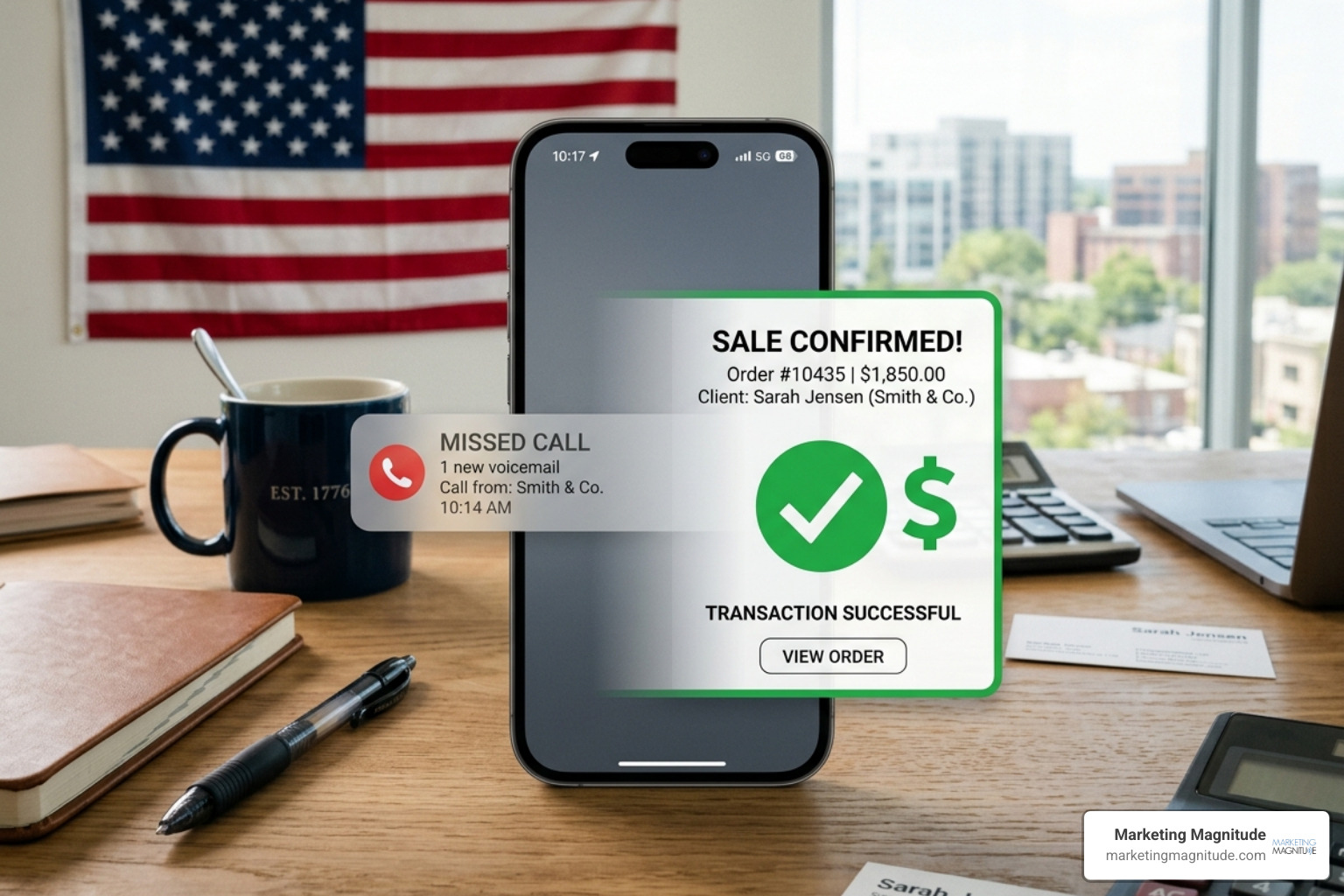
And that’s a costly blind spot. According to research, 60% of consumers still prefer to call small businesses rather than fill out a contact form. Every one of those calls is a revenue event with no record attached to it — unless you’re using call tracking.
I’m Kelly Rossi, founder of Marketing Magnitude and a digital marketing strategist with over 20 years of experience running PPC, SEO, and analytics campaigns for businesses across dozens of industries. I’ve seen how why call tracking alone can double your marketing ROI is not a hypothetical — it’s a pattern I’ve watched repeat across service businesses, e-commerce brands, and local companies the moment they start connecting phone conversions to their ad spend. In the sections below, I’ll walk you through exactly how it works, what the data shows, and how to put it into practice fast.
Know your “Why Call Tracking Alone Can Double Your Marketing ROI” Tie into: Missed revenue Attribution clarity Real examples terms:
What is Call Tracking and How Does It Work?
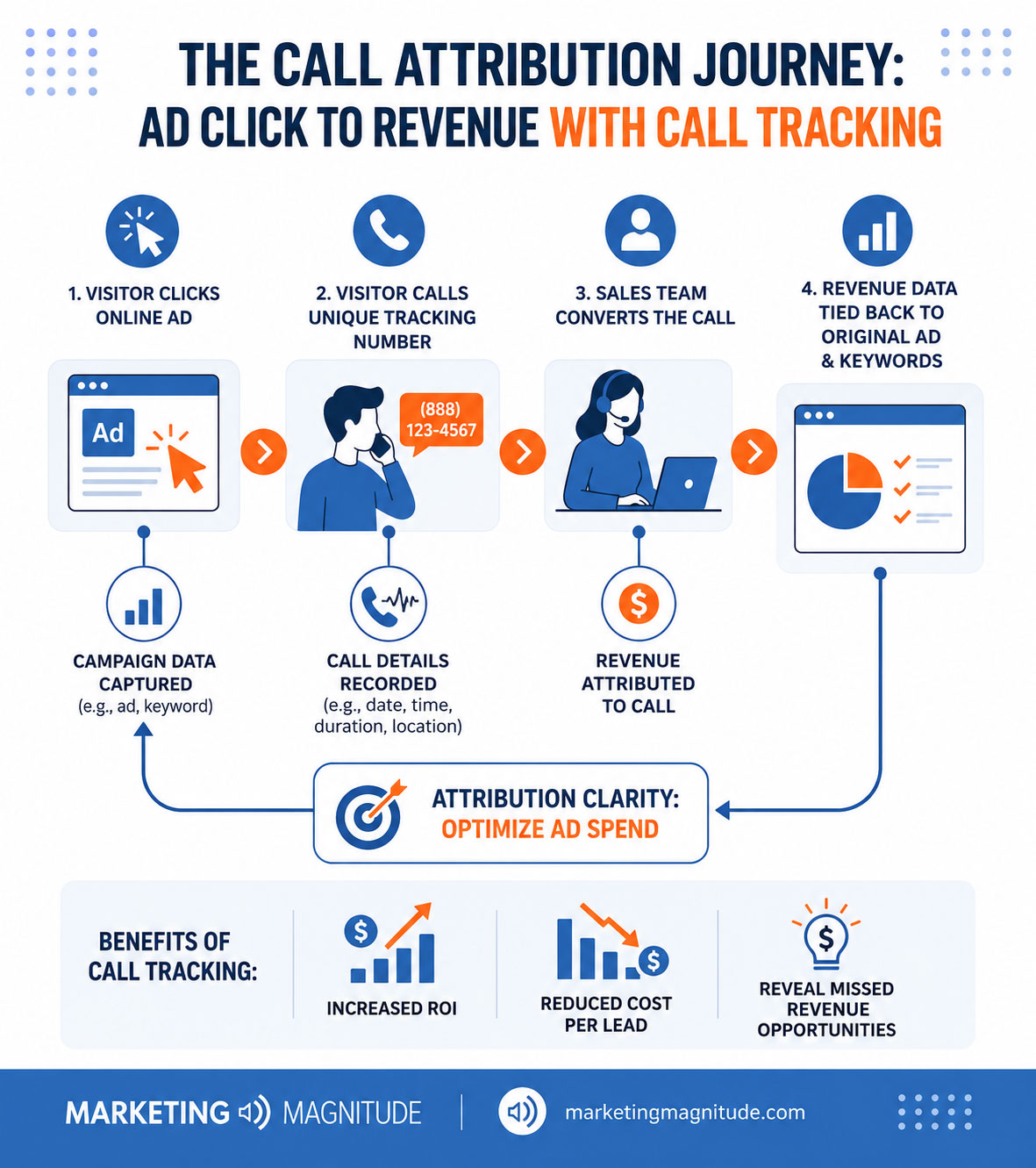
At its most basic level, call tracking is a technology that allows us to monitor and analyze inbound phone calls from various marketing campaigns. It works by assigning unique, trackable phone numbers to different marketing channels. When a customer calls one of these numbers, the software logs the source, duration, and even the sentiment of the call before forwarding it to your business line.
To understand how this technology creates such a massive impact, we need to look at the two primary methods:
Dynamic Number Insertion (DNI)
This is the gold standard for digital marketing. DNI uses a small snippet of code on your website to automatically swap out the phone number displayed based on how the visitor arrived at your site. For example, a visitor coming from a Google Ad might see a different number than someone who arrived through an organic search in Las Vegas. This allows for session-level tracking, which captures the Google Click ID (GCLID) and links the phone call directly to a specific ad click or keyword.
Static Call Tracking
Static numbers are used for offline marketing efforts. We might use one unique number for a billboard in Austin, TX, another for a direct mail flyer, and a third for a radio spot. Because these numbers are hard-coded into the creative, any call to that number provides instant attribution clarity.
By implementing website conversion tracking, we bridge the gap between digital “clicks” and physical “conversations.” This technology ensures that the marketing trail doesn’t go cold the moment a prospect picks up the phone.

Why Call Tracking Alone Can Double Your Marketing ROI by Capturing Missed Revenue
The primary reason why call tracking alone can double your marketing ROI is that it reveals “hidden” revenue that traditional analytics simply miss. In the current May 2026 landscape, data fragmentation is at an all-time high. If you aren’t tracking calls, you are essentially throwing darts while blindfolded.
The Power of High-Intent Leads
Research consistently shows that phone calls convert to revenue 10–15 times more frequently than web leads. A person who fills out a form might be “just looking,” but someone who calls your business is often ready to buy right now. Despite this, many businesses ignore these high-value interactions in their ROI calculations.
Stopping Revenue Leaks
Without call tracking, businesses often suffer from massive “revenue leaks.” Consider the Call Tracking Mystery: Solve the Case of Missing Marketing ROI where marketers act as detectives. If you spend $5,000 on a PPC campaign and it shows zero form fills, you might be tempted to kill that campaign. However, if that same campaign drove 50 high-value phone calls that resulted in $20,000 in sales, killing it would be a catastrophic mistake.
Capturing the 60%
With 60% of consumers preferring to call small businesses over digital outreach, failing to track these calls means you are ignoring the majority of your customer base. When we implement call tracking, we often find that campaigns previously thought to be “underperforming” are actually the primary drivers of revenue. By simply identifying these winners and reallocating budget toward them, doubling your ROI becomes a matter of math, not luck.
Achieving Attribution Clarity Across Marketing Channels
One of the most significant hurdles in modern marketing is “attribution clarity.” How do you know which of your ten different marketing channels actually closed the deal? Call tracking serves as the essential online-to-offline bridge.
Closing the Loop with CRM Syncing
When we integrate call tracking with tools like Google Ads or CRM systems (such as Salesforce or HubSpot), we create a unified data ecosystem. This allows us to see the entire customer journey. A prospect might:
- See a social media ad.
- Search for your brand on Google.
- Visit your site via an organic link.
- Finally, call you after seeing a specific landing page.
Without tracking, you might give all the credit to the “direct” visit. With call tracking, you see the multi-touch path that led to the conversion. This is exactly why call tracking for marketing campaigns is important; it provides the keyword-level data needed to refine your strategy.
Channels We Track
We use call data to bring clarity to:
- Paid Search (PPC): Identifying the exact keywords driving calls.
- Local SEO: Tracking calls from Google Business Profiles in Nevada and beyond.
- Social Media: Measuring the “click-to-call” effectiveness of mobile ads.
- Offline Media: Billboards, print ads, and direct mail.
- Email Marketing: Seeing which newsletters prompt direct inquiries.
By piping this data into a central dashboard, we can perform a “line-up” of marketing channels. We identify the “villain” keywords that eat budget without producing calls and the “hero” keywords that drive high-value sales, allowing for immediate budget reallocation.
Real-World Examples: How Call Tracking Doubles ROI in Practice
To truly understand why call tracking alone can double your marketing ROI, we have to look at the real-world data. These examples show how capturing “missed revenue” and gaining “attribution clarity” leads to explosive growth.
The HVAC Revenue Leak
A service-based HVAC company once discovered a shocking truth through call tracking. After auditing their data, they found that nearly 200 out of 600 inbound calls were going unanswered. This represented one-third of their potential revenue lost simply because no one was on the other end of the line. By identifying these peak “missed call” times, they adjusted their staffing and immediately captured that lost revenue, effectively increasing their ROI without spending an extra cent on ads.
The Roofing Agency Breakthrough
A roofing agency focused on lead quality rather than just volume. By using call tracking to identify which keywords led to “quotable” leads, they trained their Google Ads algorithm to ignore low-quality traffic. The results were staggering:
- 12.4x Return on Ad Spend (ROAS).
- 19% growth in average quote value.
- 60% reduction in low-quality leads.
E-commerce and Service Business Wins
An e-commerce retailer used call tracking to reallocate ad spend away from groups that generated clicks but no calls, achieving a 30% improvement in ROI. Similarly, a service business optimized their offline campaigns, resulting in a 25% reduction in cost per lead and a 20% increase in overall ROI.
| Metric | Before Call Tracking | After Call Tracking | Improvement |
|---|---|---|---|
| Cost Per Lead (CPL) | $120 | $90 | 25% Reduction |
| Conversion Rate | 2% (Web only) | 15% (Phone) | 7.5x Increase |
| Marketing ROI | 150% | 310% | 106% Increase (Doubled) |
| Attribution Accuracy | 40% | 98% | 145% Increase |
Future Trends: AI Analytics and the Next Frontier of ROI
As we move through 2026, the technology behind call tracking is evolving far beyond simple recording. The integration of AI and speech analytics is the next frontier for doubling marketing ROI.
AI Transcription and Sentiment Analysis
Modern platforms now offer instant AI-generated call summaries. Instead of listening to hours of recordings, we can use AI to highlight buyer intent, extract key products mentioned, and even detect the caller’s emotional state. If a customer sounds frustrated, real-time alerts can notify a manager to step in and save the sale.
Conversation Intelligence
About 56% of organizations have already improved customer experiences by managing contact center journeys in real-time using speech analytics. AI can “score” a lead automatically based on the conversation. If a caller uses high-intent keywords like “pricing,” “schedule,” or “emergency repair,” the system can flag that lead as a high priority for the sales team.
Predictive Analytics
By analyzing thousands of calls, AI can begin to predict which marketing efforts will result in the highest-value customers. This allows us to move from reactive tracking to proactive strategy, further amplifying the Why Call Tracking Alone Can Double Your Marketing ROI effect.
Frequently Asked Questions about Call Tracking ROI
Why Call Tracking Alone Can Double Your Marketing ROI through Quality Metrics?
ROI isn’t just about the number of calls; it’s about the quality of those calls. Call tracking allows us to set “conversion triggers” based on call duration. For instance, a 30-second call might be a wrong number, but a 5-minute call is almost certainly a sales opportunity.
By analyzing these metrics, businesses can identify gaps in their sales process. If you are getting 100 calls but only closing 2, the problem isn’t the marketing—it’s the objection handling on the phone. Using call recordings for sales training is one of the fastest ways to double your revenue without increasing your ad budget. As noted in this discussion on call tracking importance, the insights from the calls themselves are often more valuable than the attribution data.
Why Call Tracking Alone Can Double Your Marketing ROI by Bridging Offline Gaps?
Many businesses still rely on traditional media like billboards in Las Vegas or print ads in Austin. Historically, these were “black holes” for data. Call tracking changes this by assigning a unique number to every physical asset.
Given that 43% of search-related conversions eventually happen over the phone, and 65% of businesses consider phone calls their most valuable lead source, having a unified view of online and offline data is essential. It allows you to see that your “expensive” billboard is actually driving the highest-intent leads, justifying the spend and providing a complete picture of your marketing ecosystem.
What are the first steps to implement call tracking for immediate gains?
To see immediate ROI gains, follow these steps:
- Set SMART Goals: Define exactly what you want to achieve (e.g., “Reduce cost per qualified lead by 20%”).
- Select a Provider: Choose a platform that offers Dynamic Number Insertion (DNI) and seamless CRM integration.
- Install the DNI Script: Add the tracking code to your website to start capturing session-level data.
- Integrate with CRM and Google Ads: Ensure your phone conversions are being reported back to your primary marketing tools.
- Train Your Staff: Ensure your team knows how to handle the “revenue stories” that call tracking reveals.
- Monitor in Real-Time: Use dashboards to identify missed calls or low-quality traffic sources immediately.
Conclusion
At Marketing Magnitude, we believe that transparency is the foundation of a successful partnership. That is why our unique selling proposition is providing real-time tracking and reporting for every campaign we run. We don’t want you to guess if your marketing is working; we want to show you the exact revenue story behind every ring.
By capturing missed revenue, providing attribution clarity, and leveraging real-world examples of success, we’ve shown why call tracking alone can double your marketing ROI. Whether you are looking for SEO in Las Vegas or PPC management in Austin, TX, our data-driven ecosystem ensures that every marketing dollar is accounted for.
Don’t let your most valuable leads disappear into a digital blind spot. It is time to measure every conversation and unlock your true marketing potential.
Get Started Now
Fill out this form to start your journey to next-level marketing solutions for your business.