Why Is a Structured Blog Content Strategy Essential for B2C Growth in 2026?

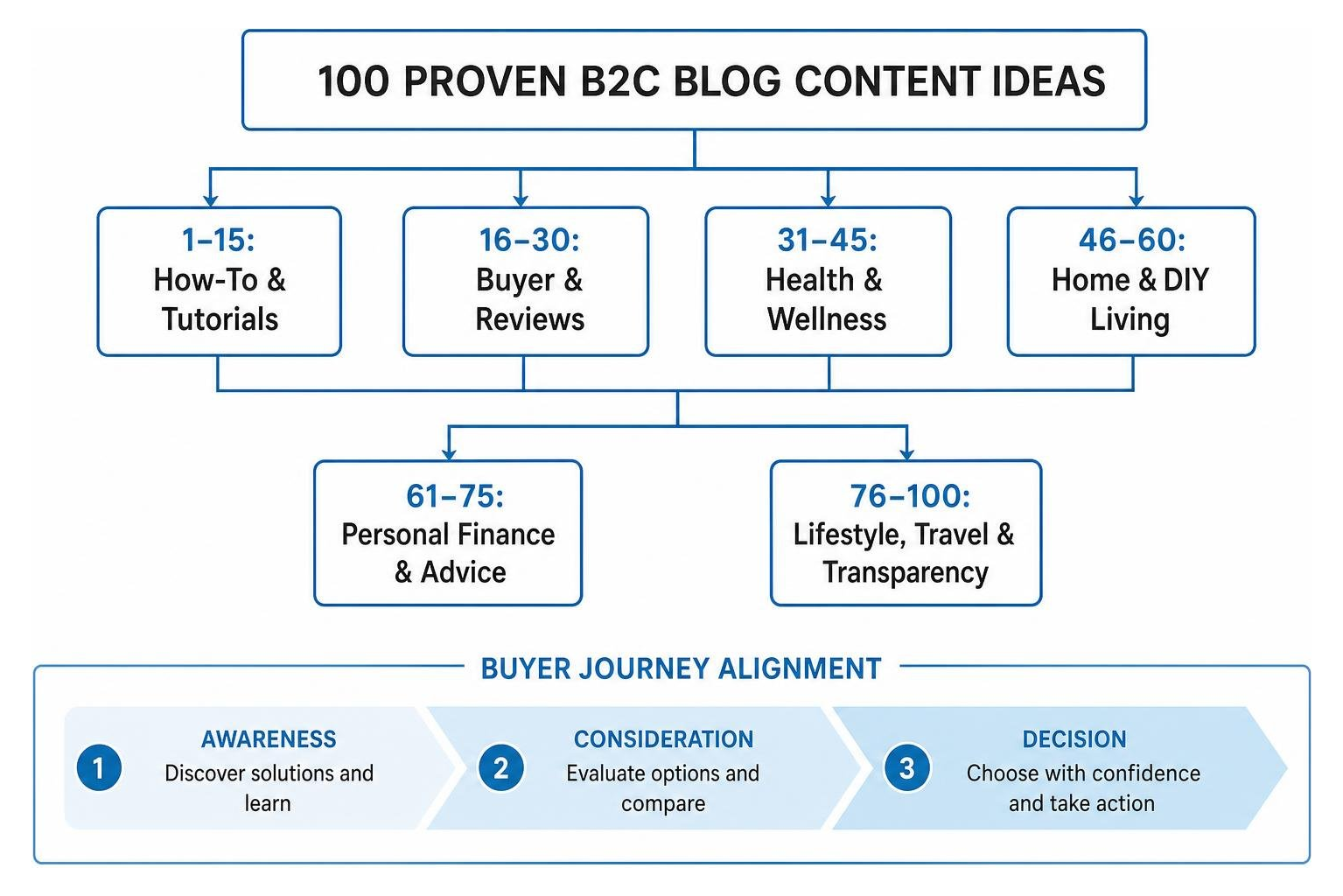
Proven B2C blog content ideas fall into several high-performing categories: step-by-step how-to tutorials, high-intent product comparisons and buying guides, health and wellness advice, home improvement and DIY walkthroughs, personal finance and budgeting guidance, travel and lifestyle inspiration, and behind-the-scenes brand stories. These formats consistently attract consumer search demand because they answer immediate questions, simplify purchase decisions, and build trust through practical, experience-driven content.
Many business owners face the same recurring challenge: staring at an empty editorial calendar, unsure what to write next. This creative fatigue often leads to sporadic posting, rushed articles, and inconsistent messaging that fails to build meaningful search visibility. In consumer markets, an irregular publishing schedule weakens your brand presence and leaves valuable organic search traffic on the table for competitors.
Maintaining a disciplined, well-researched blogging strategy solves this inconsistency. When you publish consumer-focused articles regularly, search engines index your pages for hundreds of relevant long-tail search queries. Over time, these articles accumulate compounding organic traffic, establish brand credibility, and create sustainable customer acquisition pathways that do not vanish when an advertising campaign ends.
In 2026, consumer search behavior places immense value on authenticity, first-hand experience, and direct, actionable answers. Modern shoppers bypass generic promotional fluff in favor of comprehensive guides, honest product evaluations, and clear problem-solving resources.
Relying entirely on social media channels to capture consumer attention carries significant operational risk. Social media users scroll an average of 143 minutes a day across rapidly shifting, algorithm-driven feeds. Social posts have a brief shelf life—often fading from user feeds within hours—making organic social reach volatile and difficult to control. In contrast, an educational blog functions as a permanent digital asset that attracts qualified buyers for months and years after publication.
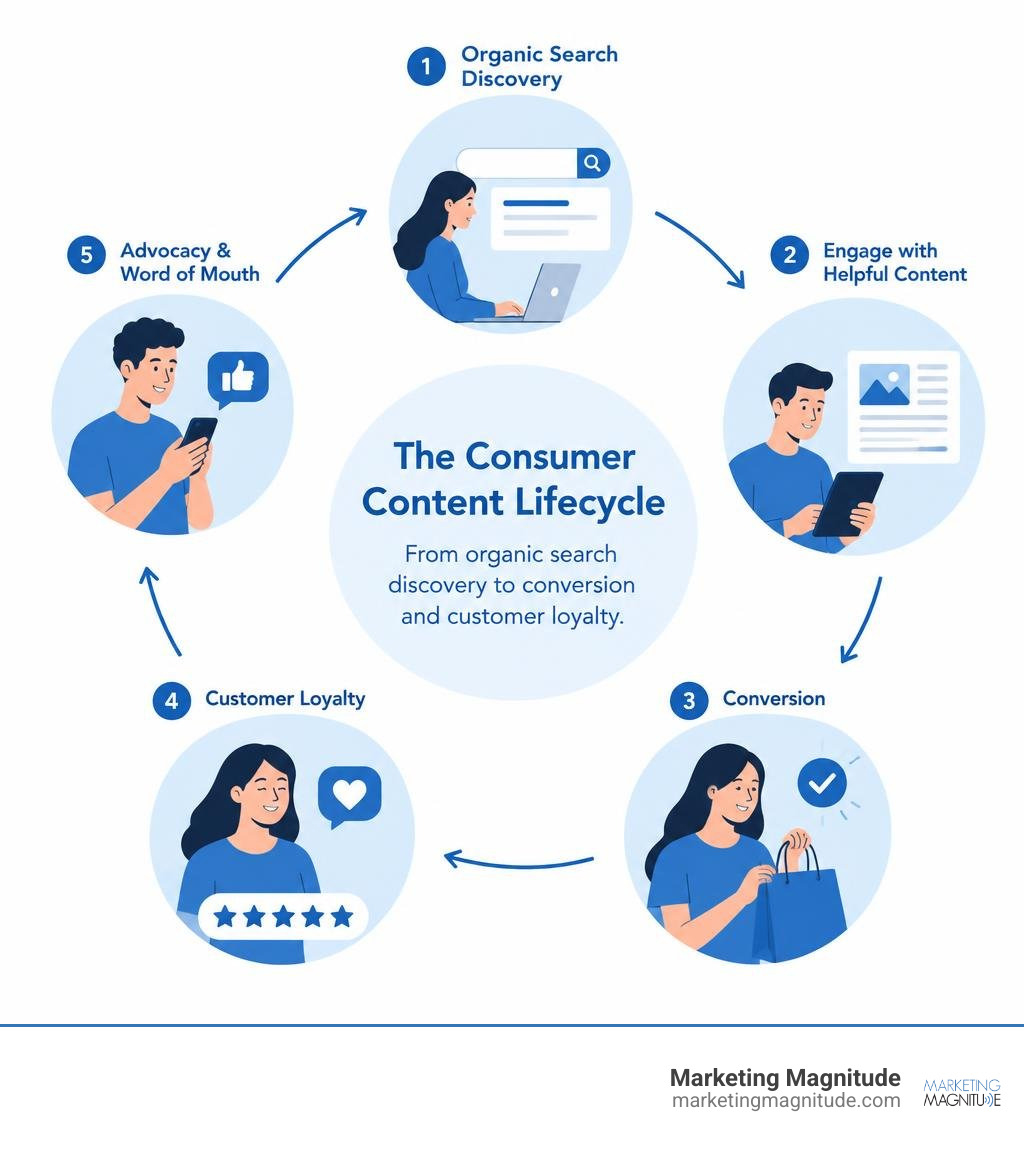
By building an enduring library of optimized blog content, you anchor your consumer marketing funnel with reliable organic discovery. Readers discover your brand while searching for solutions to everyday challenges, consume your educational resources, build trust in your expertise, and transition smoothly toward making a purchase.
How Do B2C Blog Content Ideas Differ from B2B Topics?
Developing content for individual consumers requires a distinct strategic approach compared to targeting corporate decision-makers. While business-to-business content focuses on team consensus, return on investment, and prolonged sales cycles, business-to-consumer content centers on personal lifestyle enhancements, emotional resonance, and immediate utility.
Understanding Investopedia’s breakdown of B2C business-to-consumer dynamics helps clarify how consumer purchasing behavior revolves around direct individual benefits, price accessibility, and emotional satisfaction. These distinct behavioral drivers are further detailed in the U.S. Chamber of Commerce guide on B2B vs. B2C differences, highlighting how consumer touchpoints require simpler conversion paths and relatable messaging.
| Dimension | B2C Content Marketing | B2B Content Marketing |
|---|---|---|
| Primary Purchase Drivers | Personal benefit, emotion, convenience, lifestyle fit | ROI, operational efficiency, cost reduction, team workflow |
| Search Intent | Immediate answers, product reviews, quick how-tos | Deep industry analysis, vendor evaluation, technical specifications |
| Emotional Triggers | Aspiration, comfort, belonging, excitement, stress relief | Risk mitigation, professional credibility, career advancement |
| Preferred Content Formats | Listicles, visual tutorials, comparisons, gift guides | White papers, case studies, technical documentation, webinars |
| Sales Cycle Length | Minutes to days (short, direct purchasing path) | Weeks to months (multi-stakeholder approval processes) |
| Tone and Voice | Conversational, engaging, accessible, empathetic | Formal, analytical, authoritative, industry-specialized |
Consumer audiences prioritize quick wins, visual step-by-step walkthroughs, and relatable storytelling over dense, corporate reports. In relationship-driven consumer industries—such as healthcare, wellness, home maintenance, and local professional services—trust is established through transparent explanations, relatable client stories, and helpful educational guidance that directly resolves everyday anxieties.
What Are 100 Proven B2C Blog Content Ideas Categorized by Industry and Format?
To build an engaging blog, you need a diverse mix of formats: step-by-step how-to tutorials, curated listicles, side-by-side product comparisons, and transparent brand stories. Pairing these structured formats with proven techniques on how to write stunning blog post titles ensures your articles capture attention in search results and social feeds.
Keyword research tools reveal that targeted consumer queries possess significant monthly search demand—ranging from several thousand to over 500,000 monthly visits. The following 100 content ideas provide practical prompts across seven key categories, complete with search demand insights to help jump-start your editorial strategy.
How-To Guides, Problem-Solving Tutorials, and Beginner Walkthroughs (Ideas 1–15)
How-to articles solve immediate consumer dilemmas by breaking complex processes into simple, actionable steps.
- Beginner Lifestyle Transitions: Step-by-step walkthroughs for adopting new daily routines (e.g., intermittent fasting for beginners, which carries a 69,000 monthly traffic potential).
- Personal Care Blueprints: Daily regimens and morning/evening checklists (e.g., how to master the multi-step Korean skincare routine, generating 8,900 monthly search potential).
- Consumer Electronics Troubleshooting: Clear guides to diagnosing everyday device issues (e.g., fixing computer cooling fan problems or home mesh network configurations).
- Hands-On Assembly and Building Guides: DIY hardware setup guides (e.g., how to build a PC, capturing 13,000 monthly traffic potential).
- Kitchen and Food Storage Hacks: Simple household tips (e.g., how to keep sliced apples from turning brown, with 3,500 monthly searches).
- Physical Movement Progressions: Skill-building exercise walkthroughs (e.g., structured pull-up progression guides or foundational handstand training, representing 2,200 monthly volume).
- Personal Style and Fit Guides: Practical wardrobe advice (e.g., how to dress for your specific body type, holding 4,000 monthly searches).
- Seasonal Home Care Walkthroughs: Step-by-step seasonal maintenance checklists (e.g., winterizing irrigation systems or inspecting roof shingles).
- Emergency Household Budgeting: Simple spreadsheets and steps for setting up a family contingency budget.
- Tough Stain and Odor Removal: Niche cleaning tutorials using common household ingredients to eliminate pet stains.
- Balcony and Small-Space Gardening: Beginner tutorials on growing fresh culinary herbs in compact apartment spaces.
- Carry-On Packing Strategies: Packing checklists and capsule wardrobe systems for multi-week international trips.
- Soothing Sensitive Skin Naturally: Identifying root triggers and calming sensitive skin flare-ups (2,900 monthly traffic potential).
- Furniture Sizing and Room Measurement: Step-by-step measuring guides before purchasing large home goods (e.g., how to measure for a sectional sofa, generating 1,100 monthly searches).
- Milestone Childproofing Walkthroughs: Room-by-room safety setups adapted for crawling infants and active toddlers.
High-Intent Product Comparisons, Buying Guides, and Reviews (Ideas 16–30)
Comparison and evaluation content captures consumers when they are actively preparing to make a purchase.
- Value vs. Premium Provider Breakdowns: High-intent consumer comparisons (e.g., finding the cheapest car insurance options, holding a massive 530,000 monthly traffic potential).
- Banking and Savings Reviews: Side-by-side account evaluations (e.g., top high-yield savings accounts, capturing 497,000 monthly traffic potential).
- Digital Privacy and Software Roundups: Category reviews for essential online tools (e.g., best consumer VPN services, representing 118,000 monthly volume).
- Hardware and Tech Buyer Guides: In-depth hardware roundups (e.g., top gaming laptops, generating 53,000 monthly traffic potential).
- Affordable Home Decor Sourcing: Curated lists of budget-friendly retailers (e.g., where to buy inexpensive furniture, holding 18,000 monthly searches).
- Targeted Skincare Product Guides: Specialized beauty roundups (e.g., best moisturizers for dry skin, capturing 9,600 monthly traffic potential).
- Side-by-Side Appliance Showdowns: Comparing two leading consumer appliances with honest pros and cons.
- Budget Category Roundups: “Best Essentials Under $50” lists across home, wellness, or tech categories.
- Non-Toxic Cleaning Showdowns: Evaluating eco-friendly versus conventional cleaning products.
- Mattress and Sleep Gear Comparisons: Choosing the ideal mattress based on sleep position, firmness, and body type.
- Quiet Home Office Accessories: Reviewing silent productivity peripherals (e.g., quiet mechanical keyboards, generating 2,600 monthly searches).
- Sustainable Fashion Alternatives: Ethical clothing roundups explaining sustainable garment manufacturing (2,200 monthly volume).
- Persona-Based Gift Guides: Curated holiday and milestone gift lists categorized by recipient hobby and price bracket.
- Essential Baby Registry Checklists: What expecting parents genuinely need versus unnecessary gear.
- Pet Nutrition Showdowns: Comparing raw, fresh-cooked, and traditional dry kibble diets for dogs and cats.
Health, Wellness, Nutrition, and Fitness Topics (Ideas 31–45)
Wellness topics achieve substantial search demand because consumers consistently seek practical ways to improve their daily health, energy, and well-being.
- Diet Myth Busting: Science-backed nutritional breakdowns (e.g., whether you can build muscle during a calorie deficit, with 4,700 monthly searches).
- Minimal-Equipment Home Workouts: Efficient home strength routines (e.g., full-body kettlebell circuits, holding 7,000 monthly traffic potential).
- Functional Aging and Mobility: Longevity-focused exercises (e.g., grip strength and joint mobility routines, representing 4,000 monthly searches).
- Holistic Skin and Beauty Rituals: Non-invasive beauty habits (e.g., natural beauty routines, capturing 4,000 monthly volume).
- Targeted Strength Routines: Specific workout plans for unique body types (e.g., workout splits for skinny individuals, with 2,200 monthly searches).
- Quick Weeknight Gourmet Dinners: Accessible recipes for busy families (e.g., easy homemade ramen bowls, capturing 81,000 monthly searches, or fresh fish tacos, holding 57,000 searches).
- Superfood Reality Checks: Evaluating popular health foods (e.g., whether acai bowls aid in weight management, representing 700 monthly searches).
- Evidence-Based Stress Management: Daily micro-habits that reduce everyday stress and soothe nervous system overwhelm.
- Sleep Environment Optimization: Practical steps to design a bedroom conducive to deep, restorative sleep.
- Desk Worker Posture and Relief: Targeted stretches and mobility drills to alleviate neck and lower back tension.
- Preventative Anti-Aging Daily Habits: Evidence-backed lifestyle choices supporting long-term cellular health (4,700 monthly traffic potential).
- Cold and Heat Therapy Walkthroughs: Practical beginner protocols for sauna use and cold water exposure.
- Nutritional Supplement Decoding: How to read supplement labels and identify clean, third-party-tested vitamins.
- Low-Impact Joint Mobility Routines: Gentle joint-friendly exercises for active seniors and rehabilitation patients.
- Postpartum Physical Recovery: Safe, foundational movement guidelines for restoring core stability after childbirth.
Home Improvement, Interior Decorating, and DIY Living (Ideas 46–60)
Homeowners and renters frequently search for visual inspiration, practical layout rules, and clear pricing expectations.
- Living Room Palette Inspiration: Coordinated interior color combinations (e.g., living room color schemes, holding 12,000 monthly traffic potential).
- Budget DIY Feature Walls: Creative wall treatments (e.g., accent wall ideas, generating 9,300 monthly searches).
- Transparent Service Cost Guides: Realistic pricing breakdowns for home projects (e.g., how much an interior designer costs, with 4,000 monthly searches).
- Coffee Table Styling Frameworks: Simple interior rules for accessorizing living room tables (1,600 monthly volume).
- Area Rug Sizing and Layout Rules: Proportional rug placement guidelines beneath beds and sofas (1,600 monthly searches).
- Sofa Silhouette Guides: Comparing modular, sectional, and traditional sofa designs (3,200 monthly traffic potential).
- Vertical Storage Solutions: Organizing small closets and compact living spaces to maximize utility.
- Renter-Friendly Aesthetic Upgrades: Removable home modifications that do not risk security deposits.
- DIY Home Energy Assessments: Simple draft-sealing adjustments that lower monthly electricity bills.
- Vintage Furniture Restoration: Step-by-step sanding, painting, and sealing techniques for thrifted finds.
- Small Bathroom Remodel Inspiration: Layout tricks that make compact powder rooms feel spacious.
- Beginner Smart Home Configurations: Setting up connected lighting and thermostats without complicated wiring.
- Low-Maintenance Indoor Plants: Hardy houseplant selections that thrive in low-light environments.
- Weekend Curb Appeal Makeovers: Exterior upgrades—like painting entry doors and updating porch lighting—achievable in 48 hours.
- Essential Homeowner Diagnostics: Basic troubleshooting steps for water heaters and air conditioning filters before calling a contractor.
Personal Finance, Budgeting, and Smart Consumer Advice (Ideas 61–75)
Personal finance content generates some of the highest organic traffic volumes in digital publishing as individuals actively research major financial milestones.
- Major Purchase Affordability Calculators: Practical purchase guides (e.g., determining how much house you can afford, with 264,000 monthly traffic potential).
- Legitimate Secondary Income Ideas: Actionable side-income roadmaps (e.g., proven ways to make money online, holding 376,000 monthly searches).
- Actionable Frugal Living Tactics: Everyday budgeting techniques (e.g., creative ways to save money, generating 25,000 monthly traffic potential).
- Credit Score Improvement Steps: Clear actions for repairing personal credit history (43,000 monthly traffic potential).
- Retail Stock Investing for Beginners: Foundational guidance on index funds and automated investing accounts (43,000 monthly searches).
- First-Time Real Estate Fundamentals: Core principles for purchasing a first residential property (30,000 monthly volume).
- Debt Elimination Strategies Compared: Evaluating the Debt Snowball method against the Debt Avalanche framework.
- Recurring Bill Negotiation Scripts: Step-by-step phone scripts for lowering home internet, mobile, and utility bills.
- Family Financial Roadmaps: Budgeting for childcare, education funds, and family life insurance.
- Student Loan Payoff Blueprints: Assessing federal income-driven plans versus private refinancing options.
- Nutritious Meal Planning on a Budget: Slashing weekly grocery expenses without compromising meal quality.
- Personal Digital Fraud Defense: Essential security habits to protect personal financial identity in 2026.
- Freelancer Tax Preparation Checklists: Identifying allowable deductions and organizing quarterly estimated taxes.
- Emergency Fund Milestones: Calculating exact financial reserve targets for single and dual-income households.
- Teaching Financial Habits to Kids: Age-appropriate money lessons, allowance structures, and savings games.
Travel, Lifestyle, Culture, and Entertainment (Ideas 76–88)
Lifestyle and leisure content appeals to consumer aspirations, providing practical itineraries, packing advice, and cultural exploration.
- Affordable Accommodation Strategies: Proven booking techniques (e.g., finding cheap hotels, holding 195,000 monthly traffic potential).
- Comprehensive Travel Itineraries: Curated destination guides (e.g., top places to visit in Costa Rica, with 6,500 monthly searches).
- City Activity Compilations: Urban travel itineraries (e.g., top activities in Medellin or 5-day Paris travel guides).
- Tourist Safety and Local Etiquette: Up-to-date travel safety advisories and cultural norms for popular vacation regions.
- Neighborhood Lodging Guides: Area-by-area breakdown of where to stay in major cities (e.g., Boston neighborhood guides, generating 2,200 monthly searches).
- Realistic Travel Expense Breakdowns: Accurate trip budgeting guides (e.g., seasonal travel costs for visiting Greece).
- Concert and Event Wardrobe Inspiration: Event-specific styling ideas (e.g., stadium concert outfit concepts, capturing 51,000 monthly searches).
- Functional Airport Fashion: Travel outfit inspiration prioritizing long-haul comfort and polished aesthetics (2,300 monthly searches).
- Cultural Culinary Traditions: Exploring global food customs (e.g., celebratory foods for Lunar New Year, representing 2,300 monthly searches).
- Fashion Concept Explanations: Deep dives into style movements (e.g., defining haute couture versus slow fashion).
- Curated Creator Roundups: Themed lists of creative influencers and educators to follow for daily inspiration.
- Regional Weekend Road Trips: Short getaway itineraries within driving distance of major metropolitan hubs.
- Solo Travel Safety Protocols: Confidence-building guides, solo dining etiquette, and safety apps for individual travelers.
Brand Transparency, Community Stories, and Behind-the-Scenes Insights (Ideas 89–100)

Transparency and storytelling build deep consumer trust by showing the craftsmanship, values, and real people behind your brand.
- Behind-the-Scenes Production Stories: Detailed documentation of how your products are sourced, crafted, and packaged.
- Founder and Team Day-in-the-Life Features: An authentic look into the daily work routine of company leadership and craftspeople.
- In-Depth Customer Success Stories: Documenting how a customer overcame a specific challenge using your product or service.
- Social Media Community Q&A: Answering top customer questions compiled directly from comment sections.
- The Authentic Founding Story: The real problem and personal frustration that motivated your company’s creation.
- Community Involvement and Sustainability Updates: Sharing local philanthropic partnerships and environmental initiatives.
- Product Formulation Iterations: An honest look at the testing, setbacks, and refinements behind a flagship offering.
- Annual Company Reflections: Publishing annual milestones, unexpected challenges, and key operational lessons learned.
- User-Generated Content Highlights: Celebrating innovative and creative ways real customers use your products.
- Employee Spotlights: Introducing team members alongside their personal hobbies and favorite brand recommendations.
- Interactive Development Polls: Inviting your audience to provide feedback on upcoming product iterations or service packages.
- Year-End Community Retrospectives: A celebratory roundup of community achievements, top customer favorites, and future plans.
If you are looking for additional inspiration to expand your editorial calendar, explore our curated list of 24 blog content ideas for B2C businesses.
How Can You Validate, Balance, and Repurpose Your B2C Content Ideas?
Generating ideas is only the initial step; turning those ideas into business growth requires a structured validation and publishing process. A dependable editorial calendar relies on data-driven keyword research rather than guesswork. Before writing, evaluate user search intent, competitive rankings, and realistic traffic potential.
Structuring your topic research into a clear framework helps you prioritize articles that generate pipeline value, which is a core step when learning how to build your first content marketing strategy.
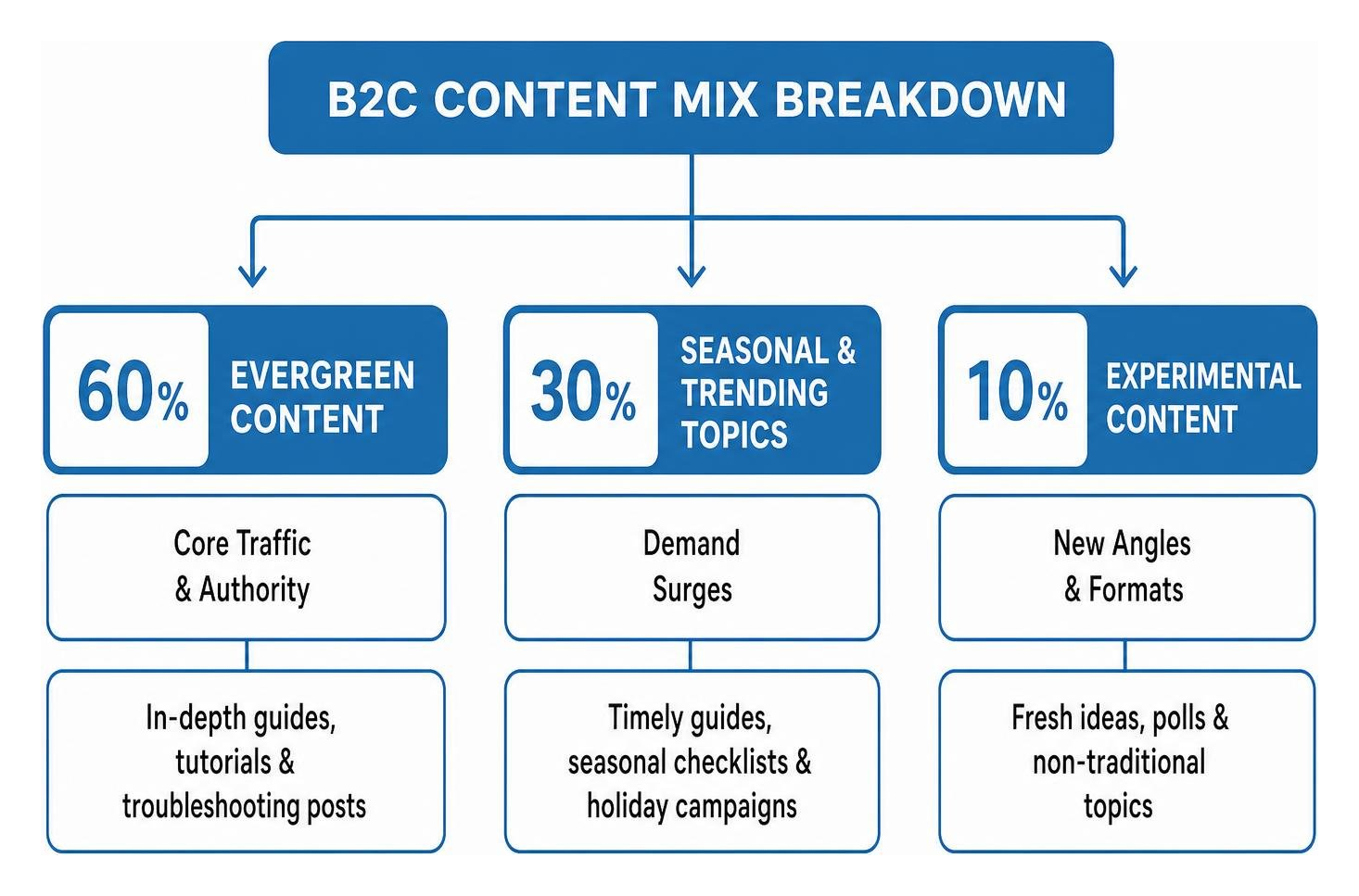
A balanced content mix incorporates three distinct tiers:
- 60% Evergreen Authority Assets: In-depth tutorials, buying guides, and troubleshooting posts that consistently generate organic search traffic year-round.
- 30% Seasonal and Trending Topics: Timely gift guides, seasonal home checklists, and holiday campaigns aligned with annual consumer spending patterns, ensuring you are proactively adjusting digital marketing to fit the seasons of your business.
- 10% Experimental Content: New storytelling angles, interactive polls, and non-traditional editorial topics that keep your brand voice fresh and engaging.
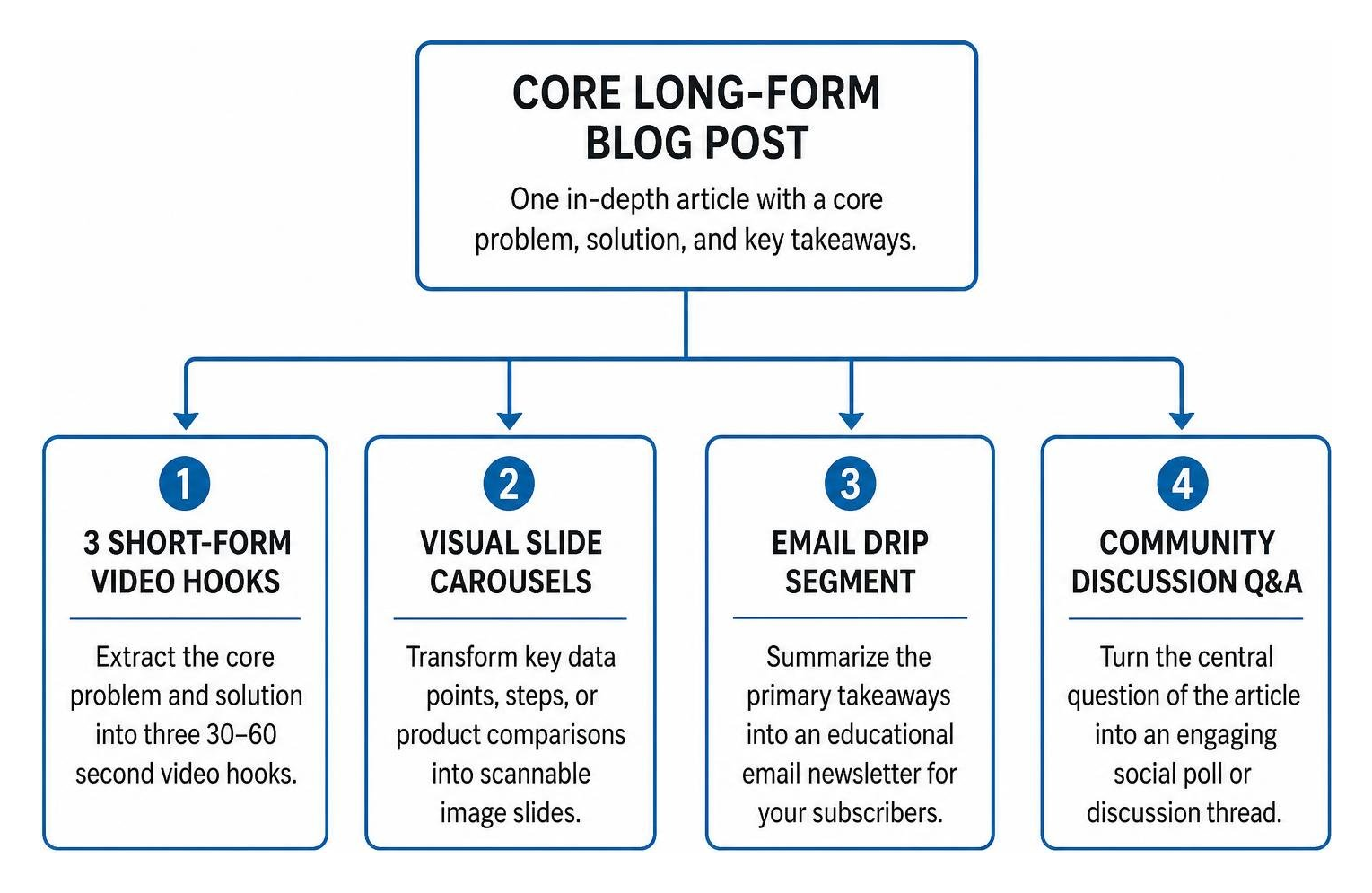
To maximize the return on every article you produce, use a systematic repurposing workflow:
- Extract Video Scripts: Convert the core problem and solution of your blog post into three 30-to-60-second video hooks for social media.
- Design Visual Carousels: Transform key data points, steps, or product comparisons into scannable image slides.
- Draft Email Newsletters: Summarize the primary takeaways into an educational email newsletter sent to your subscriber list.
- Initiate Community Discussions: Turn the central question of the article into an engaging social poll or community discussion thread.
Connecting every blog post to clear lead capture mechanisms—such as downloadable checklists or consultation forms—ensures that reader attention converts directly into your customer relationship management (CRM) pipeline.
What Common Mistakes Should B2C Brands Avoid When Brainstorming Content?
Many consumer blogs struggle to produce measurable business results due to recurring strategic missteps during the topic selection phase:
- Over-Emphasizing Self-Promotion: Writing exclusively about company announcements rather than addressing the everyday challenges, questions, and pain points of your target audience.
- Chasing Unrealistic Head Terms: Targeting high-volume keywords with insurmountable competition while overlooking high-intent, low-difficulty long-tail queries that convert at higher rates.
- Omitting Conversion Architecture: Publishing informational articles without contextual calls-to-action, downloadable resources, or structured conversion pathways.
- Letting Content Become Outdated: Publishing articles and abandoning them, allowing links to break, pricing data to expire, and search rankings to decline over time.
- Publishing Thin Content: Producing generic summaries that lack first-hand perspective, unique brand insights, or original multimedia.
- Treating Blogging as an Isolated Silo: Operating the blog independently rather than integrating it with email marketing sequences, CRM lead tracking, and automated follow-ups.
What Are the Most Frequently Asked Questions About B2C Blogging?
How Often Should a B2C Business Publish New Blog Content?
For most consumer-facing businesses, publishing 1 to 2 high-quality, comprehensive blog posts per week is the optimal cadence. Publishing once or twice weekly allows your team to thoroughly research keywords, create custom visual assets, integrate internal links, and distribute content across email and social channels without sacrificing depth. Consistency and depth always outperform high-frequency, low-quality publishing.
How Long Does It Take for B2C Blog Posts to Generate Search Traffic?
Newly published blog posts generally take 3 to 6 months to mature in search engine rankings and generate steady organic traffic. The exact timeline depends on your domain’s historical authority, backlink profile, and the keyword competitiveness of the topic. Pairing organic search optimization with proactive email distribution and social sharing generates immediate early engagement while search algorithms index and rank your pages.
Which B2C Blog Post Formats Generate the Highest Conversions?
Direct comparisons (“Product A vs. Product B”), category-specific buying guides, and comprehensive gift guides consistently deliver the highest conversion rates. These formats attract consumers who are at the bottom of the buying funnel and actively comparing options prior to checkout. Incorporating clear, contextual calls-to-action and relevant lead magnets captures this high-intent traffic effectively.
How Can Marketing Magnitude Help Scale Your B2C Content Marketing Ecosystem?
Generating website traffic is only one component of a successful digital strategy. Real business growth occurs when marketing, customer communication, automation, and analytics operate together as a unified system.
At Marketing Magnitude, we build complete growth infrastructures tailored to consumer-facing and relationship-driven businesses. We combine strategic organic search engine optimization services with modern web development, CRM integration, and automated lead nurturing workflows to ensure your website functions as an active revenue driver rather than a static brochure.
Through our fully managed integrated content marketing services, we handle end-to-end strategy—from competitive keyword discovery and high-converting copywriting to technical optimization and lead attribution tracking. We provide the strategic consulting and technology systems you need to turn organic search visitors into long-term, loyal customers.
Get Started Now
Fill out this form to start your journey to next-level marketing solutions for your business.