How Has Plumbing Digital Marketing Evolved in 2026?
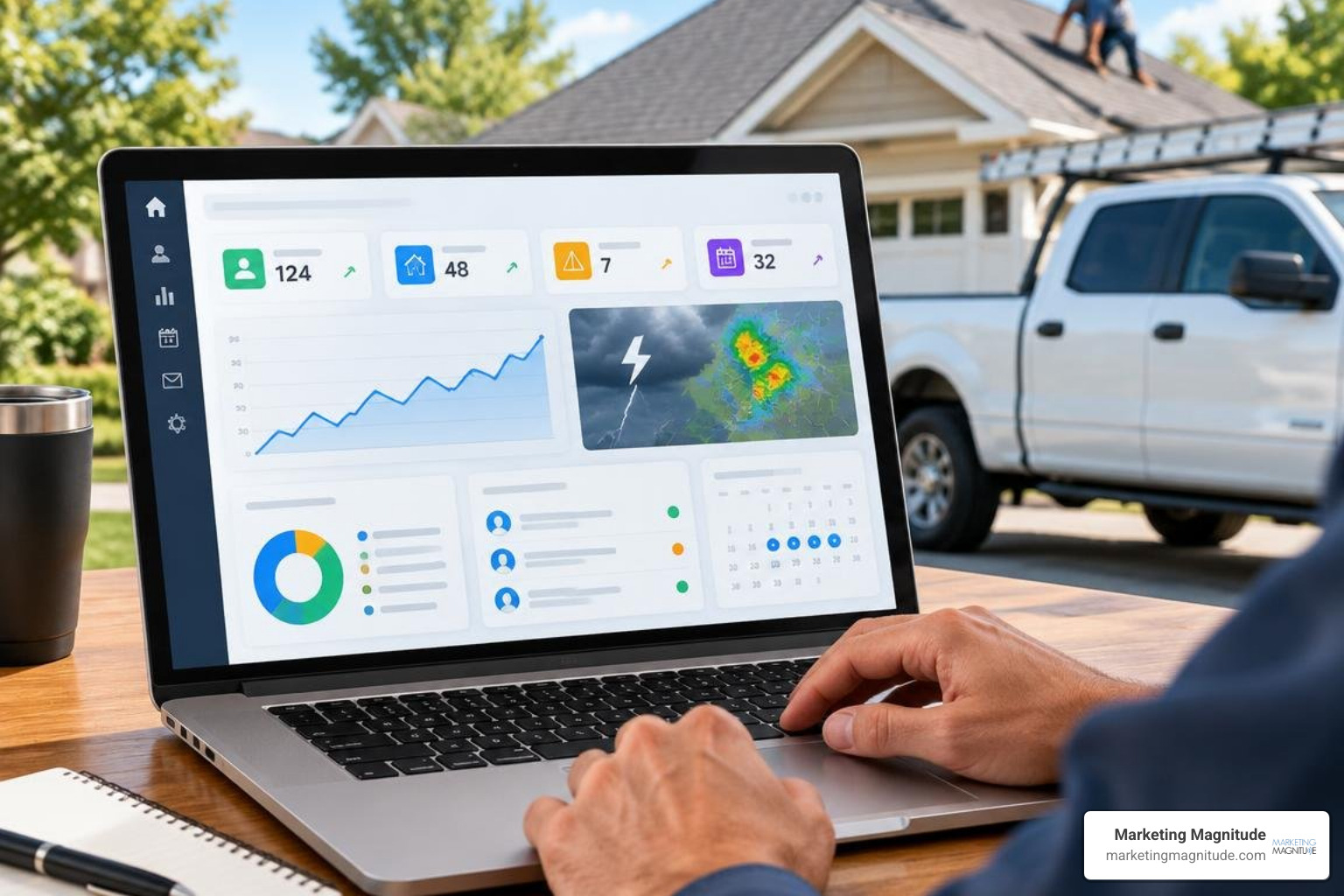
Plumbing marketing has fundamentally shifted from disconnected tactics to unified operational ecosystems. For years, contractors operated in silos: an agency ran search ads, a webmaster maintained the site, and an office administrator manually logged calls on a whiteboard or basic dispatch board. In 2026, fragmented approaches cause severe revenue loss. Modern digital marketing for plumbers integrates visibility, customer data, automated intake, and field operations into one seamless engine.
The urgency behind this shift is clear: 93% of consumers search online before hiring a plumber, and 97% of all online customer experiences begin with a search engine. Search behavior is now heavily influenced by AI search overviews, voice assistants, and immediate zero-click local answers. When a homeowner discovers a plumbing failure, they do not browse through pages of search results; they engage the most accessible, highly rated, and immediately responsive company available.
This makes operational responsiveness a core marketing variable. Data shows that responding within 5 minutes makes a business 21 times more likely to convert a lead compared to waiting 30 minutes. After just one hour, lead conversion probability drops by approximately 90%. If an inbound request sits in an unmonitored inbox or goes to an unanswered voicemail, paid ad spend is wasted.
To capture and retain market share, plumbing businesses must operate across a three-funnel architecture:
- Emergency Funnel: High-urgency, immediate-need calls (burst pipes, severe sewer backups, complete loss of hot water) driven by local search and paid click-to-call assets.
- Replacement Funnel: High-ticket, planned installations (tankless conversions, whole-home repiping, sewer line replacements) driven by targeted awareness, retargeting, and educational content.
- Maintenance & Retention Funnel: High-margin recurring service agreements (annual inspections, water heater flushes, filtration cartridge replacements) driven by first-party CRM data, SMS, and email automation.
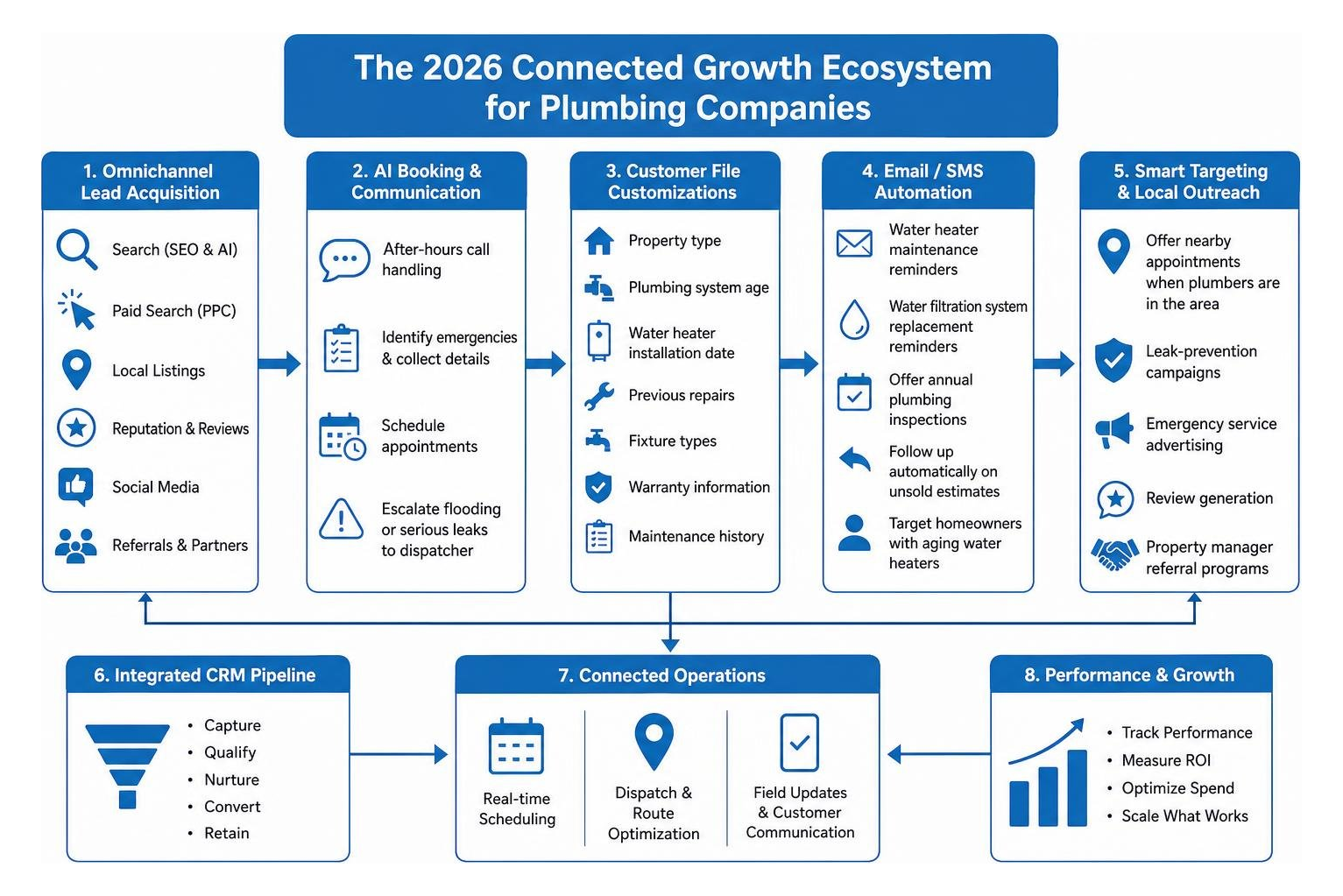
Rather than hiring disconnected vendors to manage isolated campaigns, top-performing shops leverage integrated systems that bridge customer acquisition, CRM pipeline management, and real-time communication.
What Are the Core Pillars of Search and Paid Advertising for Plumbers?
Capturing market share requires balanced paid and organic visibility. Plumbers must dominate high-intent search moments while maintaining a sustainable organic pipeline.
A solid local search presence starts with implementing proven local SEO strategies for plumbing companies. Your primary Google Business Profile (GBP) category must be set precisely to “Plumber,” supported by relevant secondary categories such as “Drainage Service,” “Hot Water System Supplier,” or “Emergency Plumbing Service.” Geo-signals must be reinforced across every service area through verified local schema, localized customer reviews, and consistent geographic citations.
On the paid side, Google Local Services Ads (LSAs) remain the primary emergency lead generator. Operating on a pay-per-lead model with the Google Guaranteed badge, plumbing LSAs average $57 per lead with a 44.5% booking rate. Because LSAs appear at the absolute top of search engine result pages, they capture homeowners who need immediate help.
Google Search PPC campaigns capture high-intent users searching for specific, high-ticket services. However, with plumbing pay-per-click costs averaging $30 to $80 per click—and competitive emergency keywords exceeding $100 per click—unstructured campaigns can quickly drain budgets. Plumbers must use exact-match Single Theme Ad Groups (STAGs), strict negative keyword lists, and dedicated landing pages. Through professional paid advertising and PPC management, bidding algorithms can be trained on actual closed-job revenue rather than raw click volume, prioritizing profitable jobs like sewer lining and whole-home repiping over low-margin calls.
Meta Ads (Facebook and Instagram) serve a different purpose. Running emergency ads on Meta is inefficient, but the platform excels at demand shaping for planned projects. Homeowners do not search for water filtration systems or aging water heater upgrades during a crisis; Meta campaigns allow you to target homeowners based on home age, neighborhood data, and custom CRM lists at an average cost of $42.95 per lead.
| Channel | Average Cost Per Lead (CPL) | Average Booking Rate | Customer Intent Level | Ideal Service Type Focus |
|---|---|---|---|---|
| Google Local Services Ads (LSA) | $50 – $75 | 40% – 50% | Critical / Immediate Emergency | Active leaks, burst pipes, drain clogs |
| Google Search PPC | $80 – $180 | 25% – 35% | High Intent / Problem Aware | Water heater replacement, sewer repair, repiping |
| Meta Ads (Facebook/Instagram) | $35 – $55 | 15% – 25% | Low / Latent Demand Shaping | Water filtration, maintenance clubs, tankless upgrades |
| Organic Local SEO (GBP/Maps) | Long-term asset (Low ongoing CPL) | 35% – 45% | High Intent / Research & Urgent | General plumbing, localized brand discovery |
Dominating Local Map Packs and On-Page SEO
Dominating the local 3-pack requires a well-structured technical foundation. Every service-area page should target specific geographic areas with localized copy, customer testimonials, and distinct PlumbingService and LocalBusiness schema markup. Schema structured data helps search engine crawlers interpret your exact service radius, physical address, business hours, and service capabilities.
Maintain precise Name, Address, and Phone Number (NAP) consistency across directories, industry citations, and mapping applications. Eliminating duplicate citations and resolving conflicting phone numbers or addresses directly protects your local map pack rankings.
Website architecture must prioritize mobile users. With over 70% of local plumbing searches happening on mobile devices—often during stressful home emergencies—websites must load in under 3 seconds. Conversion elements must include:
- Sticky click-to-call buttons anchored at the base of the mobile viewport.
- Simplified booking forms requesting only essential details (Name, Phone, Address, Issue).
- Prominent trust badges, real technician photos, licensing details, and Google Guaranteed verification badges above the fold.
Paid Search Structure for Emergency vs. High-Ticket Jobs
To maximize advertising efficiency, split campaigns into two distinct structures:
- Urgent Repair Funnel: Focused on high-intent terms like “burst pipe repair,” “emergency plumber near me,” and “sewer backup clearing.” These campaigns utilize aggressive target impression share or maximized conversion bidding with strict geo-fencing, routing callers to direct phone lines for rapid dispatch.
- High-Ticket Installation Funnel: Focused on searches like “tankless water heater cost,” “trenchless sewer replacement,” and “whole-house copper repipe.” These campaigns use value-based Smart Bidding, leading to dedicated conversion pages that feature financing calculators, warranty breakdowns, and online scheduling.
Using revenue-weighted bid strategies prevents ad platforms from optimizing purely for high-volume, low-margin calls. Tagging conversion values based on historical service tickets directs ad spend toward high-margin installations.
How Can Customer File Customizations and First-Party Data Drive Precision Marketing?
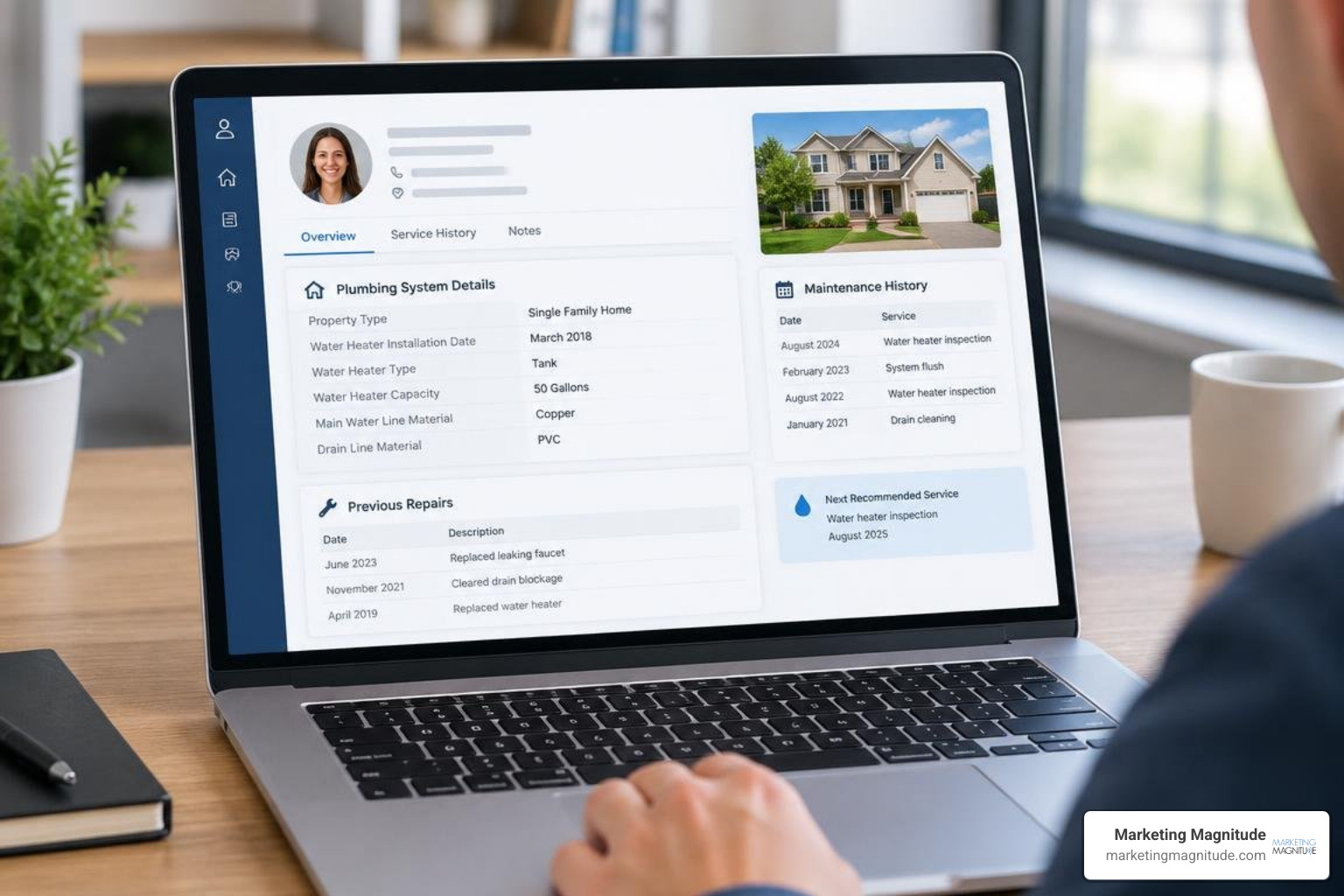
Customer acquisition costs continue to rise across all paid search channels. Plumbing businesses that rely entirely on buying cold traffic each month operate at a disadvantage. Sustainable profitability depends on using first-party customer data to generate high-margin work from your existing client base.
A modern contractor marketing CRM platform does more than store contact names and billing addresses. It transforms dispatch logs and technician notes into structured, searchable marketing assets:
- Property Type: Categorizing accounts as single-family residential, multi-family, commercial, HOA, or historic properties allows you to tailor service offers, maintenance proposals, and pricing structures.
- Plumbing System Age and Pipe Material: Documenting whether a property utilizes galvanized steel, polybutylene, copper, cast iron, or PEX enables predictive outreach. Homes with 40-year-old galvanized pipes or aging cast iron can be targeted with educational campaigns about pinhole leaks, sewer deterioration, and modern repiping solutions.
- Water Heater Installation Date and Serial Information: Standard tank water heaters have an operational life expectancy of 8 to 12 years. Recording the exact installation date, brand, capacity, and serial number allows you to automate proactive outreach when systems reach their 8th year, before catastrophic tank failure occurs.
- Fixture Types and Water Quality Systems: Tracking installed fixtures, whole-home filtration systems, water softeners, and reverse osmosis units creates recurring opportunities for scheduled cartridge replacements, membrane flushes, and media rejuvenation.
- Warranty Information and Service History: Tracking manufacturer and labor warranty expiration dates allows you to offer seamless transitions into recurring annual maintenance plans as warranties conclude.
Connecting service history directly to marketing automation turns customer files into consistent revenue engines.
Building High-Yield Audience Segments from Dispatch Records
Using structured CRM fields, you can generate dynamic, highly targeted customer segments:
- Aging Water Heater Replacements: Filter for properties with units installed 8+ years ago to run targeted replacement and high-efficiency tankless consultation campaigns before emergency failures occur.
- Chronic Drain Clog Outreach: Segment homeowners with multiple drain clearing requests over the prior 12 months for preventative hydro-jetting, mainline camera inspections, and trenchless pipe lining solutions.
- Warranty Expiration Alerts: Automatically identify customers whose installation or repair warranties expire within 60 days, transitioning them smoothly into recurring maintenance club agreements.
Targeted, data-backed communications produce higher conversion rates at a fraction of the cost of cold paid search campaigns.
How Does AI Booking and Real-Time Communication Capture High-Intent Plumbing Leads?
Speed to lead is critical in the plumbing industry. A customer dealing with an overflowing toilet or an active ceiling leak will call the next competitor on the list if their call goes to voicemail. Modern AI communication infrastructure ensures every customer inquiry is engaged instantly, 24/7.
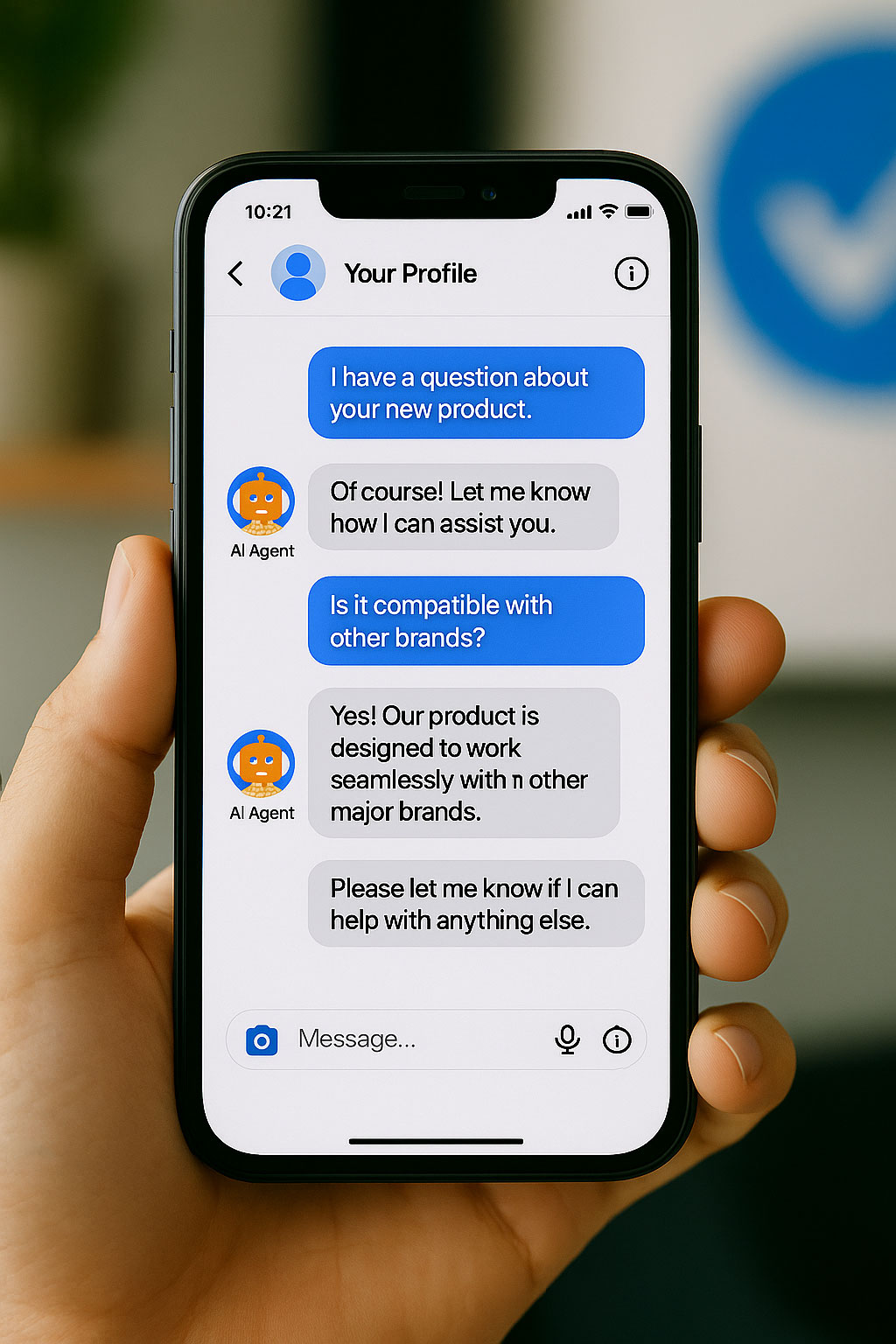
Deploying intelligent AI phone answering and chatbot systems enables plumbing companies to capture, qualify, and book leads without adding round-the-clock administrative overhead. Modern conversational AI understands natural language, identifies customer urgency, and takes immediate operational action.
Key operational capabilities include:
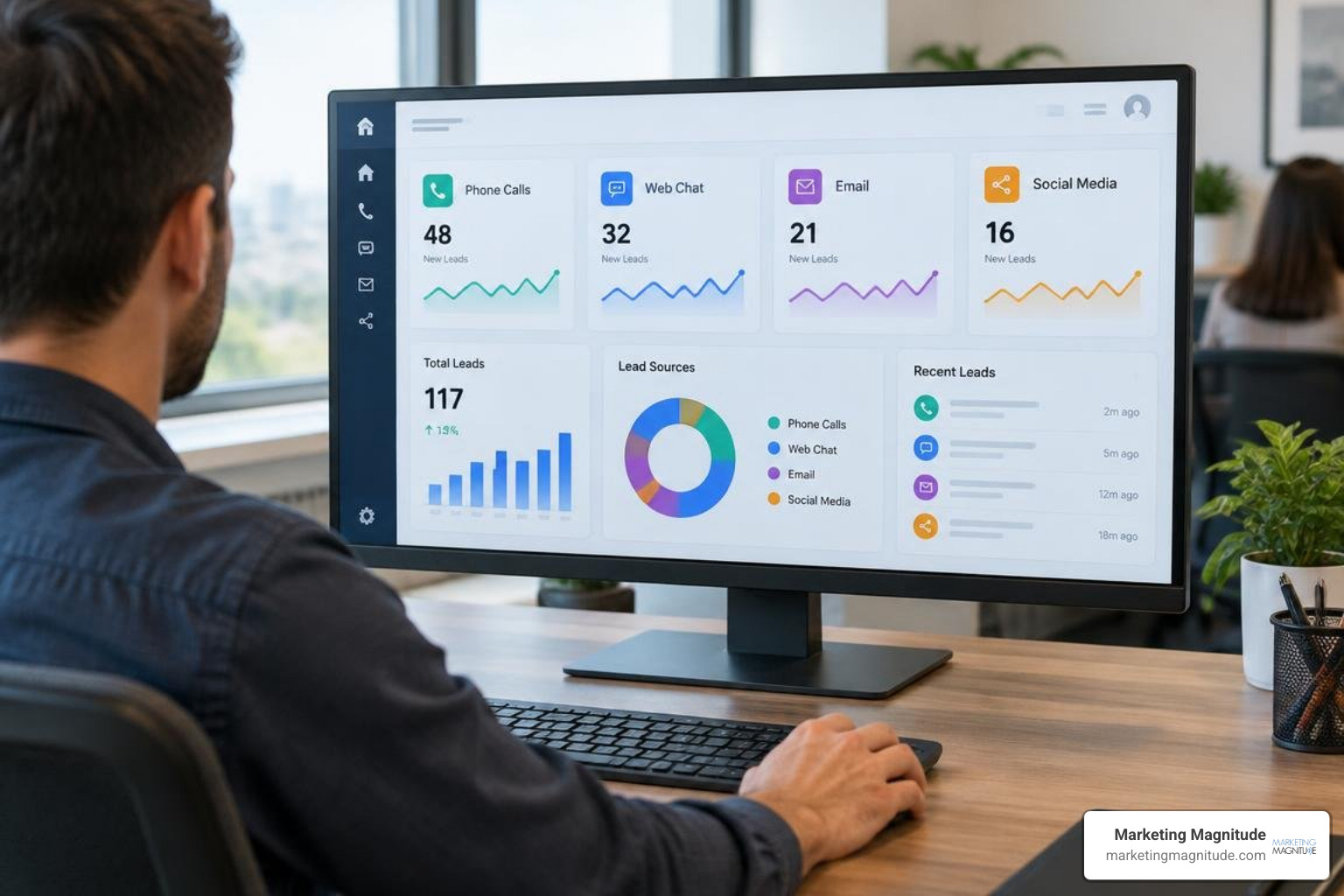
- 24/7 Omnichannel Lead Engagement: Instantly answering inbound calls, web chats, and text inquiries within 30 seconds to eliminate customer drop-off.
- Urgency Recognition: Distinguishing between routine non-emergency questions and active home flooding or gas hazards.
- Pre-Dispatch Information Gathering: Automatically collecting detailed problem summaries, fixture photos, property access details, and customer verification.
- Automated Scheduling Coordination: Aligning customer requests with open dispatch slots and calendar availability directly within CRM workflows.
These AI systems capture issue descriptions, gather photo uploads of damaged pipes or water heater data plates, confirm property addresses, and schedule service directly into open dispatch windows.
Automated Emergency Intake and Triage Protocols
The most critical operational role of AI communication in plumbing is safety triage and emergency escalation:
- Urgency Identification: Natural Language Processing (NLP) identifies high-risk keywords such as “flooding,” “burst pipe,” “gas smell,” “sewer pouring,” or “leaking through ceiling.”
- Immediate Guidance: For active water leaks, the AI instantly provides the homeowner with emergency damage-mitigation instructions: “We are alerting our emergency technician. If you have not done so, locate your main water shut-off valve near the street or in your garage and turn it clockwise to stop active flooding.”
- Automated Escalation: The AI triggers an automated escalation sequence, instantly alerting on-call human dispatchers via SMS, mobile app notifications, or automated outbound calls with the intake transcript, photos, and customer address.
Routine appointments are booked smoothly through automated workflows, while catastrophic emergencies receive immediate human attention.
What Email and SMS Automation Workflows Generate Predictable Plumbing Revenue?
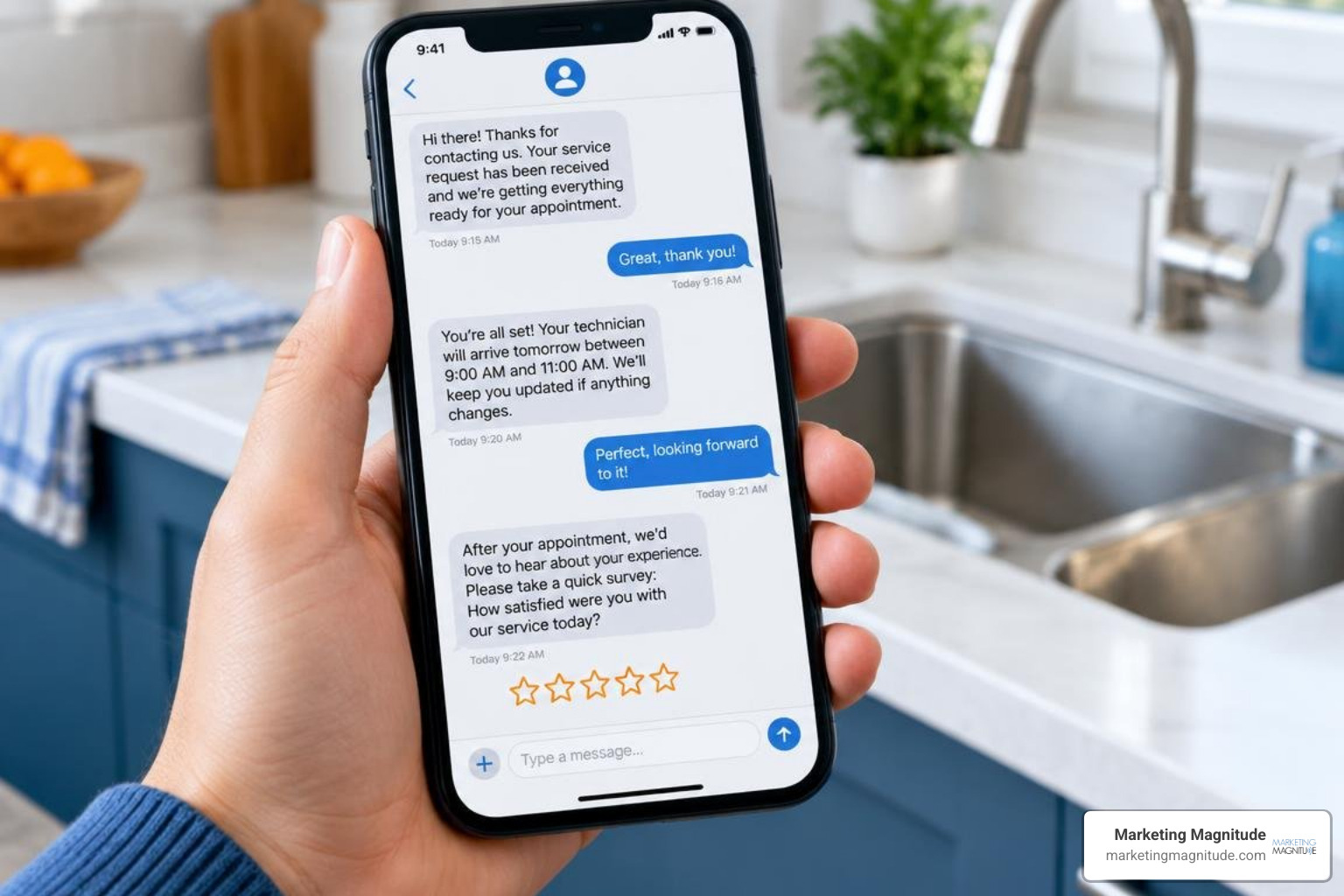
A predictable plumbing business relies on automated customer retention workflows. For every $1 invested in strategic email marketing, the average return across service businesses is $44. Paired with SMS, which regularly sees open rates above 90% within minutes, automated workflows turn one-time callers into long-term clients.
Using connected CRM software and marketing automation, plumbing companies can deploy multi-touch workflows that trigger based on customer actions and system dates.
Key automation workflows include:
- Water Heater Maintenance Drips: Annual automated notifications reminding homeowners to flush their water heater to prevent sediment buildup, preserve energy efficiency, and maintain system warranties.
- Water Treatment Cartridge Replacements: Automated reminders sent every 6 to 12 months based on the specific filtration systems installed, complete with single-tap booking links.
- Shoulder-Season Safety Inspections: Proactive campaign broadcasts sent in early spring and autumn offering comprehensive home plumbing evaluations, filling technician schedules during slower periods.
- Unsold Estimate Reactivation: Automated follow-ups for high-ticket quotes (sewer repairs, repipes, water heaters) that have not closed within 48 hours.
- “We’re in Your Neighborhood” Radius Notifications: Automated SMS messages sent to nearby CRM contacts when a service truck is dispatched to their subdivision, offering reduced dispatch fees for same-day bookings.
High-Converting Automated Follow-Up Sequences
Following up on unsold estimates is one of the fastest ways to generate high-margin revenue. Homeowners often delay approving estimates due to price shock, lack of financing awareness, or competing priorities.
When structuring these workflows, applying proven frameworks for setting up automated drip SMS campaigns ensures consistent engagement without feeling intrusive.
A proven 4-stage unsold estimate sequence includes:
- Touch 1 (Hour 4): SMS with a direct digital link to review the detailed proposal, technician notes, and project photos.
- Touch 2 (Day 2): Automated email focusing on flexible monthly financing options: “Did you know your $3,500 tankless upgrade can be split into low monthly payments of $65/mo? Click here to pre-qualify without affecting your credit score.”
- Touch 3 (Day 7): SMS highlighting quality, labor warranties, and verified customer testimonials for similar neighborhood projects.
- Touch 4 (Day 14): Final courtesy email offering a limited-time incentive, such as a complimentary whole-home plumbing safety inspection or a waived dispatch fee if scheduled that week.
How Can Reputation Management, Social Media, and Referral Networks Expand Market Share?
Trust is the single most valuable asset for a home service company. 9 out of 10 consumers check online reviews before selecting a local business, and consumers spend 31% more with companies that maintain excellent review profiles. Building a strong local reputation requires systematic processes.
Automated review generation should be tied directly to dispatch workflows. Within 30 to 60 minutes of job completion, an automated SMS should be sent to the customer thanking them by name for choosing the company, noting the specific repair completed, and inviting them to share a quick Google review through a direct link to the business’s Google Business Profile.
Technicians should also carry customized QR code cards that link directly to your Google review submission form, allowing satisfied homeowners to leave feedback before the service vehicle leaves the driveway.
If a customer leaves a negative review, respond publicly, calmly, and professionally within 24 hours. Acknowledge their frustration, state your company’s commitment to quality work, and provide a direct phone number to an operations manager to resolve the issue offline. Addressing negative feedback constructively demonstrates accountability and protects conversion rates.
On social channels, focus on authentic, localized content:
- Short-form vertical video (Reels, TikTok) featuring technicians explaining common plumbing issues, demonstrating why drain cleaners damage pipes, or showing before-and-after footage of clean mechanical rooms.
- Seasonal community advice, including step-by-step winterization guides and spring leak checks.
- Community sponsorships, youth team partnerships, and local charity projects that build local brand recognition.
Complement social content with strategic B2B referral programs. Property managers, real estate agents, home inspectors, HVAC contractors, and local restoration companies are consistent sources of plumbing leads. Implement dedicated email marketing automation to deliver quarterly newsletters, priority diagnostic offerings, and partner updates to keep your business top of mind.
Property Manager and Trade Partner Referral Funnels
Establishing systematic B2B referral relationships creates consistent, low-cost commercial and residential service leads:
- Dedicated Partner Protocols: Create streamlined dispatch processes offering priority booking and discounted diagnostic rates for property management firms and HOA boards.
- Cross-Trade Strategic Alliances: Build formal cross-referral partnerships with local HVAC contractors, water damage restoration specialists, and licensed electricians who encounter plumbing needs on job sites.
- Automated Partner Engagement: Use automated quarterly newsletters and monthly check-ins to maintain top-of-mind awareness and share relevant seasonal maintenance guides.
How Do Plumbing Companies Measure ROI and Close the Attribution Loop?
Scaling a plumbing business requires tracking metrics that directly reflect revenue and profitability rather than vanity engagement.
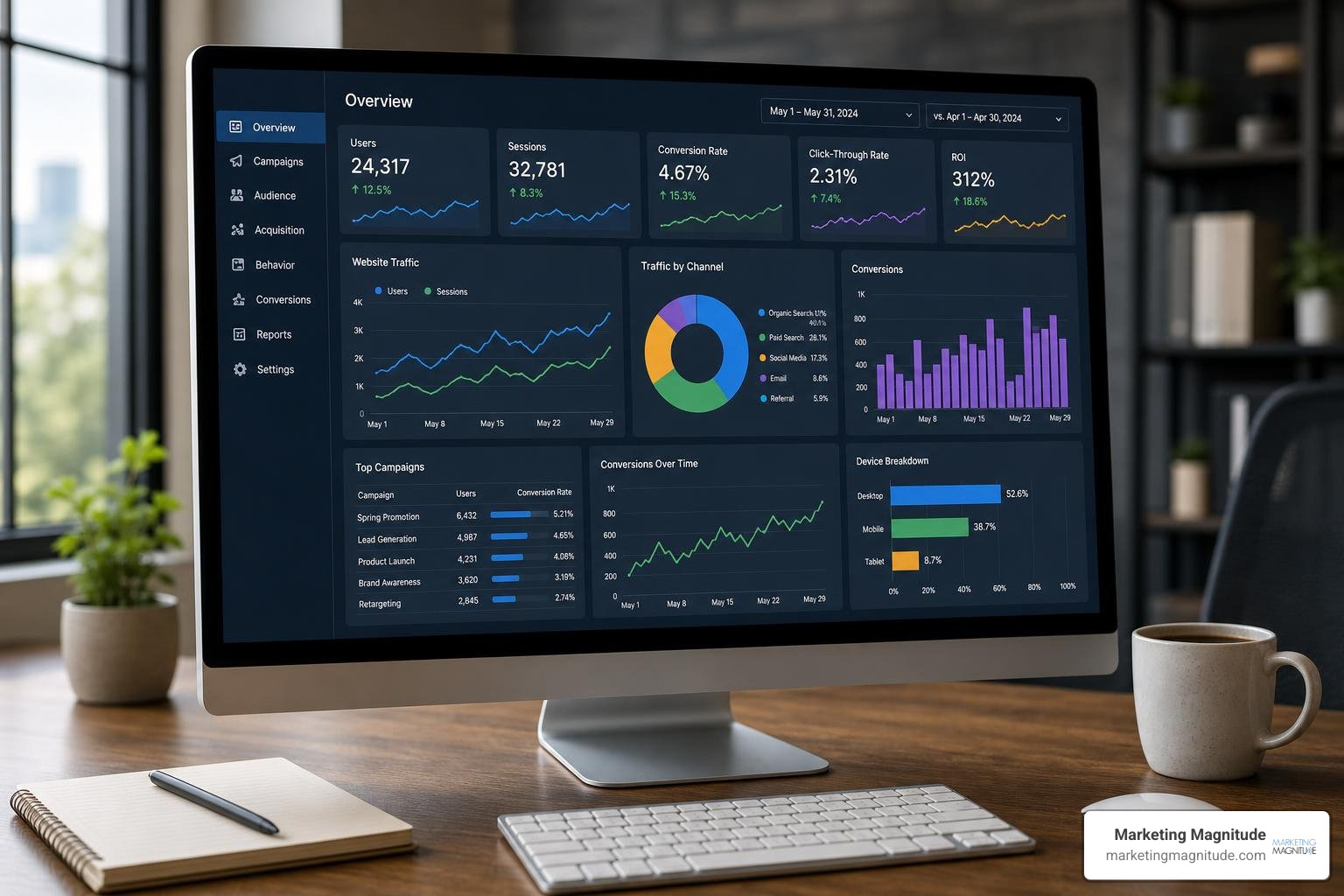
Tracking must connect each closed job back to the original marketing touchpoint. Utilizing Dynamic Number Insertion (DNI) allows you to display unique, trackable phone numbers across different marketing channels (Google LSAs, Google Search Ads, Meta campaigns, organic landing pages, and offline direct mail).
Understanding how call tracking increases marketing ROI helps you reallocate budget from underperforming campaigns into channels that generate profitable, high-ticket jobs.
Every plumbing growth scorecard should monitor these core Key Performance Indicators (KPIs):
- Cost Per Lead (CPL): Total ad spend divided by total inbound inquiries across each channel.
- Cost Per Booked Job (CPBJ): Total marketing spend divided by the number of jobs actually dispatched.
- Lead-to-Booking Rate: The percentage of raw inbound calls and chats that convert into scheduled appointments (target: >80% for emergency calls).
- Average Ticket Value by Source: The average revenue generated per closed job across specific marketing campaigns.
- Customer Lifetime Value (LTV): Total revenue generated by a customer across all service calls, maintenance memberships, and equipment upgrades over their lifetime.
Closing the attribution loop between your CRM and digital marketing platforms ensures your marketing budget is continuously directed toward the most profitable services.
Frequently Asked Questions About Advanced Plumbing Marketing
What is the most cost-effective marketing channel for a plumbing company in 2026?
The foundation of cost-effective plumbing marketing is a fully optimized Google Business Profile (GBP) paired with automated post-job SMS review generation and Google Local Services Ads (LSAs). This combination captures high-intent homeowners actively seeking emergency services at a lower cost per acquisition than standard PPC search campaigns.
How does an AI chatbot handle emergency plumbing calls after business hours?
Modern conversational AI systems use natural language processing to triage inbound inquiries in real time. The AI gathers the caller’s address and issue details, provides immediate mitigation guidance (such as locating the main water shut-off valve), and instantly routes critical emergencies—such as burst pipes or flooding—directly to an on-call dispatcher via urgent SMS and phone escalation.
How often should plumbers follow up on unsold replacement estimates?
Plumbing companies should use an automated 4- to 5-touch follow-up sequence spanning 14 days after providing an estimate. Initial follow-ups should confirm receipt of the quote, secondary messages should introduce flexible financing options, and subsequent touchpoints should highlight customer reviews, warranty coverage, and seasonal scheduling incentives.
How Can You Implement an Integrated Growth System for Your Plumbing Business?
Isolated marketing tactics produce unpredictable results. Buying ad clicks without fast intake systems, running SEO campaigns without conversion-focused websites, and collecting customer data without automated follow-ups wastes valuable marketing budget.
To build a predictable, scalable business, contractors must connect their lead generation, customer intake, CRM systems, and retention workflows into one unified growth ecosystem.
At Marketing Magnitude, we build integrated growth platforms tailored to service businesses. By combining search marketing, local SEO, paid advertising, custom CRM architecture, AI communication, and lifecycle automation, we help plumbing companies scale efficiently and sustainably.
Ready to eliminate lead leaks, increase your booking rates, and build a dependable pipeline of high-margin plumbing jobs? Contact Marketing Magnitude today to audit your current digital systems and develop your customized growth engine.
Get Started Now
Fill out this form to start your journey to next-level marketing solutions for your business.