What Is a Backlink, and Why Do You Need One?
What is a backlink, and why do I need it? Here’s the short answer:
A backlink is a link from another website that points to yours. Search engines like Google treat each backlink as a vote of confidence — a signal that your content is worth trusting. More high-quality backlinks generally means higher rankings, more organic traffic, and greater visibility online.
Why you need backlinks:
- They tell search engines your site is credible and authoritative
- They help your pages rank higher in Google search results
- They drive referral traffic directly from other websites
- They speed up how quickly Google discovers and indexes your pages
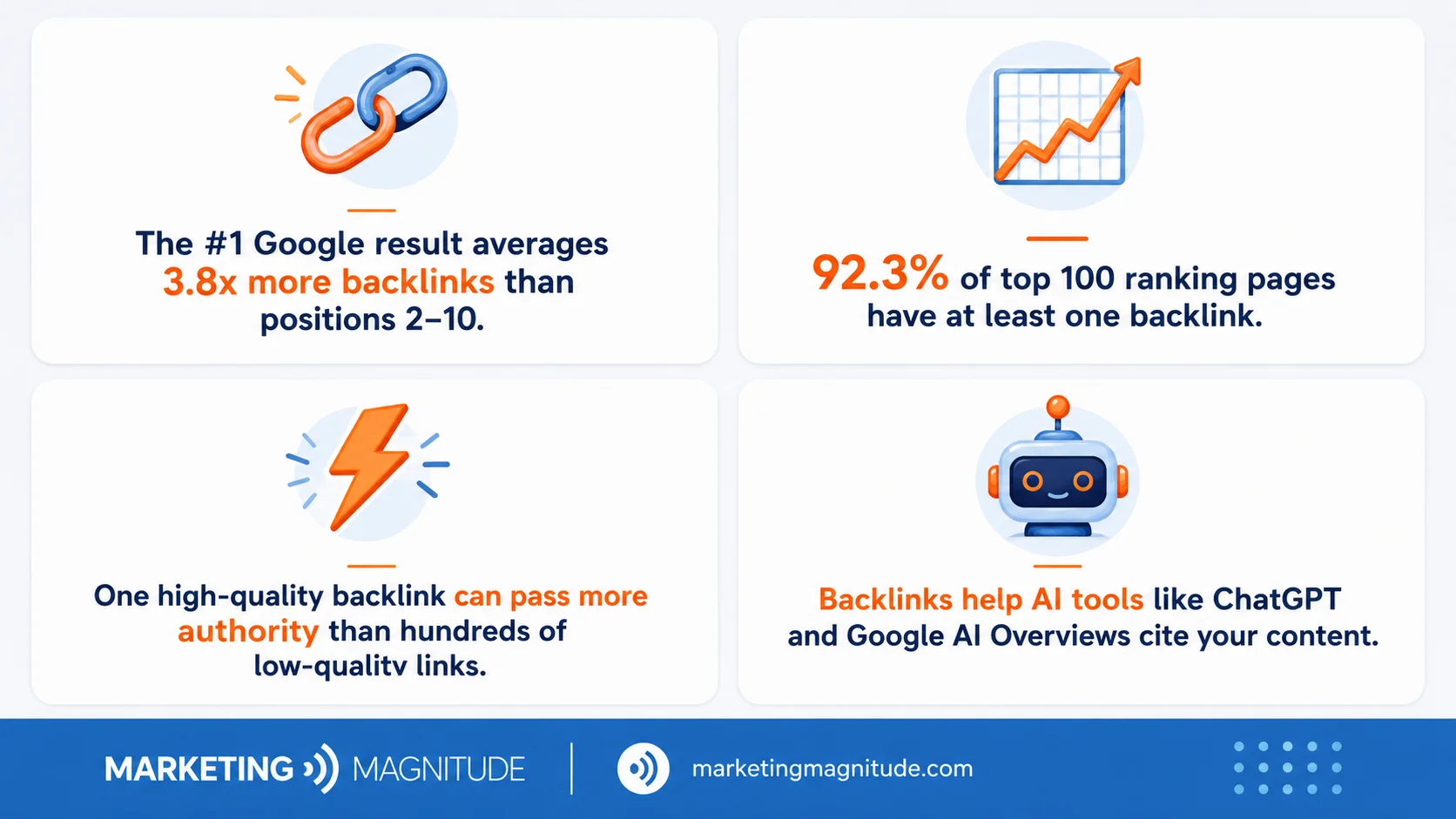
- They influence whether AI tools like ChatGPT and Google’s AI Overviews cite your content
The data backs this up. The number one result in Google has, on average, 3.8 times more backlinks than pages ranking in positions two through ten. And 92.3% of the top 100 ranking websites have at least one backlink.
Not all backlinks are equal, though. A single link from a trusted, relevant website can outweigh hundreds of links from low-quality sources. This guide covers everything you need to know — what backlinks are, how they work, what makes them good or harmful, and how to start building them.
I’m Kelly Rossi, founder of Marketing Magnitude, and with over 20 years of experience helping service-based businesses grow through integrated SEO and digital marketing systems, I’ve seen how understanding what a backlink is and why you need it can be the difference between a site that ranks and one that stays invisible. Let’s break it all down so you can start making backlinks work for your business.
What is a backlink, and why do I need it? glossary:
What is a backlink, and why do I need it?
To understand how the modern web functions, it helps to view it not as a collection of isolated pages, but as an interconnected map. At the heart of this map are hyperlinks. When another website places a clickable link that points directly to your website, you have earned a backlink.
But why is this simple connection so critical to your business?
For search engines, navigating the web without links would be like trying to navigate a city without roads. Backlinks act as the digital highways that allow search engine crawlers to discover, index, and evaluate your content. If your website has no external links pointing to it, it exists in a digital vacuum. In fact, studies show that roughly 95% of all indexed web pages have zero backlinks, and consequently, they receive zero organic traffic from Google.
By understanding what is a backlink, and why do I need it?, you transition from passively hoping customers find your website to actively building digital pathways that guide search engines and qualified prospects straight to your virtual front door.
Understanding the Core Concept: What is a backlink, and why do I need it?
At its technical roots, a backlink is created using HTML code. When Site A wants to reference a resource on Site B, they embed a hyperlink using an anchor tag. To understand how this works conceptually, you can read our comprehensive resource on What is a backlink?.
When search engine bots crawl Site A and find that link, they follow it to your site. This process does two things:
- It passes link equity (historically called “link juice”), which is a portion of the linking site’s own authority.
- It signals to search engines that an independent third party has vetted your content and found it valuable enough to share with their own audience.
To build a strong foundation in digital marketing, it is helpful to look at how these elements fit together. You can explore these concepts further in our A Brief Glossary of 12 Essential SEO Terms, which breaks down the foundational language of search visibility.
As explained by Moz in their guide on What Are Backlinks In SEO and Why Are They Important? – Moz, search engines treat these connections as digital endorsements. The more unique websites (known as referring domains) that link to you, the more search engines trust your site’s credibility.
Backlinks vs. Internal Links vs. Outbound Links
To optimize your website’s search performance, you must understand how different types of links function together. While backlinks are crucial, they are only one piece of a complete link distribution system.
Here is how backlinks compare to internal and outbound links:
| Link Type | Origin | Destination | Primary Purpose | Level of Control |
|---|---|---|---|---|
| Backlink (Inbound Link) | External Website | Your Website | Passes external authority, trust, and referral traffic. | Low (Must be earned or built) |
| Internal Link | Your Website | Your Website | Establishes site architecture, distributes link equity, and aids navigation. | High (Fully controlled by you) |
| Outbound Link | Your Website | External Website | Provides reference value, builds trust, and establishes topical context. | High (Fully controlled by you) |
Each of these link types plays a distinct role in your overall search strategy. Internal links help search engine crawlers understand the hierarchy of your pages, ensuring that when you receive a powerful backlink to a blog post, that authority is successfully distributed to your commercial service pages.
To learn how to structure your own pages to maximize this internal flow of authority, check out our guide on The Secret Sauce of On Page Optimization.
Why Backlinks Matter for SEO and AI Search in 2026
The search landscape is changing rapidly. With the rise of artificial intelligence, conversational search engines, and generative search experiences, many business owners ask: Do backlinks still matter in 2026?
The answer is an emphatic yes. In fact, as AI-driven search engines attempt to filter through an unprecedented volume of AI-generated content, they rely more heavily than ever on human-vetted trust signals. Backlinks have evolved from simple technical ranking signals into comprehensive reputation metrics that prove your brand’s real-world authority.
The Role of Backlinks in Modern Search Engine Rankings
Google’s foundational algorithm, PageRank, was built on the core principle that a link is a vote of confidence. While Google’s ranking systems now utilize hundreds of complex signals, the 2024 Google Content Warehouse API leak confirmed that PageRank remains highly active in multiple modern variations.
Backlinks are still one of Google’s primary ranking factors. When a reputable website links to you, they are aligning your site with Google’s E-E-A-T (Experience, Expertise, Authoritativeness, and Trustworthiness) framework. This external validation is incredibly difficult to fake, which is why top-ranking pages on search engine results pages (SERPs) consistently possess the highest volume of quality backlinks.
For a deeper look into how these ranking signals operate, read our educational article on What is Search Engine Optimization?.
As we navigate the current search landscape, staying informed about historical and modern search metrics is essential. You can find more context in our guide on Need to Know Search Engine Optimization Facts.
Furthermore, as outlined in Similarweb’s analysis of Backlinks in 2026: What They Are & How to Get Them | Similarweb, search engines continue to prioritize sites that demonstrate a steady, natural growth of followed links over time.
How Backlinks and Brand Mentions Influence AI Search Engines
In 2026, optimization is no longer just about ranking on page one of Google; it is also about securing citations in AI search tools like ChatGPT, Perplexity, and Google’s AI Overviews.
These Large Language Models (LLMs) use Retrieval-Augmented Generation (RAG) to pull real-time web data to answer user queries. Because these AI models must avoid presenting false information, they prioritize citing websites that are highly trusted within their training data and index.
Interesting statistics from 2026 show how backlinks and brand mentions influence this process:
- 73.2% of SEOs identify backlinks as a primary ranking factor for AI Overviews.
- Brand mentions from authoritative sources correlate 3 times more strongly with AI citations than traditional backlinks alone.
- Visitors coming to your site via AI search conversions have a 23x better conversion rate compared to traditional organic search visitors, making AI visibility highly lucrative.
This means that a modern backlink strategy must focus on building both clickable links for traditional SEO and high-authority contextual brand mentions. When authoritative industry publications mention your brand alongside relevant topics, AI search engines recognize your business as a trusted entity, prompting them to recommend your services to users.
Evaluating Link Quality: Dofollow, Nofollow, and Toxic Links
Not all links are created equal. In the early days of SEO, webmasters could manipulate search results by acquiring thousands of low-quality links from spammy directories or forum comments. Today, search engines use sophisticated machine-learning algorithms to evaluate the quality, context, and intent behind every link.
Dofollow vs. Nofollow Backlinks: The Technical Difference
When a website links to another, the link is “dofollow” by default. This means search engine crawlers will follow the link and actively pass link equity to the destination page.
However, site owners can add specific attributes to the link’s HTML code to instruct search engines on how to handle it. The most common attribute is rel="nofollow".
To understand the difference, let’s look at the HTML structure:
- Dofollow Link:
Marketing Magnitude - Nofollow Link:
Marketing Magnitude
In March 2020, Google updated its policy to treat “nofollow” attributes as hints rather than strict directives. This means that while nofollow links do not pass direct link equity in the traditional sense, Google may still use them for indexing and context.
Additionally, Google uses two other link attributes introduced to better classify web content:
rel="sponsored": Used for links that are part of paid advertisements, sponsorships, or affiliate agreements.rel="ugc": Used for links within user-generated content, such as forum posts, blog comments, or guest reviews.
While dofollow links are the gold standard for boosting search engine rankings, nofollow, sponsored, and UGC links are still highly valuable. They drive real referral traffic, diversify your link profile, and build brand awareness that AI engines recognize.
For a breakdown of these and other essential search terms, explore our list of SEO Terms You Need to Know.
What Makes a Backlink High-Quality vs. Low-Quality?
To ensure your link-building efforts yield a positive return on investment, we must focus on quality over quantity. As discussed in Backlynk’s guide on What Are Backlinks? 2026 Definition, Examples & Google Link Rules | Backlynk, Google evaluates links based on several key quality signals:
- Topical Relevance: The linking website must share a logical connection with your business. For example, if you run a physical therapy clinic in Las Vegas, a link from a medical journal or a local sports blog is highly relevant. A link from an unrelated beauty blog in another country is not.
- Domain and Page Authority: Links from established, trusted websites (like major news outlets, educational institutions, or industry-leading blogs) carry significantly more weight than links from brand-new websites with no established trust.
- Link Placement: Google prioritizes editorial links that are naturally integrated into the main body copy of a page. Links placed in footers, sidebars, headers, or author bios carry far less value.
- Anchor Text: The clickable text used to link to your site should be natural and descriptive. Over-optimizing your anchor text with exact-match keywords (e.g., using “best Las Vegas chiropractor” dozens of times) looks manipulative and can trigger search filters. A natural profile is dominated by brand names and naked URLs.
- Organic Traffic of the Linking Page: A link from a page that receives active organic traffic from Google passes significantly more equity than a link from a page with zero organic visitors.
Building high-quality links requires a strategic approach. To avoid common pitfalls and protect your marketing budget, read our advice on how to Don’t Go Broke Buying Backlinks.
The Risks of Bad or Toxic Backlinks
Just as high-quality backlinks can elevate your business, low-quality or “toxic” links can severely damage your search visibility.
Toxic backlinks typically come from spammy websites, link farms, automated comment spam, or low-quality private blog networks (PBNs) designed solely to manipulate search rankings. Google’s SpamBrain AI is highly effective at identifying these unnatural link patterns.
If your website accumulates a high volume of toxic links, you risk receiving an algorithmic demotion or a manual action penalty from Google, which can cause your organic traffic to plummet overnight.
If you suspect your site has been targeted by a negative SEO attack or has accumulated low-quality links in the past, you must perform a backlink audit and use Google’s Disavow Tool to instruct search engines to ignore those harmful connections.
How to Build and Audit Your Backlink Profile
Now that you understand the value of backlinks and how search engines evaluate them, let’s look at how to build and maintain a healthy backlink profile for your business.
Actionable Strategies to Start Building Backlinks
Earning high-quality backlinks requires a combination of strategic content creation and targeted outreach. As outlined in the What Are Backlinks? Everything You Need to Know (2026) – Link Building Journal, the most effective link-building strategies focus on providing genuine value to the web:
- Create Linkable Assets: Publish original research, data-driven studies, comprehensive guides, or interactive tools on your website. When other writers and industry professionals need data to support their content, they will naturally link back to your asset as their source.
- Digital PR and Expert Sourcing: Use platforms like Featured.com or HARO (Help a Reporter Out) to provide high-quality quotes and expert commentary to journalists. In exchange for your expertise, writers will often include a backlink to your business in their articles.
- Broken Link Building: Use SEO tools to find broken links on authoritative websites within your niche. Reach out to the site owner, politely point out the broken link, and suggest one of your high-quality articles as a relevant replacement.
- Reclaim Unlinked Brand Mentions: Set up alerts to monitor when websites mention your business name without linking to you. Reach out to the author, thank them for the mention, and politely ask if they would be willing to turn it into a clickable hyperlink.
- Selective Guest Posting: Write high-quality, educational guest articles for reputable publications that your target audience actually reads. Ensure any links pointing back to your site are contextually relevant and embedded naturally within the body text.
To explore how these off-page efforts tie into a broader digital marketing strategy, read our guide on Search Engine Optimization SEO Strategies for Improved Online Visibility.
How to Check and Audit Your Existing Backlinks
Before launching a link-building campaign, you must establish a baseline by auditing your current backlink profile.
We recommend using Google Search Console (a free tool that provides a list of websites linking to you) alongside comprehensive SEO platforms like Ahrefs or Semrush.
When conducting a backlink audit, look for:
- Referring Domain Growth: Is your list of unique linking websites growing steadily over time, or is it declining?
- Anchor Text Distribution: Ensure your anchor text profile looks natural, with a healthy mix of brand terms, naked URLs, and descriptive phrases.
- Link Health: Check for lost links, broken links pointing to 404 pages, or redirect chains that could be diluting your link equity.
- Toxicity Score: Identify any spammy or irrelevant domains that could be dragging down your search visibility, and prepare a disavow file if necessary.
Frequently Asked Questions About Backlinks
What is a backlink, and why do I need it for local SEO?
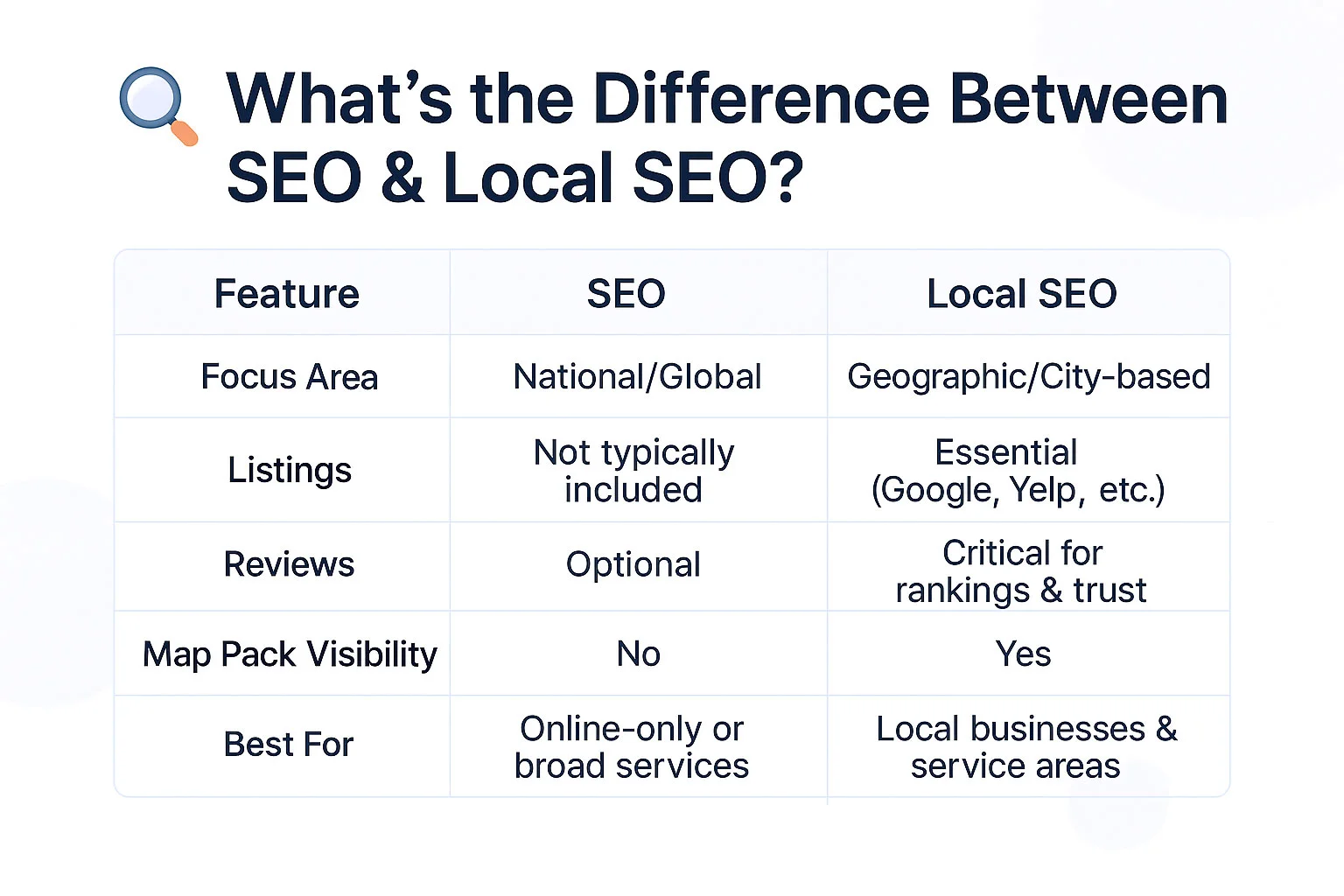
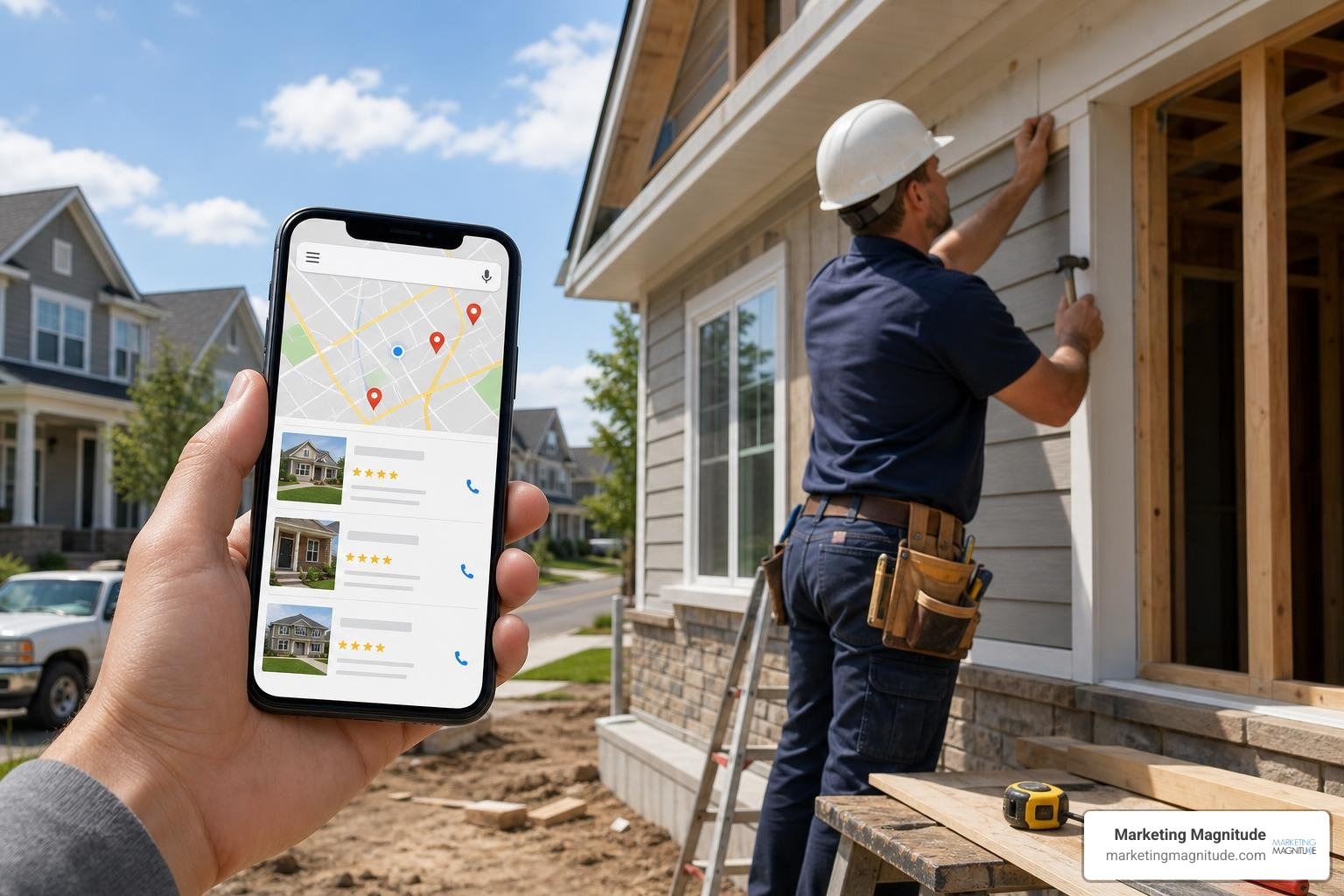
For service-based businesses in competitive regional hubs like Las Vegas or Austin TX, backlinks are the lifeblood of local search visibility.
When regional websites, local chambers of commerce, and neighborhood directories link to your website, they pass geographic relevance to your business. This signals to Google that your business is an active, trusted member of the local community, which directly improves your rankings in both local organic search and the Google Maps Local Pack.
Can I safely buy backlinks in 2026?
No. Google’s spam policies strictly prohibit buying or selling links that pass PageRank.
Google’s machine-learning systems are highly sophisticated and can easily detect unnatural link-velocity spikes or patterns from known link sellers. Instead of spending your marketing budget on risky paid links that could result in a search penalty, invest in creating high-quality content and executing legitimate digital PR campaigns.
How long does it take for new backlinks to improve rankings?
The time it takes to see ranking improvements from a new backlink depends on several factors, including the authority of the linking site, how quickly search engine bots crawl and index the link, and the competitiveness of your target keywords.
In general, links from highly active news sites can be indexed in a matter of days, while links from smaller blogs may take several weeks. You can typically expect to see measurable ranking improvements within 30 to 90 days after a high-quality link is indexed.
Conclusion
Understanding what is a backlink, and why do I need it? is a crucial step toward building a successful online presence. However, in modern digital marketing, search engine optimization cannot exist in a silo.
At Marketing Magnitude, we believe that true, sustainable business growth happens when your SEO, CRM technology, email automation, and paid advertising work together as a single, connected ecosystem.
Whether you are looking to build a high-authority backlink profile, optimize your website for AI search visibility, or streamline your local customer acquisition pipeline in Las Vegas or Austin TX, we are here to help you scale smarter and more efficiently.
Ready to transform your website into a high-performing growth asset? Explore our comprehensive Search Engine Optimization Services and let’s build a sustainable growth system for your business.