
Why Your Marketing Isn’t Working Has Nothing to Do With Your Ads or SEO
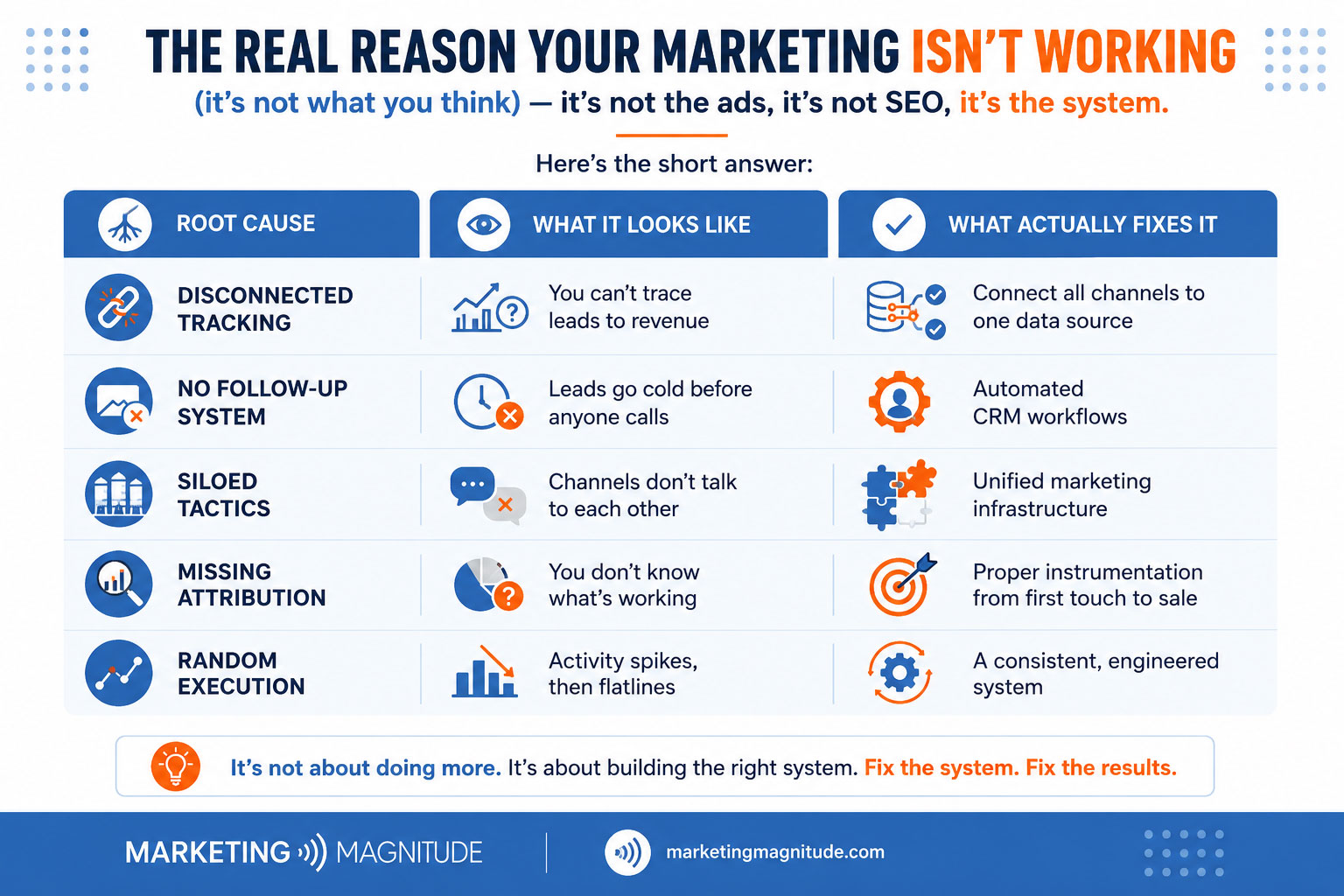
The real reason your marketing isn’t working (it’s not what you think) — it’s not the ads, it’s not SEO, it’s the system. Here’s the short answer:
| Root Cause | What It Looks Like | What Actually Fixes It |
|---|---|---|
| Disconnected tracking | You can’t trace leads to revenue | Connect all channels to one data source |
| No follow-up system | Leads go cold before anyone calls | Automated CRM workflows |
| Siloed tactics | Channels don’t talk to each other | Unified marketing infrastructure |
| Missing attribution | You don’t know what’s working | Proper instrumentation from first touch to sale |
| Random execution | Activity spikes, then flatlines | A consistent, engineered system |
Most small businesses aren’t failing at marketing because their ads are bad or their SEO is weak. The campaigns run. The content gets published. The leads come in — sometimes.
But results never become predictable.
You spend more to get the same outcome. You add another channel. You hire someone new. And still, revenue feels like a coin flip.
That’s not a tactics problem. That’s a systems problem.
The machinery is running, but the wires aren’t connected. And no amount of new ads will fix a broken engine.
I’m Kelly Rossi, founder of Marketing Magnitude and a digital marketing strategist with over 20 years of experience helping businesses stop chasing tactics and start building systems that reliably turn traffic into revenue — and I’ve seen this pattern repeat across nearly every industry. In this guide, I’ll walk you through the three dirty little secrets behind why the real reason your marketing isn’t working (it’s not what you think) is always structural — and exactly what to do about it.
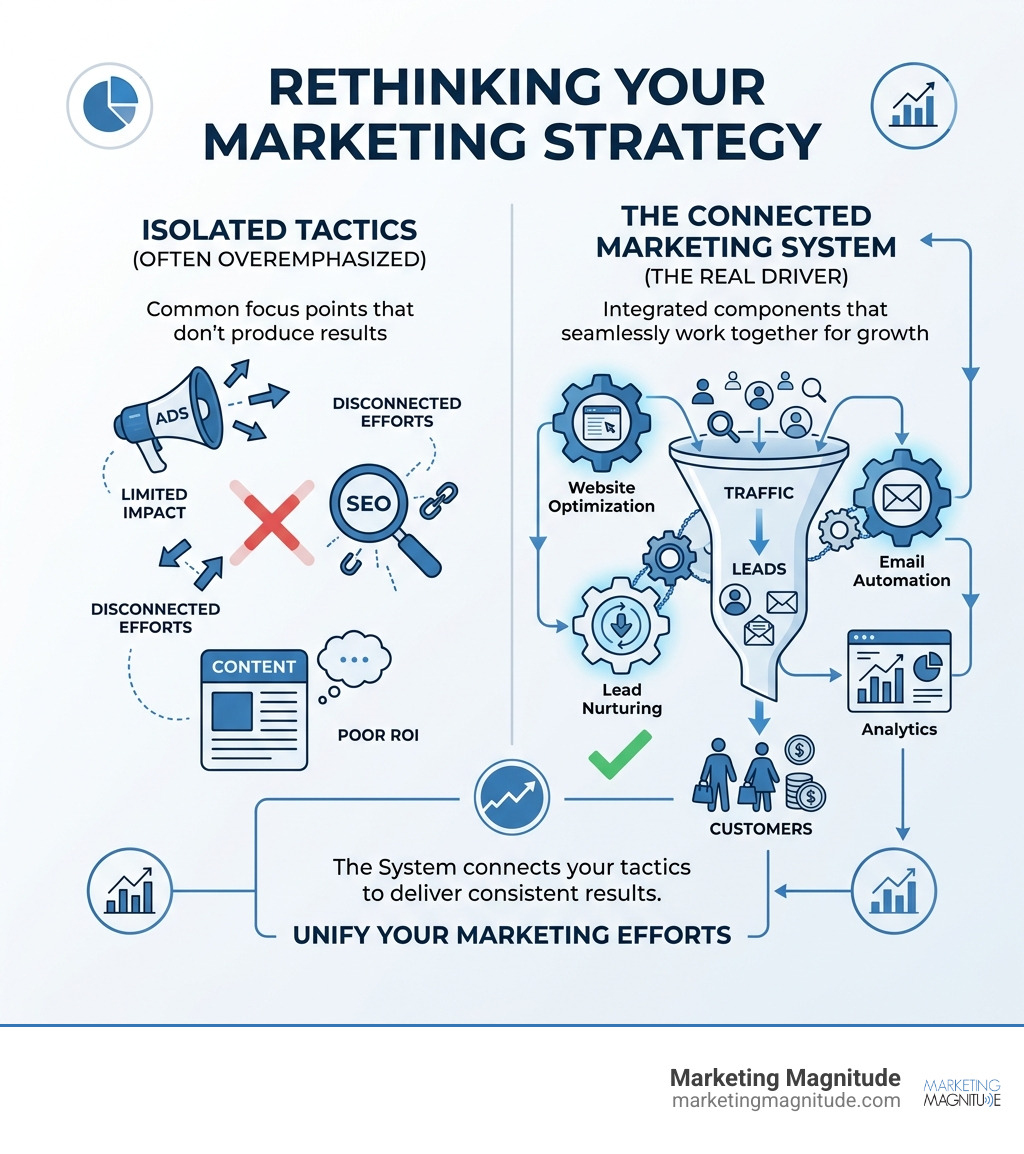
Secret #1: “The Real Reason Your Marketing Isn’t Working (It’s Not What You Think)” Twist: It’s not the ads It’s not SEO It’s the system
When we talk to business owners in Las Vegas or Austin, the frustration is almost always the same: “We’re doing all the things, but the needle isn’t moving.” They have a beautiful website, they’re running Google Ads, and they’ve hired an SEO person. Yet, the revenue growth is stagnant or, worse, erratic.
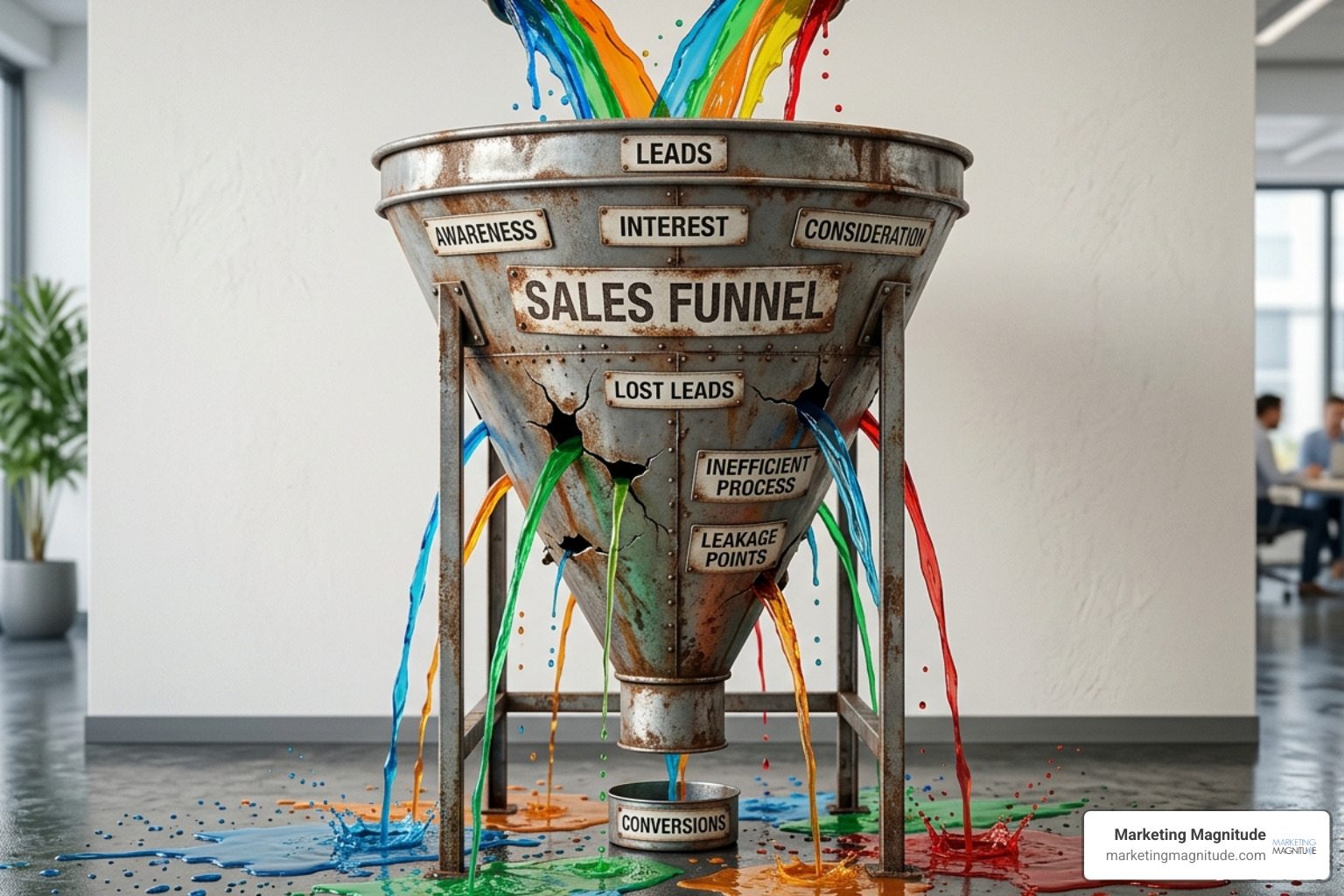
The truth is that Most Marketing Doesn’t Fail. It Just Never Becomes Reliable | The Systems Problem. It doesn’t implode; it just stays in a state of expensive “okay-ness.” This happens because of systemic bottlenecks. Think of your marketing like a plumbing system. If you have a massive leak in your pipes, increasing the water pressure (buying more ads) won’t get more water to the tap; it will just flood your house faster.
We often see the 80:20 principle ignored. Businesses spend 80% of their energy on new customer acquisition while ignoring the structural leaks that cause them to lose the leads they already have. This is a primary reason why 4 Ways to Improve Your Digital Marketing Strategy must start with an audit of your infrastructure, not your creative assets.
Structural issues often manifest as unreliable management. If your marketing performance swings wildly month-to-month without a clear explanation, you aren’t managing a system; you’re riding a roller coaster. This lack of stability is often why 4 Reasons Your Social Media Marketing Might Not Be Working; it’s not the platform’s fault, but the lack of a system to catch and convert that social interest.
“The Real Reason Your Marketing Isn’t Working (It’s Not What You Think)” Twist: It’s not the ads It’s not SEO It’s the system: The Illusion of Activity
There is a seductive trap in marketing called “The Illusion of Activity.” It’s when your team is busy—writing blogs, posting to Instagram, tweaking ad copy—but none of it is connected to a commercial outcome. This is the “doing stuff” problem.
When you engage in “random acts of marketing,” you might see a spike in engagement or a few extra clicks, but these are misleading proxies for progress. This activity creates a massive cognitive cost for the business owner. You’re forced to make dozens of small decisions every week about things that don’t actually move the revenue dial. This leads to decision fatigue, where you eventually stop caring about the details because you can’t see the big-picture impact.
Consider this: average website conversion rates hover around 2–3% across many sectors. If you are focused solely on getting more traffic (activity) but your system for converting that traffic is broken, you are effectively working harder to maintain a failing status quo. Avoiding 5 Major Social Media Marketing Mistakes to Avoid isn’t just about better posts; it’s about ensuring those posts feed into a system that actually converts.
Secret #2: The Accountability Gap and Revenue Leakage
The second secret is the “Accountability Gap.” This is the dark void between a lead being generated and a sale being closed. Most businesses track the front end (how many clicks did we get?) and the back end (how much money is in the bank?), but they have no idea what happens in the middle.
| Feature | Lead Generation (Tactics) | Lead Management (Systems) |
|---|---|---|
| Goal | Get someone to click or call | Turn the interest into a customer |
| Focus | Traffic, CTR, CPC | Response time, CRM, Automation |
| Visibility | High (Ad dashboards) | Low (Manual logs, memory) |
| Outcome | Raw leads | Predictable revenue |
As noted in the research, Your Marketing Isn’t Broken. It Was Never Engineered. | Olunix, marketing without a system is just expensive guessing. One of the most shocking statistics we see is that 40% of leads often go unanswered. In a study of a dental clinic, it was discovered that 40% of their calls were simply going unanswered at the front desk. By fixing the system to ensure every call was handled, they saw a 35% lift in booked appointments without spending an extra dime on ads.
This is why 3 Digital Marketing Strategies That Are Essential for Business must include a robust CRM (Customer Relationship Management) workflow. Without a data handoff that is automated and visible, leads fall through the cracks. If you aren’t tracking this, you might think your ads are failing, leading to PPC Mistakes That Harm Your Digital Marketing Strategy like cutting budget on a campaign that was actually working—you just weren’t answering the phone.
“The Real Reason Your Marketing Isn’t Working (It’s Not What You Think)” Twist: It’s not the ads It’s not SEO It’s the system: The Follow-Up Failure
Lead decay is a silent killer. Most small businesses lose over half their leads in the follow-up phase. If a lead comes in and doesn’t get a response within minutes, the chance of converting them drops off a cliff.
If your marketing feels like a “black hole” where money goes in and nothing comes out, look at your response speed. We’ve seen businesses double their conversions in six weeks just by implementing a CRM workflow that sends an automatic text and email reminder the moment a form is filled out.
Many Three Red Flags Your PPC Strategy Needs a Makeover are actually symptoms of a follow-up failure. You don’t need “better” leads; you need a system that treats every lead like it’s gold. Automated re-engagement campaigns can breathe life into “dead” leads, turning a 50% lead loss into a 35% appointment lift.
Secret #3: Tactics are Commodities, Engineering is the Edge
In May 2026, anyone can buy a Facebook ad or hire a writer to churn out AI-assisted content. These tactics have become commodities. The real competitive advantage lies in Marketing Systems Engineering.
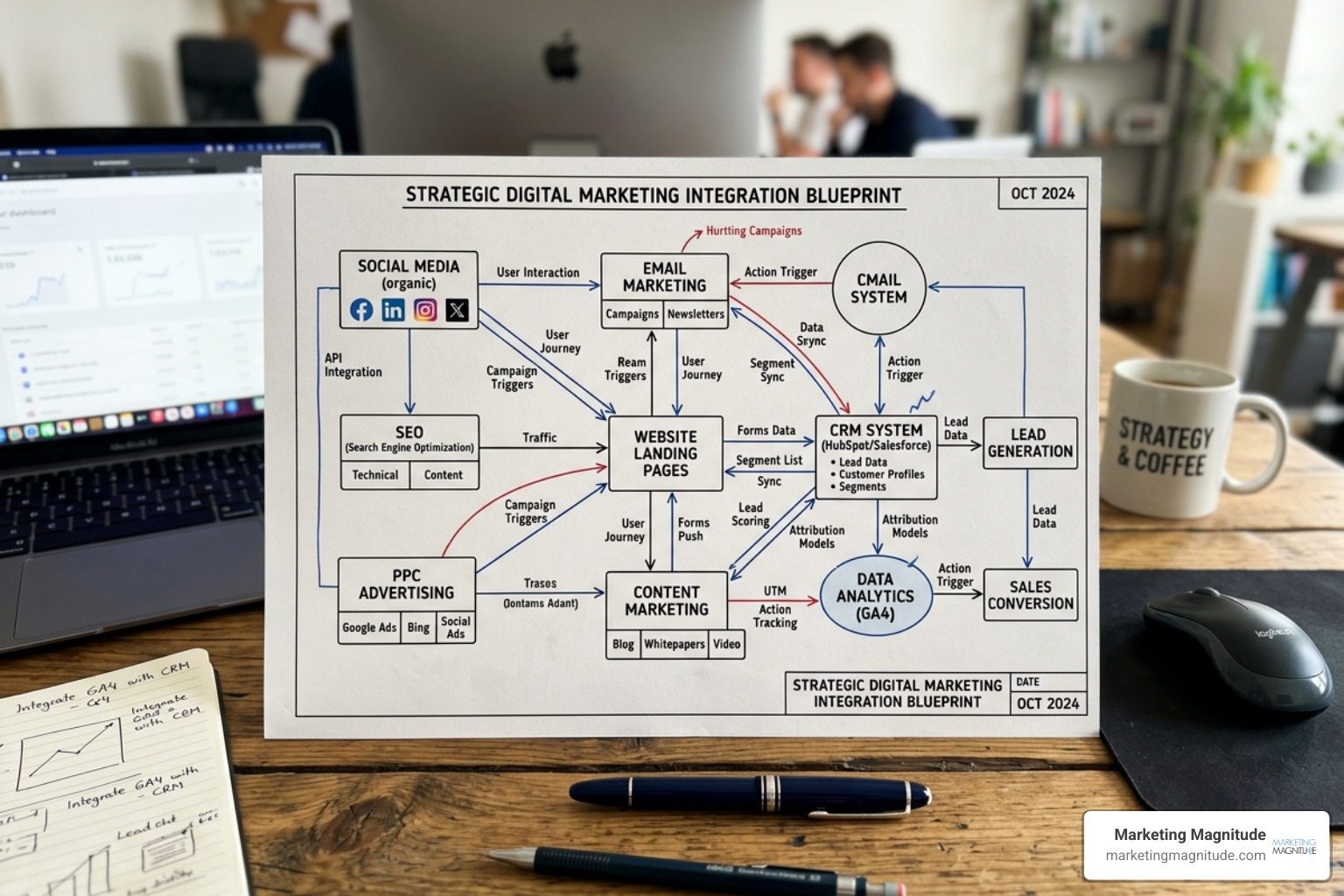
Every business goes through marketing maturity stages. Most get stuck because they try to apply “Level 5” tactics to a “Level 1” system. For example, SEO Writers: Avoid These 3 Content Marketing Mistakes focuses on the quality of the content, but if that content isn’t part of a sequenced journey, it’s just noise.
As the research from Big Brain Strategy suggests, Most Marketing Problems Aren’t Mysteries. They’re Patterns.. Whether you are a “Ghost” (successful but invisible online) or a “Firefighter” (constantly reacting to the crisis of the day), these are patterns that can be fixed with structure.
Often, the bottleneck isn’t strategy—it’s bandwidth. You might have a great plan, but if you don’t have the systems to execute it consistently, it fails. This is often How to Know Your SEO Person is Faking It; they focus on rankings (a tactic) rather than how those rankings integrate into your revenue system.
The Cost of Disconnected Marketing Infrastructure
The financial waste of disconnected marketing is obvious, but the hidden costs are worse. When you have siloed suppliers—one person doing SEO, another doing PPC, another managing the website—they rarely talk to each other. This creates a “Frankenstein” system where data is trapped in different silos.
When deciding between Hiring an Agency vs In-House, the most important question isn’t “who is cheaper?” but “who will build the system?” If you Should You Make Your Own Changes to Your Digital Marketing?, you risk breaking the delicate tracking links that keep your data accurate.
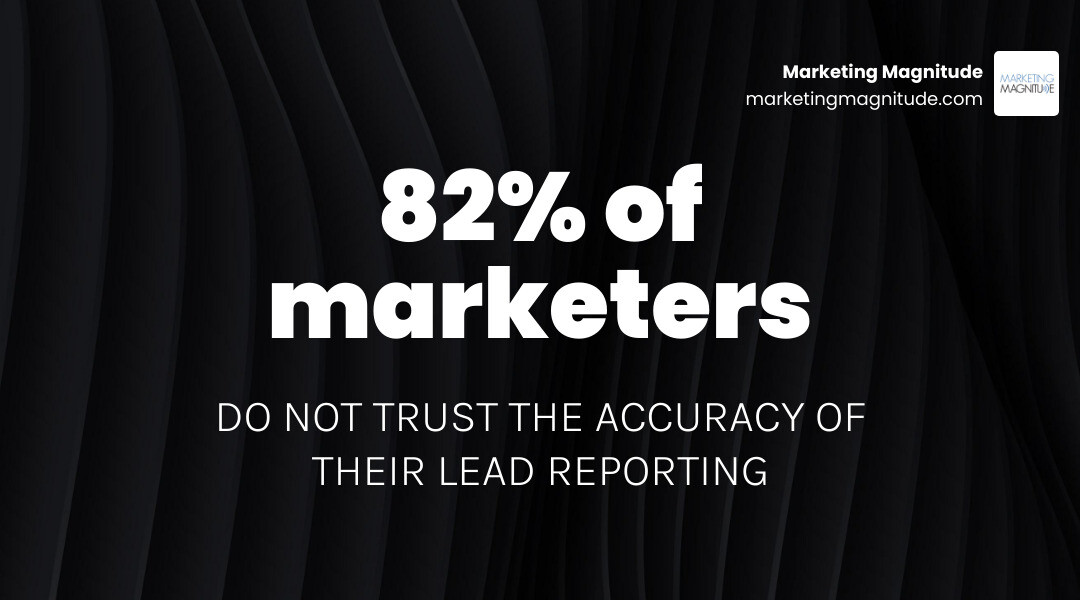
The lack of trust is staggering: 82% of marketers admit they do not trust the accuracy of their lead reporting. This distrust leads to “Flying Blind,” where decisions are made based on gut feelings rather than facts. Attribution red flags, like having more than 20% of your traffic labeled as “Direct,” usually mean your tracking is broken and you’re losing valuable referral data from your paid campaigns.
How to Map and Fix Your Marketing System Step-by-Step
Fixing your system isn’t about buying more tools; it’s about engineering the flow of data and customers.
- Visual Mapping: Sit down with a whiteboard and map the journey from the first time someone sees your name to the moment they pay you. If there is a gap where you “hope” they find the next step, that’s your first leak.
- Instrumentation: You must be able to track every enquiry back to its source. This means using call tracking, UTM parameters on all links, and hidden fields in your forms.
- Establish a Digital Marketing Strategy: This isn’t just a list of goals; it’s a blueprint for how your website, CRM, and ads will talk to each other.
- Feedback Loops: Create a weekly rhythm where you look at the data. If an ad has a high click-through rate but zero sales, your system should tell you that immediately so you can “kill” the experiment.
- Algorithmic Optimization: Modern platforms like Google and Meta use AI to find your audience. But they need consistent data to learn. If your system is “random,” the algorithms can’t help you.
- Predictable Growth: Once the system is aligned, growth becomes a matter of turning the dial. If you know that $1,000 in spend equals 10 leads and 2 sales, you can scale with confidence.
Frequently Asked Questions about Marketing Systems
Why does marketing activity create the illusion of progress without revenue?
Visible activity—like getting “likes” or “traffic”—feels good, but these are often misleading proxies. Without a system to attribute those actions to actual sales, you are operating in tactical silos. You lack “directional clarity,” meaning you’re running fast, but you might be running in a circle.
How can I quickly diagnose if my marketing has a systems issue?
Ask yourself these three questions:
- If I turned off one marketing channel tomorrow, would I know the exact financial impact within 30 days?
- Can I trace my last five customers back to the specific keyword or ad they first clicked?
- Does my revenue feel predictable, or does it swing wildly regardless of what I spend? If you answered “no” to the first two or “wildly” to the last, you have a systems issue.
What are the real costs of disconnected marketing beyond financial waste?
The biggest cost is decision fatigue. When you don’t have a reliable system, every marketing choice feels like a high-stakes gamble. This erodes your confidence as a leader and creates a “cognitive load” that prevents you from focusing on your actual business operations. Over time, this leads to a loss of momentum and misaligned priorities across your entire team.
Conclusion
At Marketing Magnitude, we believe that transparency is the antidote to marketing failure. Whether you are in Las Vegas, Austin, or anywhere in the United States, your business deserves more than “random acts of marketing.”
We specialize in building the infrastructure that makes marketing reliable. Our unique approach provides real-time tracking and reporting, giving you transparent insights into exactly how your campaigns are performing. We don’t just “do” SEO or PPC; we engineer systems that connect your traffic to your revenue.
Stop guessing and start growing. If you’re ready to fix your system and finally see the results your business deserves, reach out to the Marketing Magnitude Advertising Agency today. Let’s build something reliable together.