Why Smart Businesses Are Turning to Professional Paid Search Management
Paid search management services help businesses run profitable pay-per-click advertising campaigns across platforms like Google Ads and Microsoft Advertising. Here’s what you need to know when evaluating providers:
What’s Included:
- Campaign setup and keyword research
- Ad copy creation and testing
- Bid management and budget optimization
- Landing page recommendations
- Performance tracking and reporting
- Ongoing optimization and account management
Key Benefits:
- Immediate visibility in search results
- Precise audience targeting
- Measurable ROI with conversion tracking
- Professional expertise without hiring full-time staff
Typical Investment:
- Monthly management fees: $650-$5,000+ depending on ad spend
- Ad spend budget: Varies by industry and goals
- Setup fees: Often one-time cost for new campaigns
Businesses make an average of $28 in income for every $1 they spend on Google Ads, and paid search visitors are 50% more likely to purchase than organic visitors. Yet less than 25% of PPC ads actually produce conversions – often due to poor campaign management.
This difference between potential and reality is why more businesses are outsourcing their paid search efforts. Professional management can mean the difference between profitable campaigns and budget drain.
I’m Kelly Rossi, and I’ve been managing paid search management services for over 20 years, helping businesses avoid costly mistakes while maximizing their advertising ROI.
What Are Paid Search Management Services?
Paid search management services are like having a skilled pilot for your advertising campaigns. Just like you wouldn’t jump into a cockpit without proper training, navigating pay-per-click advertising requires expertise that most business owners don’t have time to develop.
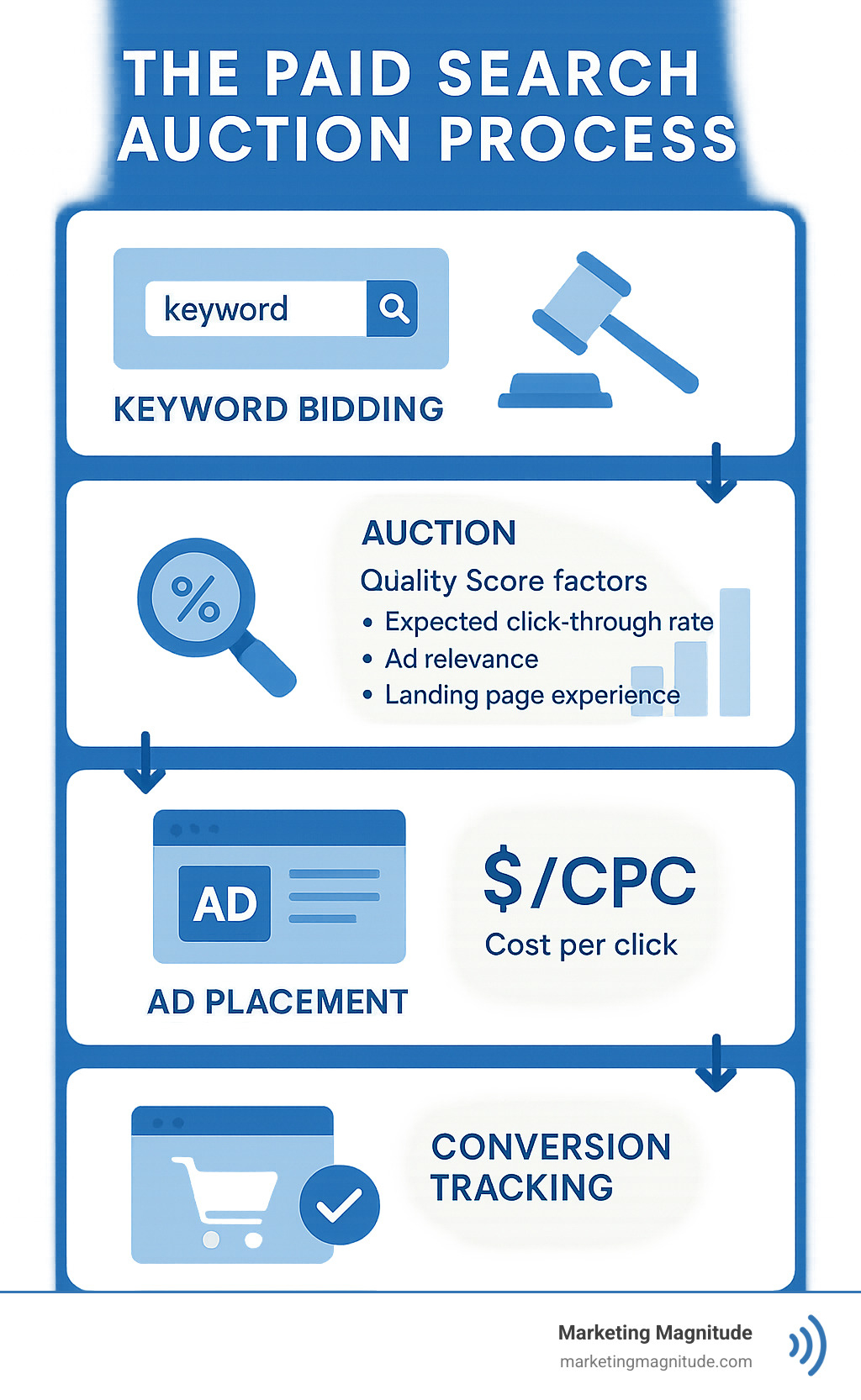
PPC works like a lightning-fast auction that happens every time someone searches online. When you type “best pizza near me” into Google, dozens of pizza shops instantly compete for your attention. The winners aren’t always the ones willing to spend the most – they’re the ones who’ve mastered relevance, quality, and strategic bidding.
The auction considers your bid amount, your ad’s quality score (measuring how relevant and useful your ad is), and the context of the search. A well-crafted, highly relevant ad can often beat a poorly designed ad with a much higher bid.
You select keywords your ideal customers might search for, create compelling ads that speak to their needs, and set maximum bids. When someone searches, the platform runs an instant auction. You only pay one cent more than necessary to maintain your position, not your maximum bid.
Quality Score is where many DIY efforts fail. Google and Bing evaluate whether your ad truly helps the searcher. They examine ad relevance to keywords, click-through rates, and landing page quality. Higher quality scores can slash costs while boosting ad position.
Major platforms include Google Ads (capturing about two-thirds of search traffic), Microsoft Advertising (powering Bing searches), and increasingly Amazon for product searches. Each platform has unique characteristics that experienced managers leverage.
For deeper insights, explore our PPC 101: Basics of Pay-Per-Click Management guide and scientific research on ad performance from Google.
Paid Search Management Services vs DIY PPC
The gap between professional PPC management and DIY efforts is like the difference between a home cook and a master chef. Anyone can follow a recipe, but creating exceptional results requires years of experience and specialized knowledge.
Average cost-per-lead has jumped 25% year-over-year to $66.69, while conversion rates dropped from 7.85% in 2022 to 6.96% in 2024. In this competitive landscape, small mistakes compound into budget disasters.
I’ve seen business owners accidentally show local ads to international audiences or burn through budgets using broad match keywords without proper negative keyword lists – paying for clicks from people who will never buy.
The learning curve is steeper than expected. While you’re figuring out keyword match types, competitors with professional management capture your potential customers using proven strategies.
There’s also opportunity cost – every hour spent wrestling with campaign settings is time not spent growing your business. Professional agencies bring battle-tested processes and advanced tools that typically deliver better results from day one.
Core Elements of a Paid Search Management Services Package
Comprehensive paid search management services should feel like having an entire marketing department working behind the scenes. The best providers become strategic partners invested in your success.
Campaign setup and strategy development begins with understanding your business goals, target audience, and competitive landscape. Professional managers structure campaigns logically, often separating by product lines or geographic regions for precise budget control.
Advanced keyword research and competitor analysis goes beyond basic keyword tools. Skilled managers analyze competitor advertising, identify high-intent long-tail keywords, and uncover opportunities with lower competition but high conversion potential.
Ad copy creation and testing combines art with science. Effective ads need compelling headlines, benefit-focused descriptions, and strong calls-to-action. Professional managers create multiple variations and continuously test different approaches.
Landing page optimization recommendations ensure ads don’t lead to dead ends. Managers audit pages for message match, loading speed, mobile optimization, and conversion opportunities.
Bid management and budget allocation involves sophisticated strategies beyond simple cost-per-click bids. Professional managers leverage automated bidding while maintaining human oversight.
Remarketing and audience development helps you reconnect with interested prospects who didn’t convert initially, including pixel tracking and sequential messaging strategies.
Key Benefits & ROI Drivers
When you invest in professional paid search management services, you’re buying something most marketing channels can’t deliver: instant visibility. The moment campaigns go live, your business appears at the top of search results for chosen keywords. No waiting months for SEO or hoping social media posts go viral.
The real magic happens with precision targeting. You reach people actively searching for exactly what you offer, at the exact moment they need it. This hyper-targeted approach means you’re not wasting money on people who might never buy.
Research shows paid search visitors are 50% more likely to purchase compared to organic search visitors. When someone clicks a paid ad, they’re already in buying mode – they’ve seen your offer and chosen to learn more.
Professional management amplifies these advantages through closed-loop reporting. Instead of counting clicks and hoping, experienced managers track every customer journey step. They know which keywords bring highest-value customers and which ads generate the most revenue.
This focus on lead quality over quantity transforms your marketing approach. Rather than celebrating vanity metrics, you measure what matters: revenue growth and customer acquisition cost. Small businesses especially benefit, as detailed in our guide on 4 Ways Small Businesses Can Benefit from Pay-Per-Click Advertising.
How Paid Search Beats Other Channels on Speed & Control
Paid search offers immediate traffic and complete control. While SEO efforts slowly build momentum over months, paid search delivers qualified visitors within hours of launching campaigns.
Budget flexibility lets you double advertising spend during busy seasons, then scale back during slower months – all with a few clicks. Traditional advertising like radio or magazines lock you into fixed schedules that rarely match business reality.
The real game-changer is granular targeting control. Create separate campaigns for different customer types, adjust bids based on device type, and schedule ads to run only when your sales team is available.
Seasonal promotions become incredibly powerful. When competitors raise prices or trending topics relate to your business, you can capitalize immediately.
Conversion & Landing Page Optimization Essentials
The secret separating successful campaigns from expensive disappointments lies in connecting ads with landing pages. Message match – ensuring ad promises align with landing page content – determines whether people convert or bounce.
Page speed might seem technical, but it’s a revenue driver. When landing pages take more than three seconds to load, you’re watching potential customers disappear. This is especially critical on mobile devices.
Conversion rate optimization transforms good campaigns into revenue engines. Professional managers continuously test headlines, button colors, form layouts, and calls-to-action. Even small improvements – like changing “Submit” to “Get My Free Quote” – can boost conversions by 20% or more.
Successful campaigns dedicate 25-30% of testing budget to systematic A/B testing, changing one element at a time rather than everything at once.
How Agencies Optimize Campaigns Step-by-Step
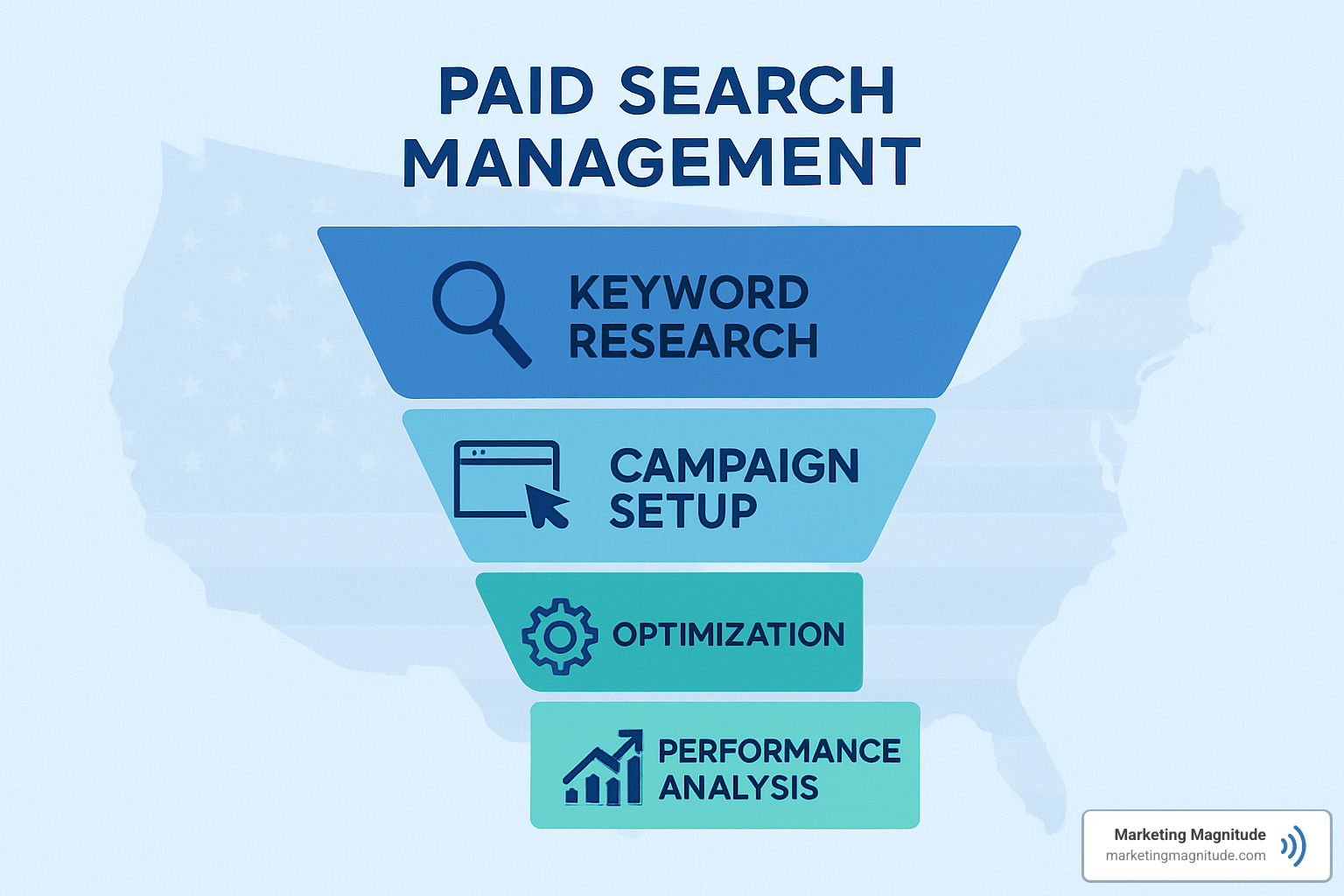
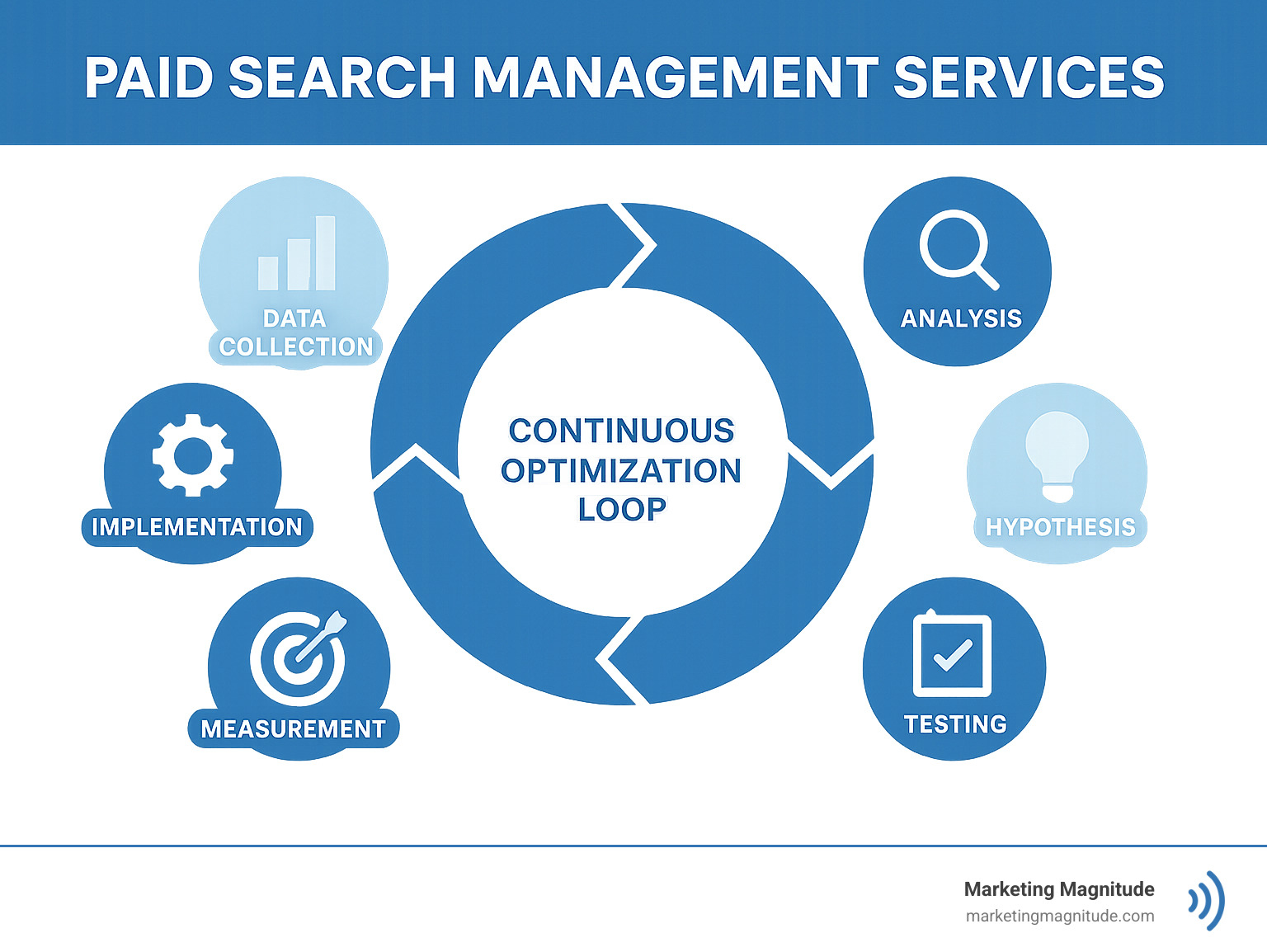
Professional paid search management services provide access to proven optimization systems refined through thousands of campaigns. It’s like having a master chef instead of following a cookbook recipe.
The process starts with a comprehensive audit of existing campaigns or competitive landscape analysis for new accounts. We examine campaign structure, keyword organization, and conversion tracking setup.
Keyword grouping creates tightly themed ad groups that improve quality scores. Instead of throwing keywords into one bucket, we organize them systematically for better performance.
Negative keyword lists prevent ads from showing for irrelevant searches. These lists save money by avoiding clicks that will never convert.
Ad extensions are like adding extra rooms to your house – they provide more space to showcase what makes your business special. We strategically set up sitelinks, callouts, and location extensions, which can increase click-through rates by 10-15%.
Smart bidding strategies use AI to optimize bids automatically, but need human oversight. We set up guardrails and monitor performance because even smart systems need guidance.
The real magic happens integrating first-party data from your CRM system. This lets us optimize based on actual customer value rather than just conversion numbers. We also set up automation scripts for routine tasks like budget adjustments.
AI insights from platforms like Google’s Performance Max provide valuable data, but interpreting insights requires experience. We know which recommendations to implement immediately and which to test carefully.
Ongoing A/B tests keep campaigns improving. We constantly test new ad copy, landing page elements, and targeting options. Small improvements compound into significant performance gains.
Paid Search Management Services & First-Party Data Synergy
Connecting CRM data with paid search campaigns opens optimization possibilities beyond basic demographics.
Revenue tracking becomes sophisticated when we see actual customer dollar values. Instead of treating a $50 customer the same as a $5,000 customer, we optimize campaigns to attract high-value prospects.
Audience lists enable remarketing campaigns that feel almost psychic. We show different ads to cart abandoners versus loyal customers, making messaging incredibly relevant.
Privacy compliance is crucial as third-party cookies disappear. We help build first-party data collection strategies that respect user privacy while providing optimization insights.
Remarketing, Retargeting & Full-Funnel Strategy
Re marketing is like a friendly shopkeeper who remembers preferences. We set up pixel tracking across websites to identify visitors who viewed specific products or pages.
RLSA (Remarketing Lists for Search Ads) lets us adjust strategy when past visitors search again. If someone visited your pricing page and searches your main keyword again, we might bid more aggressively.
Display and video remarketing expands reach beyond search results. We create sequential messaging strategies that tell stories across multiple touchpoints.
Full-funnel strategy coordination ensures all touchpoints work together harmoniously.
Reporting, Dashboards & Transparent Communication
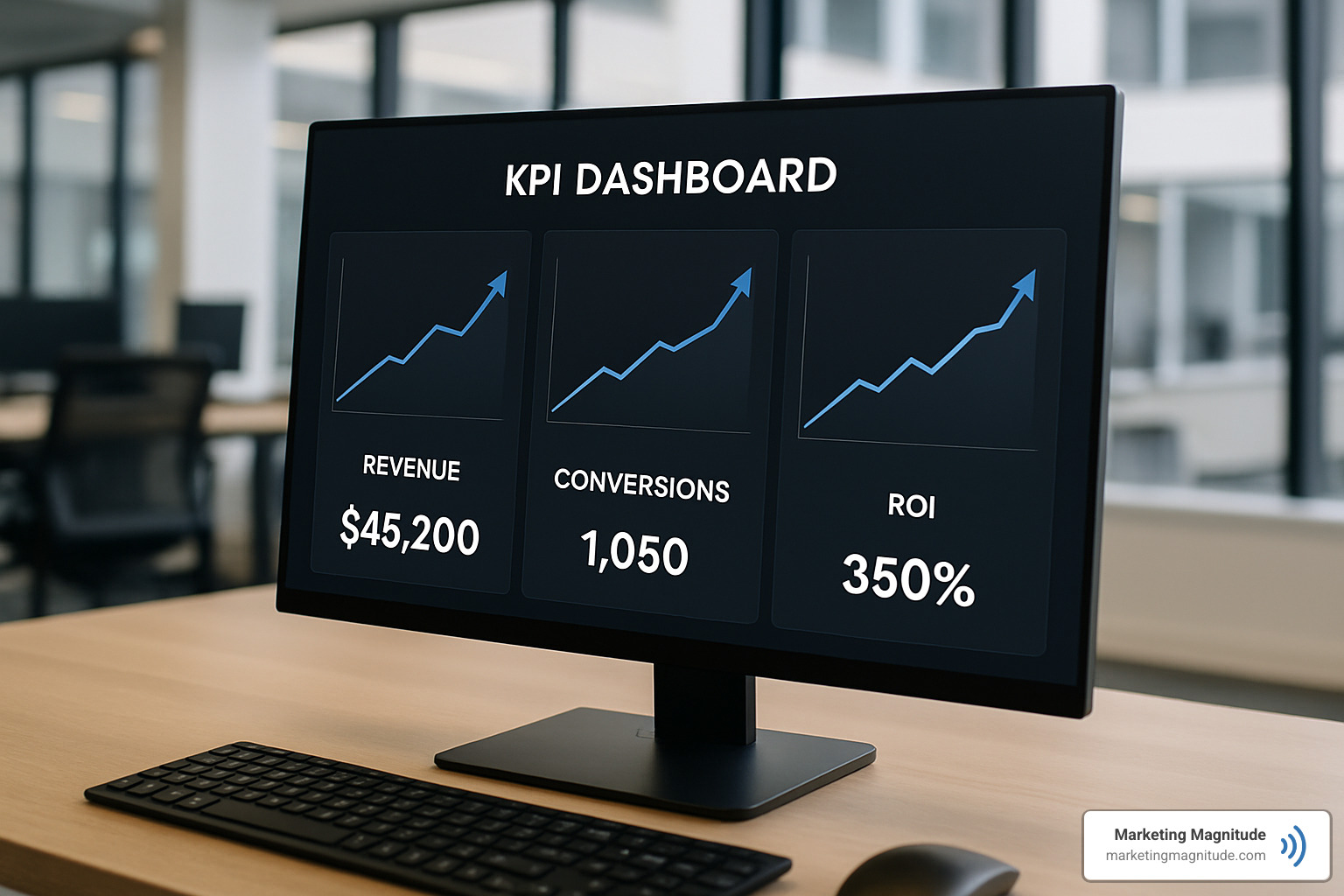
Real-time KPIs let us spot opportunities and problems immediately, not after spending your budget.
Custom dashboards focus on metrics that matter to your business goals. We highlight cost-per-acquisition, return on ad spend, and revenue attribution – numbers that directly impact your bottom line.
Actionable insights come from regular strategy calls and performance reviews. We explain what we’re doing, why, and expected results with clear communication about campaign performance.
At Marketing Magnitude, our real-time tracking means you always know how campaigns perform. Learn more at Services: Pay-Per-Click Management (PPC).
Pricing Models & Choosing Between Agency and In-House
| Approach | Monthly Cost | Setup Time | Expertise Level | Tool Access | Scalability |
|---|---|---|---|---|---|
| In-House Manager | $4,000-8,000+ salary | 3-6 months | Limited initially | Additional costs | Difficult |
| Agency Flat Fee | $650-2,500 | 2-4 weeks | Immediate expert access | Included | Easy |
| Agency % of Spend | 10-20% of ad budget | 2-4 weeks | Immediate expert access | Included | Very easy |
| Performance-Based | Varies by results | 2-4 weeks | Highly motivated | Included | Results-dependent |
Understanding the true cost of paid search management services goes beyond simple monthly fees. When you compare agency pricing to hiring internally, the numbers often surprise business owners.
Flat monthly fees typically range from $650 for basic campaign management up to $2,500 or more for comprehensive services. This model works well when you have consistent ad budgets and want predictable costs. You know exactly what you’ll pay each month, regardless of how your campaigns perform.
Percentage-based pricing usually runs 10-20% of your monthly ad spend. This approach aligns beautifully with your growth – as your campaigns succeed and budgets increase, your agency partner shares in that success. It also means lower fees when you’re testing new markets or during slower seasons.
Performance-based arrangements tie fees directly to results like leads or sales. While this sounds appealing, these contracts often require higher base fees and complex tracking systems. They work best when you have clear conversion values and established tracking systems.
The hidden costs of DIY management add up quickly. Beyond a skilled manager’s $4,000-8,000 monthly salary, you’ll need premium tool subscriptions, ongoing training, and certification maintenance. Most importantly, there’s the opportunity cost of your time – every hour spent tweaking campaigns is time not spent growing your business.
When to Outsource Paid Search Management Services
Several situations make outsourcing paid search management services the smart choice over building internal capabilities.
Growing businesses often need results faster than they can hire and train staff. When market opportunities arise or competitors increase their activity, agencies provide immediate expert-level management without the months-long hiring process.
Limited internal expertise makes outsourcing essential for most businesses. PPC management requires specialized knowledge that takes years to develop properly. Learning through trial and error with real ad budgets gets expensive quickly.
Multi-platform complexity overwhelms most internal teams. Managing campaigns across Google Ads, Microsoft Advertising, and social platforms simultaneously requires platform-specific expertise that’s nearly impossible to maintain with one person.
Resource constraints affect many businesses that can’t justify a full-time PPC position. You might need expert management but lack the budget for a complete internal team with manager, analyst, and creative support.
The need for scale often tips the balance toward agencies. As your campaigns expand across multiple products, regions, or customer segments, professional management becomes more cost-effective than building internal capabilities.
How to Evaluate & Onboard a PPC Partner
Choosing the right paid search management services provider requires looking beyond flashy promises to examine real capabilities and processes.
Certifications matter, but experience matters more. Google Partner status and Microsoft Advertising accreditation show platform knowledge, but look for agencies that can explain complex strategies in simple terms and share relevant success stories.
Case studies reveal how agencies approach real business challenges. Pay attention to examples from businesses similar to yours in size and industry. Look for specific metrics and realistic timeframes rather than vague claims about “explosive growth.”
The kickoff process tells you everything about how thoroughly an agency understands your business. Professional providers spend significant time in findy sessions, analyzing your competitive landscape, and aligning on specific goals before spending a dollar of your budget.
Goal alignment prevents frustration down the road. Clear discussions about key performance indicators, reporting frequency, and success metrics ensure everyone works toward the same objectives. The best agencies ask tough questions about your business goals and customer lifetime values.
Red flags include guaranteed results (no one can guarantee Google’s algorithm), requests for admin access to your business accounts, vague reporting promises, or pressure to sign long-term contracts. Professional agencies earn your business through results, not contractual obligations.
If you’re already running campaigns but seeing warning signs, our guide on Three Red Flags Your PPC Strategy Needs a Makeover can help identify what needs attention in your current approach.
Frequently Asked Questions about Paid Search Management Services
How much budget do I need to see meaningful results?
Most businesses need at least $1,000 to $2,000 monthly in ad spend to gather enough data for meaningful optimization. You need enough clicks and conversions to spot patterns – if you’re only getting five clicks monthly, it’s nearly impossible to know what’s working.
The sweet spot is generating 15 to 30 conversions monthly, which gives automated bidding strategies enough data to help you. In highly competitive fields like legal services or insurance, you might need $5,000+ monthly just to compete effectively.
A good rule of thumb is allocating 20% to 40% of your overall marketing budget to paid search. B2B companies often lean toward the higher end because their sales cycles are longer and customer values typically higher.
What’s the difference between PPC and SEO for long-term growth?
You don’t have to choose between paid search management services and SEO – they work beautifully together.
PPC is like having a fast pass at an amusement park – you get immediate visibility and can start driving traffic within hours. SEO is like planting a garden – it takes months to grow, but eventually provides “free” organic traffic.
The best businesses use PPC to inform their SEO strategy. When you find keywords that convert well in paid search, those become prime targets for organic efforts. When SEO research uncovers valuable long-tail keywords, you can test them quickly in PPC campaigns.
Companies often double their market coverage by running both simultaneously. While building organic rankings, PPC fills the gap and captures traffic they’d otherwise lose to competitors.
How soon can I expect ROI after launching a managed campaign?
You’ll see impressions and clicks almost immediately – sometimes within the first hour. But meaningful conversion data usually takes two to four weeks to accumulate.
The magic happens after three to six months of continuous optimization, when campaigns have enough performance data for managers to identify winning combinations and scale what works.
Professional managers often deliver “quick wins” in the first few weeks by fixing obvious issues like poor keyword targeting or mismatched ad copy. These immediate fixes can boost ROI while longer-term optimizations develop.
Expect a learning period – those first few months are an investment in understanding your audience and refining your approach. The best-performing long-term campaigns use this data thoughtfully rather than rushing to judgment.
Conclusion
The journey through paid search management services reveals a clear truth: success often comes down to professional expertise and systematic optimization. While the potential for profit is enormous – with businesses averaging $28 return for every $1 invested and paid search visitors being 50% more likely to purchase – less than 25% of PPC ads actually produce conversions.
This gap exists because paid search success requires more than just setting up campaigns. It demands continuous optimization, strategic thinking, and deep platform knowledge that takes years to develop. Thriving campaigns are managed by professionals who understand keyword match types, bidding strategies, and conversion optimization nuances.
At Marketing Magnitude, we’ve built our paid search management services around transparency and real-time results. We believe you shouldn’t wait for monthly reports to understand campaign performance. Our approach focuses on building genuine partnerships where your success drives our success.
The mastery mindset separates winning campaigns from mediocre ones. This means treating each campaign as a living system requiring constant attention, testing, and refinement. Platform algorithms change, competitors adjust strategies, and customer behavior evolves. Agencies that accept this reality and build optimization into their DNA deliver consistent results.
Your advertising budget is too valuable to waste on guesswork. Whether you’re managing campaigns in-house or working with another provider, the question isn’t whether you should invest in paid search – it’s whether your current approach maximizes every dollar spent.
The best time to optimize your paid search efforts was yesterday. The second best time is right now. Professional management can transform budget-draining campaigns into profit-generating engines, but only if you partner with experts who prioritize your results.
If you’re ready to find what your campaigns can achieve with proper management and transparent reporting, we’d love to show you what’s possible. Learn more about our PPC services and see how our real-time tracking and results-driven approach can turn your paid search investment into a reliable growth engine for your business.